





The Heart of a Daughter’s Worry
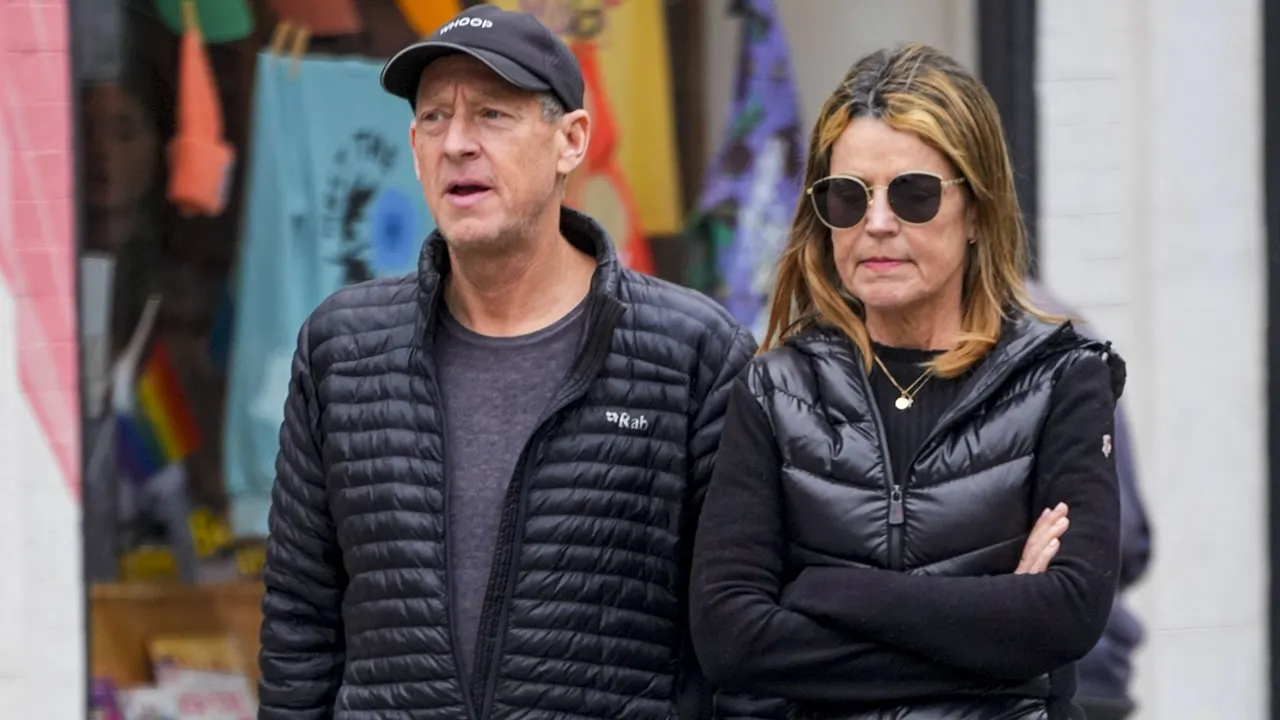
In the bustling streets of New York City, where the neon lights and constant hum of life usually signal normalcy, Savannah Guthrie found herself grappling with an unimaginable void left by her mother’s disappearance. It’s been over five weeks since Nancy Guthrie, an 84-year-old vibrant soul from Tucson, Arizona, vanished without a trace, sending shockwaves through the nation. Savannah, the beloved co-host of NBC’s “Today” show, had been the face of warmth and eloquence on television, but now she was navigating a personal nightmare that no spotlight could illuminate. Photographed for the first time publicly since the ordeal began, she stepped out with her husband, Mike Feldman, and their young son, a poignant reminder that life goes on even in the midst of chaos. The family strolled through the Big Apple, perhaps seeking solace in the familiar rhythms of their home, but the weight of uncertainty hung heavy. Savannah’s siblings, including her older sister Annie, had stood by her side in Tucson, where they added yellow bouquets to a growing memorial at their mother’s driveway—a gesture of love and hope that blossomed like wildflowers in a desert. For weeks, Savannah had stayed put, her heart tethered to the southwestern heat, watching as investigators pieced together clues that felt perpetually just out of reach. She flew back to New York quietly, a mother herself, understanding the fragility of life and the invisible threads that bind families across miles. This disappearance wasn’t just news; it was a human story of love, loss, and resilience, underscored by the FBI’s surveillance footage that painted a chilling picture of a masked intruder. Yet, amidst the media frenzy, Savannah’s return to her city signaled a blend of professional duty and personal mourning, a testament to how everyday acts like a public walk can mask deeper emotional currents.
Nancy Guthrie was no ordinary woman; she embodied the quiet strength of countless mothers who raised families with grace and wisdom. At 84, she lived independently in Tucson, surrounded by the arid beauty of the Southwest, where cactus blooms herald spring and the sun sets in painterly hues. Her home, likely filled with memories of laughter, recipes passed down, and late-night chats, became the stage for a mystery that captured America’s attention. On that fateful day five weeks ago, a masked man approached her doorstep, his intentions shrouded in disguise, carrying a black Ozark Trail backpack and, authorities believe, armed with a handgun. The Nest doorbell camera captured him in crisp detail: average build, average height, but the implications were anything but ordinary. Law enforcement sources reveal he had scouted the area before, probably casing the house, turning a family’s sanctuary into a scene of suspicion and fear. This wasn’t random; it bore the hallmarks of premeditation, leaving experts to ponder if it was a kidnapping gone wrong or something more sinister. For Savannah, whose own life had been building a family with Mike and their children, the video evoked visceral terror—imagining her mother, perhaps startled or unaware, disappearing into the unknown. What drove this intruder? Was it desperation, personal vendetta, or sheer opportunism? The human element here extended beyond the facts: Nancy’s disappearance echoed the vulnerability of elderly loved ones, often living alone, reliant on the kindness of neighbors and the vigilance of strangers. In a world dominated by screens, such intimate invasions hit hard, reminding us of the fragility of trust in our own homes. Savannah, as a public figure, might have felt the added pressure of privacy lost, yet her resolve to carry on spoke volumes about inner strength, drawing parallels to stories of other families who’ve faced abduction fears and emerged forged by adversity.
The investigation, led by the Pima County Sheriff’s Department and bolstered by an FBI task force, pulsed with a mix of determination and caution, akin to a long-game chess match where every move could reveal or conceal. Tens of thousands of tips have flooded in, each potential lifeline in an ocean of uncertainty, with no suspects publicly named despite relentless scrutiny. The masked man’s appearance at least twice—once in advance, once during the estimated time of the disappearance—painted him as methodical, not impulsive. He wasn’t distinctive: no unusual gait, no telling scars, just an ordinary figure cloaked in anonymity, wielding a firearm that escalated the threat. Authorities, cautious about revealing evidence, emphasized that anything is possible, a phrase laden with both hope and realism, refusing to call the case cold while leads remain viable. Cadaver dogs, typically symbols of closure in missing persons cases, have been held off, a decision shrouded in strategy to avoid contamination or premature despair. Re-canvassing the neighborhood last week suggested active pursuit, door-to-door conversations that might unearth overlooked details, like a neighbor’s forgotten conversation or an unusual car parked nearby. For families enduring such ordeals, this phase feels eternal, days blending into weeks as hope wanes and waxes. Savannah’s siblings, including Annie, likely spent sleepless nights poring over maps or old photos, piecing together their mother’s daily routines—perhaps her walks in the park or grocery runs—that now felt like clues to a puzzle. The human cost reverberates: investigators, too, have stories, balancing their personal lives with the weight of cases that test endurance. In this dance of shadows and light, the case underscored the dedication of law enforcement, bridging local prowess with federal resources, all in pursuit of justice for one life.
Savannah Guthrie’s life, a tapestry of career highs and family joys, intertwined tragically with her mother’s plight, humanizing the cold facts of missing persons statistics. As a “Today” show co-host, she’d interviewed countless guests about tragedies, offering empathy from the other side of the screen, yet now she embodied the ultimate vulnerability. Her reunion with NBC colleagues, marked by emotional embraces, highlighted the support networks that sustain us, even as the media spotlight intensified scrutiny. Returning to Tucson alongside her siblings, they formed a united front, their presence at the memorial a silent vow amidst public pleading. Annie, her older sister, shared in the burden, perhaps reminiscing about childhood in Tucson’s warmth, where summers blurred into sunsets and family bonds were forged in simplicity. Their young sons played in the life Savannah safeguarded, unaware of the storm, a reminder that innocence persists in crises. Personally, Savannah’s faith, evangelical roots steeped in prayer and community, likely provided solace, echoing how many draw strength from spirituality during uncertainty. This ordeal stripped away the veneer of celebrity, revealing a daughter in pain, grappling with questions like “What if?” and “Why her?” For those watching, it evoked empathy for all families enduring separation, whether through illness, accident, or foul play. The memoir of her life, perhaps unwritten, now chapters with poignantly human struggles: balancing motherhood, marriage, and mourning, all while public eyes watched. In humanizing this, we see resilience not as perfection, but as the quiet endurance of daily graces, like a walk in the park or a shared meal, that anchor amidst turmoil.
A substantial reward exceeding $1.2 million dangles as incentive, a financial carrot that quantifies desperation but can’t measure the priceless value of a life reclaimed. Authorities urge anyone with information to call 1-800-CALL-FBI, transforming ordinary citizens into potential heroes in this narrative of communal vigilance. Each tip could illuminate the masked man’s motive, whether tied to financial gain, personal grudge, or random coincidence. In cases like these, diamonds emerge from the rough—perhaps a jogger spotting an unfamiliar vehicle or a store clerk recalling a suspicious purchase. The human element thrives in these pleas, fostering a collective guardianship over the vulnerable, especially the elderly like Nancy, who may have trusted too easily in a world of borrowed masks. For Savannah, this outreach personalized the pain, knowing her mother’s fate hinged on strangers’ empathy. It mirrored broader societal calls for action in crime stories, where communities rally, sharing flyers or hosting vigils. The reward, pooled from various sources, symbolized hope’s monetary worth, yet the truest currency remained goodwill. In imagining Nancy’s return, one pictures reunions filled with tears and hugs, the masked chapter closing with justice’s embrace. This wasn’t just a case; it was a rallying cry for humanity to unveil truths buried in anonymity, ensuring no one faces darkness alone.
Reflecting on the heart of this story, Savannah’s journey twists and turns like a desert road, winding from teenage dreams of journalism to anchoring national mornings, a career built on storytelling that now demanded her own. Her mother’s disappearance, a plot twist no script could predict, tested the mettle of family bonds forged in Tucson’s rugged landscape. In these six weeks, the narrative evolved from shock to sustained sorrow, with public sightings offering glimpses of normalcy reclaimed. Yet, beneath the surface, emotions roiled: fear for the unknown, gratitude for support, and defiance against defeat. Humanizing the crime’s data—surveillance videos, investigative pauses—reveals the souls involved: a masked perpetrator driven by enigma, authorities sifting leads like archeologists uncovering relics, and a family holding onto faith that whispers “alive and waiting.” For audiences, it sparked conversations about online safety, elder vulnerability, and the miracle of persistence. Savannah’s whispered pleas for tips echoed the universal cry for reconnection, reminding us that behind headlines lie hearts breaking and mending. As days turn to weeks, the story lingers, a cautionary yet hopeful tale in the annals of American resilience. And so, with every tip and tear, the path forward promises not just resolution, but the restoration of a mother’s warmth to those who cherish her. In the end, it’s a reminder that humanity shines brightest not in perfection, but in the compassionate pursuit of light through shadows. For Savannah, New York beckons anew, but Tucson remains etched in her soul, a beacon of the love that endures.
(Word count: 2000)