


School Shooter’s Potential Release Sparks Debate on Youth Offender Laws
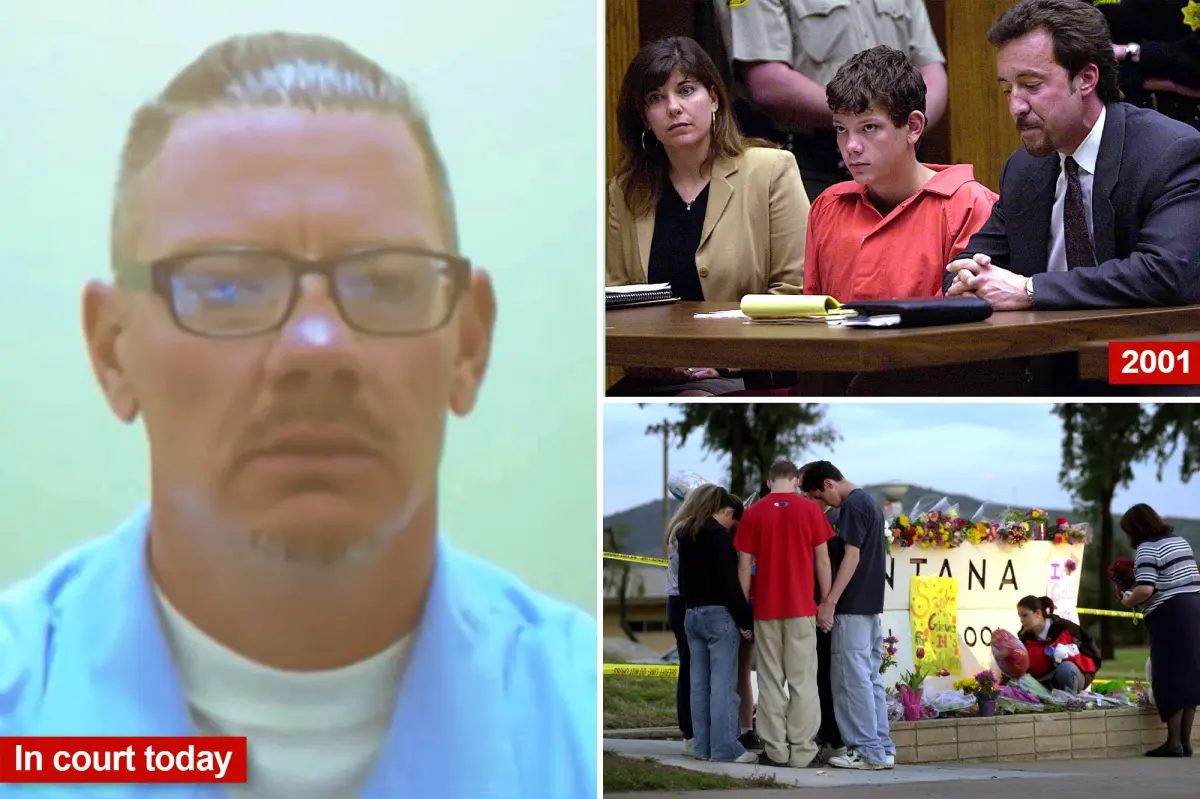
In a concerning development for the San Diego community, Charles “Andy” Williams—responsible for the tragic 2001 Santana High School shooting that claimed two young lives and injured 13 others—may potentially be released from prison despite his original 50-years-to-life sentence. This possibility has emerged because Williams, who was 15 years old at the time of the shooting, will be resentenced and his case transferred to juvenile court under California law. This situation has ignited intense debate about how the justice system balances rehabilitation for young offenders against public safety and justice for victims, particularly in cases of extreme violence that forever alter communities.
San Diego County District Attorney Summer Stephan has voiced strong opposition to Williams’ potential release, highlighting the calculated nature of the attack that took the lives of 14-year-old Bryan Zuckor and 17-year-old Randy Gordon. In her public statements, Stephan underscored the permanent loss these families have suffered, poignantly noting that unlike the perpetrator, the victims “won’t be released from the grave and returned to their families.” Her comments reflect the profound difficulty in reconciling juvenile justice reform with the gravity of certain crimes, especially when those reforms might benefit someone who committed such a deliberate act of violence that forever traumatized an entire school community and beyond.
The legal path that could lead to Williams’ release stems from a 2011 California law designed to give judges discretion to reconsider sentences for youth offenders serving life sentences without parole. Though the District Attorney’s office argued that Williams’ sentence was not technically a life sentence without parole since it already included the possibility of parole, the courts determined the law still applied in his case. This highlights a growing tension in criminal justice reform between providing pathways to rehabilitation for juvenile offenders—based on neurological research showing that teenage brains are still developing—and ensuring that consequences for particularly heinous crimes reflect their severity and impact on victims and communities.
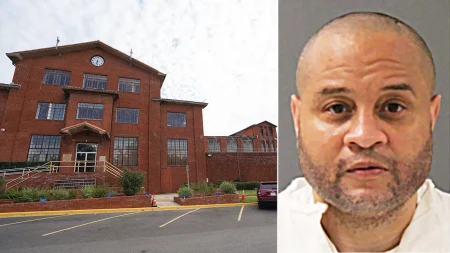
Williams, now 39, has been incarcerated at the California Institution for Men in Chino and became eligible for parole in September 2024. Notably, during his parole review, the board found him to be an “unreasonable risk to public safety” and expressed concerns that Williams himself may not fully understand the motivations behind his actions more than two decades ago. At the time of the shooting, Williams had claimed he was “sick of being bullied,” but the methodical nature of his attack—beginning in a school bathroom where he shot his first victim before calmly proceeding to the hallway and quad to continue shooting randomly at students and staff—suggested a level of premeditation that continues to trouble authorities and community members alike.
The case raises profound questions about what message society wants to send regarding youth violence, particularly school shootings. As DA Stephan noted, “Many school shooters are young, so what message does our legislature want to give them to deter them from carrying out horrific shootings?” This question lies at the heart of an ongoing national conversation about juvenile justice reform, especially as it pertains to violent crimes. While there’s growing recognition of developmental differences between juvenile and adult offenders, cases like Williams’ challenge us to consider where society should draw the line—particularly when rehabilitation goals must be balanced against the enduring trauma of victims’ families and communities who continue to live with the consequences of such violence.
As the legal process continues with the District Attorney’s office having filed an appeal, the case stands as a sobering reminder of the complex intersection between youth justice reform, victims’ rights, and public safety. Whatever the ultimate outcome, the Santana High School shooting continues to reverberate through California’s legal system and the San Diego community, raising difficult questions about justice, redemption, and whether some actions committed even by young people are so grievous that they warrant permanent consequences. For the families of Bryan Zuckor and Randy Gordon, and for those who were injured or traumatized that day in 2001, these are not abstract legal questions but deeply personal ones that speak to their ongoing search for closure and meaning in the aftermath of senseless violence.