




Russia Escalates Ukraine Conflict with Nuclear-Capable Missile Strike
Moscow’s Strategic Warning Comes Amid Emerging Peace Negotiations
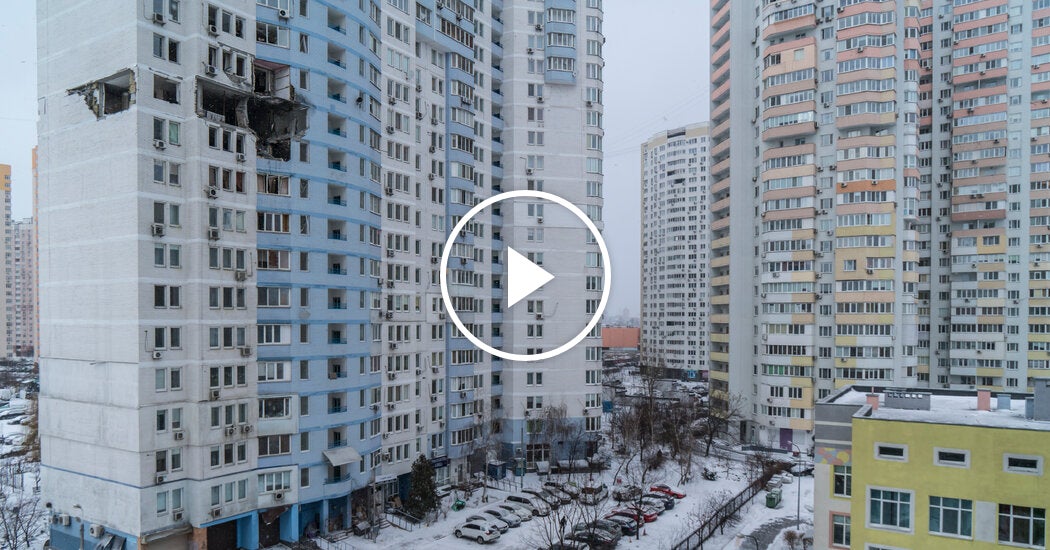
In a dramatic escalation of the long-running conflict in Ukraine, the Russian Defense Ministry confirmed on Friday that it had launched a nuclear-capable intermediate-range ballistic missile against targets in western Ukraine. This provocative military action arrives at a particularly sensitive moment, as U.S.-led negotiations aimed at ending the devastating war have recently shown promising momentum. The missile strike, which damaged residential buildings in a snow-covered urban area, represents one of the most significant military escalations in months and sends an unmistakable message from President Vladimir V. Putin to Western powers involved in the peace process.
Defense analysts view this development with grave concern, noting that while the missile was reportedly equipped with a conventional warhead, the deliberate choice to deploy a nuclear-capable system marks a dangerous new chapter in the conflict. “This is classic Russian escalation-to-deescalate strategy,” explains Dr. Kateryna Stepanenko, a military analyst at the Institute for War Studies. “By demonstrating the capacity to deploy such advanced weapons systems, Moscow is attempting to strengthen its negotiating position while simultaneously signaling to NATO and Washington that it maintains escalation dominance.” The missile, identified as an Oreshnik intermediate-range ballistic missile, represents part of Russia’s modernized strategic arsenal that had previously been restricted under the now-defunct Intermediate-Range Nuclear Forces (INF) Treaty, which the United States and Russia formally abandoned in 2019.
Impact on Civilian Areas Draws International Condemnation
The missile strike targeted what Moscow claims was a military-industrial complex in western Ukraine, but satellite imagery and on-the-ground reporting confirm significant damage to civilian infrastructure and residential buildings. Local Ukrainian officials report that the attack damaged multiple apartment complexes, leaving hundreds displaced amid freezing winter temperatures. “We were sleeping when the building shook like an earthquake,” recounted Oleksandr Petrenko, a 67-year-old resident who escaped with only minor injuries. “The wall of our apartment simply disappeared, and we could see directly outside. Everything we owned was destroyed in seconds.” Ukrainian emergency services continue to sift through rubble, with casualty figures still being determined.
International reaction has been swift and severe. U.S. Secretary of State immediately condemned the attack as “a reckless provocation that threatens not just Ukrainian lives but the stability of the entire European security architecture.” European Union foreign policy chief called for an emergency session of the UN Security Council, while NATO Secretary General warned that the alliance was “monitoring the situation closely” and consulting with member states on appropriate responses. Human rights organizations have expressed outrage at what Amnesty International termed “a potential war crime” given the missile’s impact on civilian-populated areas. Moscow has dismissed these criticisms, insisting the strike precisely targeted military infrastructure and that civilian casualties, if confirmed, were regrettable but unavoidable collateral damage in what it continues to term its “special military operation.”
Strategic Context: Missile Capabilities and Nuclear Signaling
Military experts note that the Oreshnik missile system represents a significant technological capability in Russia’s arsenal. With an estimated range exceeding 2,000 kilometers and the ability to carry either conventional or nuclear warheads, such intermediate-range ballistic missiles had been specifically prohibited under arms control treaties until recent years. “What makes this particularly concerning is the dual-use nature of the system,” explains Dr. Pavel Baev, a Russian military affairs specialist at the Peace Research Institute Oslo. “While Russia claims this particular launch carried a conventional warhead, the same delivery system could be used with a nuclear payload, creating strategic ambiguity that is almost certainly intentional.”
The timing of this demonstration has not escaped observers’ attention. Recent weeks have seen increased diplomatic activity, with U.S. and European negotiators engaging both Ukrainian and Russian representatives in separate talks aimed at establishing parameters for potential ceasefire discussions. Multiple sources within diplomatic circles suggest that preliminary frameworks for territorial compromises had been cautiously advancing, with neutral third-party nations offering to host more formal negotiations. “Putin is demonstrating that Russia retains escalation capabilities that must be factored into any settlement discussions,” notes former U.S. Ambassador to Ukraine William Taylor. “It’s a calculated move to strengthen Russia’s bargaining position by reminding everyone that Moscow still has cards to play despite the war’s protracted nature and the significant losses sustained by Russian forces.”
Implications for Peace Negotiations and Global Security
This missile strike threatens to derail the fragile progress in peace negotiations that had been quietly advancing in recent months. Ukrainian President Volodymyr Zelensky addressed his nation following the attack, characterizing it as “nuclear blackmail” while vowing that Ukraine would not be intimidated into accepting unfavorable terms. “This is precisely why Ukraine needs continued and enhanced Western security guarantees,” Zelensky stated, calling for accelerated delivery of promised air defense systems and renewed consideration of Ukraine’s NATO membership aspirations. Western diplomats now face the delicate challenge of continuing to support Ukraine while preventing further escalation that could potentially expand the conflict beyond Ukraine’s borders.
The strike also raises profound questions about the future of global arms control and nuclear security frameworks. With the INF Treaty abandoned and the New START Treaty set to expire in the coming years without a clear replacement, military analysts worry about an emerging environment with fewer guardrails against nuclear proliferation and strategic weapons development. “What we’re witnessing is the dangerous erosion of the post-Cold War security architecture,” warns Dr. Rose Gottemoeller, former NATO Deputy Secretary General and arms control expert. “When nations feel unconstrained by treaty obligations and verification mechanisms, the threshold for deploying advanced weapons systems inevitably lowers.” As winter deepens across Ukraine and diplomatic efforts continue despite this serious setback, the international community now confronts an escalated threat environment with potentially far-reaching consequences for European security and global strategic stability. How Western powers respond to this calculated provocation may determine whether negotiations can be salvaged or if the conflict is entering an even more dangerous phase with heightened nuclear dimensions.