






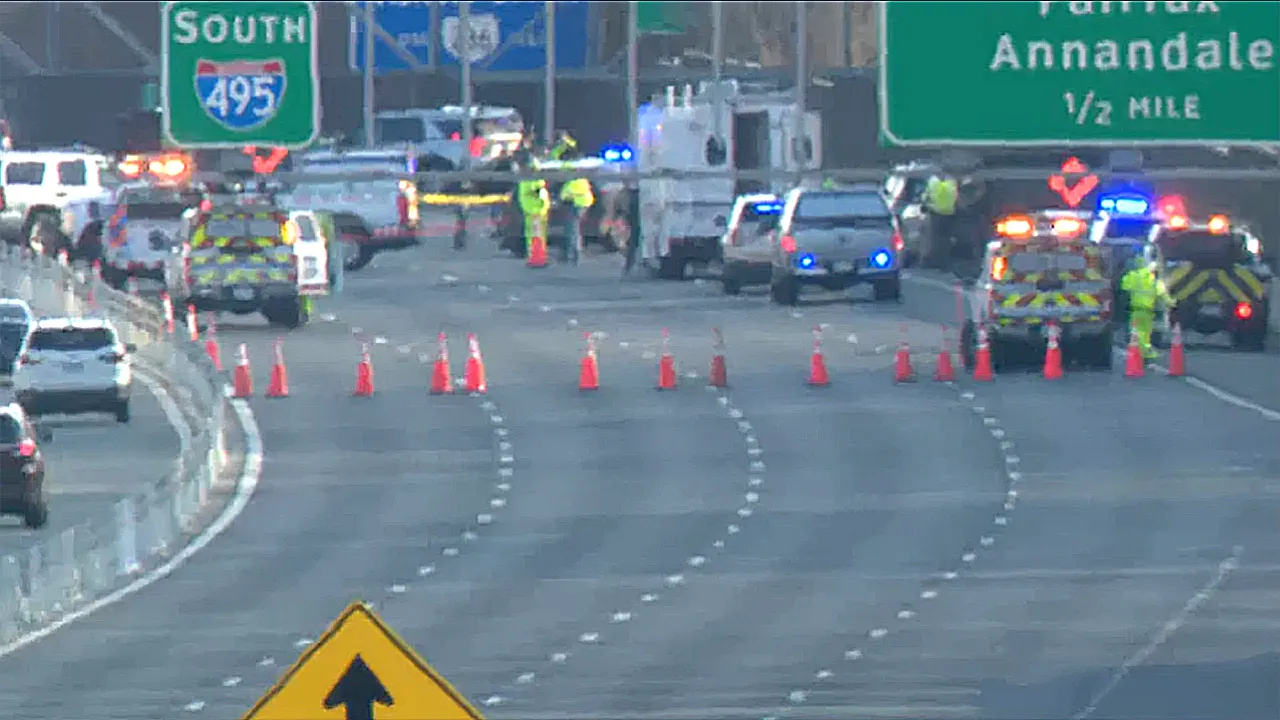
The Unraveling Horror on I-495
It was a Sunday afternoon in the sweltering Virginia heat, with the sun beating down mercilessly on the buzzing highways near Washington, D.C. Interstate 495, a lifeline artery for commuters darting between work, home, and weekend errands, became the unlikely stage for an act of savage desperation that would shatter lives in an instant. Picture the scene: cars zipping along the southbound lanes near the Little River Turnpike in Annandale, Fairfax County—about a 30-minute drive from the nation’s capital. Horns blared, engines roared, and tempers flared over some trivial slight, a classic road rage confrontation escalating into something unimaginable. What started as a heated exchange—a reckless cut-off, an obscene gesture, a slammed brake—quickly morphed into a nightmare of violence. Authorities would later describe it as a “road rage incident,” but for those involved, it was a moment where human fragility collided with unchecked fury, turning a mundane drive into a blood-soaked tragedy. Eyewitnesses, huddled in their vehicles or fleeing on foot, spoke of chaos erupting like a sudden storm. A man—described by later reports as armed only with a knife but fueled by rage—lunged into the fray, targeting random individuals in a blind, stabbing spree. It wasn’t premeditated terrorism, officials confirmed, but rather the toxic brew of personal grievance boiling over into public mayhem. In that blink, innocence was lost; families were torn, and a community was left reeling with questions about how everyday frustrations could spiral so lethally. As stories began to trickle out, it became clear this wasn’t just a statistic—it was a human story of anger unleashed, with ripples that would touch countless lives far beyond the highway’s concrete barriers.
The Victims’ Silent Screams and the Heroic Response
Among the chaos, lives hung in the balance like fragile threads. Officials reported at least four people fell victim to the assailant’s relentless blade, their bodies bearing the violent marks of an encounter gone horribly wrong. But one stood out in the cruelty—a 39-year-old woman whose name would echo as a poignant loss. She was likely just going about her day, perhaps heading to a loved one’s home or running errands with her faithful companion, a dog whose loyalty cost it everything. Eyewitness accounts paint a harrowing picture: screams piercing the air as the suspect prowled the interstate, knife in hand, targeting anyone in his path. The woman and her pet didn’t stand a chance; fatal stabs ended their journeys in a pool of grief that would haunt those who knew them. Imagine the terror in her final moments—a deep, primal fear as she confronted an unreasoning aggressor, her thoughts perhaps racing to family she’d never see again, to unfulfilled dreams and tender memories. Her dog, an innocent bystander in this human tempest, succumbed to the same fate, a silent casualty whose wagging tail and comforting presence were extinguished forever. Friends and relatives, when they learned the news, wept not just for the loss but for the senselessness of it all. How did such a routine drive turn deadly? The authorities tried to piece it together: the Virginia State Police trooper, called at around 1:17 p.m., arrived on a scene already engulfed in violence. The stabbings had begun before his arrival, a race against time where help came too late for some. But for others, his presence was a beacon. Armed and facing a knife-wielding maniac, the trooper acted decisively in self-defense, firing shots that neutralized the threat. In that crucial standoff, lives were saved, and justice, though brutal, prevailed. The trooper emerged unharmed, a testament to bravery in the face of madness, but his soul would forever carry the weight of shedding blood to protect the innocent.
Piecing Together the Suspect’s Dark Path
As investigators delved deeper, the figure of the suspect emerged not as a monster, but as a troubled soul whose own life was a tapestry of unresolved pain and repeated missteps. He was killed in the confrontation, his body falling under the barrage of justified gunfire—a swift end to a spree that claimed lives and sowed terror. Officials, though tight-lipped on details, hinted at a history marred by brushes with the law, much like reports of other tragedies involving individuals with lengthy criminal records and dropped charges. It’s easy to humanize him in hindsight, to wonder about the demons that drove him: perhaps a lifetime of rejection, mental health struggles, or mounting frustrations from a society that had failed him. Was he a father, a brother, a son whose potential withered away amid poverty, addiction, or interpersonal failures? Friends or acquaintances might recall a man who seemed unhinged, prone to outbursts like the one that ignited this horror—a seemingly minor road dispute ballooning into a murderous tantrum. But such speculation, while tempting, underscores the tragedy: unchecked anger can transform ordinary people into perpetrators, their inner turmoil spilling out onto unsuspecting strangers. In the aftermath, as police combed through his background, questions lingered: Could earlier interventions have prevented this? Had the system—courts, counselors, communities—let him slip through the cracks? His death brought closure for some, but for others, it raised alarms about the fragility of mental health support and the perils of fading into obscurity. The knife, that simple tool turned weapon, became a symbol of how personal reckonings can erupt publicly, leaving a community grappling with empathy mixed with revulsion.
The Highway’s Frozen Silence and Community Repercussions
In the immediate wake, the highway itself became a silent witness to the horror, its southbound lanes frozen in a surreal lockdown that mirrored the shock rippling through Annandale. The Virginia Department of Transportation swiftly announced closures past Gallows Road, with 495 Express Lanes barricaded by heavy police presence. Picture the gridlock: hundreds of cars idling, drivers straining for glimpses of the unfolding drama, their hearts pounding as rumors spread via phone lines. Families in minivans, solitary commuters in sedans, even delivery drivers— all forced into a sudden pause, pondering the safety of their own journeys. Social media buzzed with fragments of information, amplifying the fear; was this an isolated outburst or a sign of deeper unrest? Crowds gathered at safe distances, their faces etched with a mix of curiosity and dread, as sirens wailed and helicopters hovered overhead. For local residents, the shutdown encapsulated the vulnerability of modern life: highways, meant to connect and liberate, could just as easily become traps of violence. The Fairfax County Police Department lent their expertise, collaborating with state troopers to secure the scene, turning the suelen stretch of asphalt into a crime investigation hub. Bystanders described a sea of flashing lights and yellow tape, forensic teams meticulously documenting bloodstains and evidence, while clergy and counselors arrived to tend to the traumatized. In the hours that followed, as traffic finally resumed, the air still hummed with unease—a reminder that beneath the surface of everyday routines lurked the potential for chaos. Communities rallied with vigils and memorials for the victims, their stories immortalized in online tributes and local news reels, fostering a collective mourning that bridged divides.
The Broader Ripple Effects and Lingering Questions
As days unfolded into weeks, the incident transcended its immediate carnage, sparking nationwide discussions on road rage and societal pressures. Experts weighed in through television segments and opinion pieces, highlighting how stress, isolation, and cultural divides could fuel such explosive behaviors. Families of the deceased grappled with profound grief, organizing fundraisers and support groups to honor the woman and her beloved dog—animals that, in their quiet fidelity, embody the innocence stolen away. Psychologists spoke of the “sudden outburst syndrome,” a phenomenon where pent-up frustrations ignite unpredictably, affecting not just urban highways but suburban tranquility. For commuters, this tragedy became a cautionary tale: a call to greater patience, empathy, and perhaps road rage prevention programs in driver education. Political voices echoed, urging funding for mental health resources and stricter oversight of repeat offenders whose charges had been dismissed. Yet, beneath the analysis lay human sorrow—the void left in homes where laughter once echoed, the emotional toll on first responders who faced their darkest fears, and the subtle shifts in community trust. Survivors of the stabbings, if any remained, would bear invisible scars, therapy sessions echoing with relived torment. And the trooper involved? He likely returned to patrol with a heavier burden, reflecting on the fine line between duty and doom. This event, while tragic, ignited conversations about compassion in a polarized world, prompting neighbors to reach out, strangers to share stories, and policy makers to act. It was a stark reminder that behind every headline is a web of dreams disrupted, legacies tarnished, and chances for redemption lost forever.
Reflections on Humanity’s Fragile Threads
In the end, the road rage stabbing on I-495 stands as a somber mirror to our collective soul, where ordinary interactions can fracture into irreversible loss. The 39-year-old woman, whose life was cut short, leaves behind a legacy of resilience—perhaps she was a mother, a friend, a worker whose contributions will be mourned eternally. Her dog’s loyalty symbolizes pure love, a bond severed in violence that resonates on a primal level. The suspect’s demise, while necessary for public safety, invites reflection on prevention, urging societies to bridge empathy gaps before they widen into destruction. Authorities, still probing the crash and related elements, assure the public of thorough investigations, but the emotional fallout lingers. Communities heal through shared vulnerability: potlucks with neighbors, drives to raise awareness, and quiet moments of remembrance. For those of us far removed, it’s a call to cherish everyday connections, to temper road rage with kindness, and to support those struggling silently. This incident, not born of terrorism but of deep-seated turmoil, underscores humanity’s dual potential—for savagery and salvation. As highways reopen and life trudges on, may we carry this story not as a burden, but as a catalyst for change, weaving stronger threads of understanding in our interconnected world. In honoring the lost, we affirm the enduring power of compassion, reminding us all that every journey holds the possibility of unexpected grace amidst the shadows.