






The Tension Builds in Olympia
In the bustling outskirts of Olympia, Washington, where suburban life often masks underlying dangers, a seemingly ordinary day erupted into chaos on April 4 when law enforcement officers found themselves in a high-stakes pursuit of a man whose past warned of trouble ahead. Picture this: a cold, crisp afternoon giving way to the roar of engines and the wail of sirens as deputies from the Thurston County Sheriff’s Office and officers from the Olympia Police Department responded to a call about an auto theft in progress. The suspect, later identified as a notorious repeat offender, had brazenly snatched a Honda Civic right off the west side of town, igniting a chain of events that would test the limits of police coordination and public safety. This wasn’t just any thief; this was a 19-time convicted felon with a rap sheet that read like a catalog of mayhem, including robberies, assaults, and unlawful possession of firearms. As the stolen car sped away, weaving through local streets, it became clear that this flight wasn’t born of desperation alone—it was a calculated evasion born from a long history of defying the law. The officers, seasoned through countless shifts, knew they had to act fast to prevent harm, but they were dealing with someone who thrived on chaos. The chase began innocently enough, with a Tenino police officer spotting the vehicle and attempting a routine traffic stop. Yet, the driver—a young man hardened by years behind bars—wasn’t about to surrender without a fight. Refusing to pull over, he accelerated, dragging the pursuit northward toward the denser, more populated neighborhoods of Tumwater, where the stakes grew exponentially higher. Families could be walking their dogs, children playing in yards, and commuters rushing home—all vulnerable to a fleeing vehicle that showed no signs of slowing. The atmosphere was electric, with radio chatter buzzing as officers strategized on the fly. “If we get him below 50, take him out before it gets to Tumwater,” one officer urged over the airwaves, their voices betraying the urgency and instinct for protection. In that moment, the pursuit transformed from a simple arrest into a community safeguard, highlighting how one individual’s choices could endanger so many. The suspect had an active escape warrant linked to an assault case, adding layers of complexity—he was running not just from the theft, but from prior judgments that had already branded him a danger. This incident wasn’t isolated; it was the latest chapter in a saga of repeated defiance, where attempts to evade police and steal vehicles had become almost routine for him. Law enforcement, ever vigilant, brought in aerial support and coordinated seamlessly between agencies like Washington State Patrol, working like a well-oiled machine to contain the threat. For locals, hearing about such an event could evoke memories of similar chases that have scarred communities, reminding everyone of the thin line between safety and peril. As the car raced onward, clocking speeds around 60 mph on roadways not designed for such recklessness, the officers felt the weight of their responsibility. They weren’t just chasing a criminal; they were protecting the fabric of everyday life in towns like Tenino and Olympia, where people go about their routines unaware of the shadows lurking. The drama unfolded like a scene from a action thriller, but with real lives hanging in the balance, underscoring the human toll of crime and response. By the end of this initial phase, the suspect’s refusal had escalated what could have been a quick apprehension into a tense standoff, forcing authorities to escalate their tactics to ensure no one else got hurt.
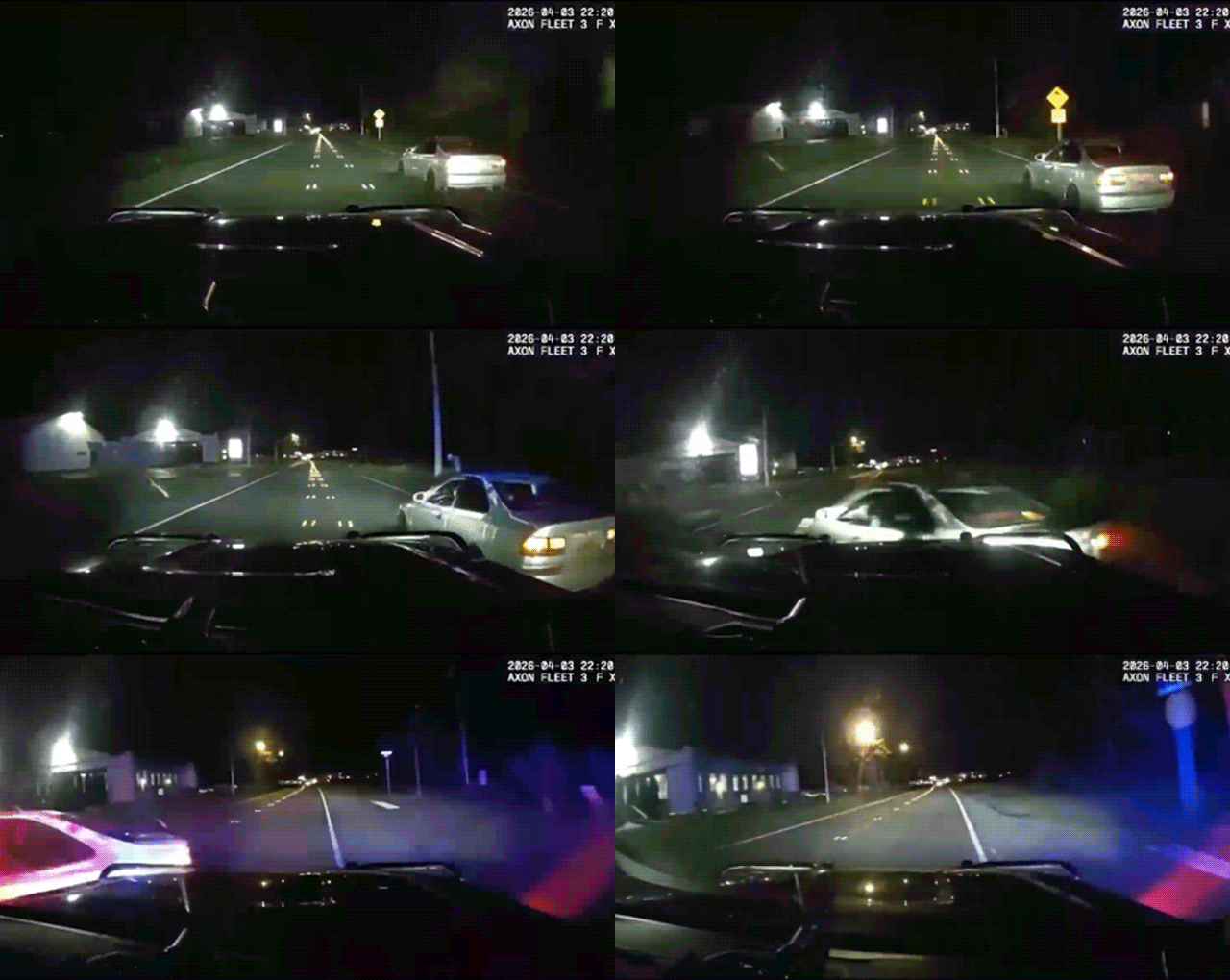
The chase intensified dramatically, as the suspect’s reckless driving pushed the boundaries of danger, with off-duty officers and plainclothes heroes watching from afar, their instincts screaming that something had to be done before it was too late. In a desperate bid to halt the Honda Civic without firing weapons—always a last resort in populated areas—officers deployed a grappler device, a slingshot-like tool designed to latch onto the vehicle and yank it to a stop. But the suspect, fueled by adrenaline and perhaps a misplaced sense of invincibility from his numerous brushes with the law, countered by flooring the accelerator, breaking free and continuing his flight. The failure of the grappler only heightened the anticipation; it was a reminder that even with cutting-edge equipment, dealing with a determined fugitive required more than technology—it demanded courage and precision. Undeterred, police next deployed spike strips across the road, a tactic that punctured the tires and brought the car skidding to a slower, more manageable crawl. For a brief moment, it seemed like surrender was imminent; the suspect pulled over, doors open as if contemplating his next move. But in a heartbeat, he revved the engine again, attempting a daring escape that zigzagged through side streets, narrowly avoiding collisions that could have turned tragedy for innocent bystanders. The video footage from the incident, captured by dashcams and bodycams, paints a vivid picture: the car tearing through intersections at breakneck speeds, headlights piercing the dimming daylight, with officers’ voices crackling over radios in a symphony of urgency. “Give me your hands! Give me your hands!” echoed later during the arrest, a far cry from this frenetic pursuit where commands were shouted but ignored. Aerial support, buzzing overhead like vigilant protectors, provided real-time intelligence, tracking the suspect’s erratic path and relaying it to ground units. This wasn’t just a cat-and-mouse game; it was a testament to the lengths communities go to safeguard their people. For those following along, perhaps from home or work, it humanized the officers as everyday heroes—fathers, mothers, sons, and daughters—risking everything to stop a threat that could invade their peaceful neighborhoods. The suspect’s history loomed large, with at least 10 misdemeanor convictions piling atop his felonies, painting a portrait of a man who seemed incapable of reformation. Previous incidents echoed in their minds, like the time he killed someone in a crash during street racing at 106 mph, mowing down an EMT and underscoring the lethal consequences of his choices. Or the home invasion where good samaritans intervened to stop an alleged park predator just months after his release. Each brush with the law revealed a pattern of violence and elusion, making this chase feel like a preventive strike against future harm. As the situation escalated in Tumwater, officers invoked advanced maneuvers, ensuring that the threat didn’t bleed into busier commercial districts where shoppers and workers milled about. The public, often unaware of the behind-the-scenes heroism, would later see the coordinated effort as a badge of community resilience. In expanding on this phase, it’s worth noting how such pursuits drain resources and emotions—officers deal with the adrenaline hangover, questioning if lives could have been saved, while families live in perpetual fear of the next incident. The suspect’s actions weren’t isolated thrills; they were ripples in a pond of consequences, affecting everything from traffic patterns to local news consumption. By pushing his luck with spike strips failing to fully immobilize him, he forced a climax where professional training shone through.
The tide turned decisively when a skilled Thurston County deputy executed a precision immobilization technique, more commonly known as a PIT maneuver—a controlled ramming of the suspect’s vehicle to spin it out of control and halt its forward momentum. Executed flawlessly amidst the chaos, this tactic brought the Honda Civic to a shuddering stop, tires smoking and metal groaning as it skid sideways. Swarming deputies, clad in tactical gear that spoke of countless similar encounters, descended upon the car with practiced urgency. Video evidence captures the intense scene: officers shouting commands amid the haze of dust and exhaust, spotlights illuminating the interior as they forcibly removed the suspect. “Give me your hands!” rings out, a phrase underscoring the raw human confrontation of authority versus defiance. To prevent any further escape into nearby wooded areas or residential enclaves, where he could hide and prolong the standoff, deputies ensured swift physical control, cuffing him on site and transporting him to safety away from the scene. This arrest wasn’t just procedural; it was a climax of perseverance, where teamwork triumphed over ad hoc evasion. Reflecting on such moments humanizes law enforcement beyond badges and sirens—they are people grappling with the moral weight of protecting society from those who refuse to play by the rules. For instance, imagine the deputy who performed the PIT: likely a veteran of multiple chases, perhaps thinking of his own family at home, driving extra carefully to make it back safe. The suspect, now subdued, faced the reality of his actions, his body covered in layers of history that included strangulation assaults and firearm possession. His path had led to this point through failed probation and repeated chances, highlighting a system strained by recidivism. Aerial footage from helicopters above painted a broader picture, showing how the pursuit had drawn a line across Thurston County, mobilizing units from Olympia to Tenino. Communities like these often pride themselves on their quiet tranquility, but incidents like this remind residents of the fragility of peace. Families watching the news that evening might sigh in relief, sharing stories of near-misses or expressing gratitude for those in uniform. The arrest encapsulated a narrative of escalation and resolution, where one man’s rebellious streak met insurmountable opposition, safeguarding hundreds who remained blissfully unaware. Expanding on this, consider the psychological toll: officers debriefed afterward, processing the adrenaline, while the suspect likely pondered yet another life behind bars. His 19 convictions weren’t just numbers; they were markers of lost opportunities, broken trusts, and societal costs. In human terms, it raises questions about rehabilitation versus incarceration, as seen in similar cases where repeat offenders cycle through the system without lasting change. The PIT maneuver, often debated for its risk, proved a necessary tool here, averting potential crashes in high-traffic zones. For onlookers or readers, it personalizes the story—turning statistics into faces, fears, and hopes for a safer tomorrow. Agencies involved praised the seamless collaboration, a blend of skill and instinct that ensured no injuries during the takedown. This event, while isolated, mirrors broader struggles with crime prevention, where proactive policing saves lives.
Authorities quickly revealed the suspect’s extensive background, a damning portfolio that explained the ferocity of the pursuit and underscored why law enforcement treated him as an imminent threat. A 19-time convicted felon, his record spanned decades of disruption, from burglaries that shattered family homes to second-degree assaults involving strangulation—acts that violated bodily autonomy and left victims traumatized. Unlawful possession of firearms added a layer of danger, hinting at premeditated violence, while multiple convictions for evading police showed a pattern of contempt for authority. At least 10 misdemeanors dotted his history, ranging from petty thefts to driving infractions, compounding the felonies into a web of unaccountability. This wasn’t a first-time offender stumbling into mischief; he was a serial perpetrator whose releases from custody had coincided with renewed offenses, such as a spree involving drugs, thefts, and wild high-speed escapades that neared his 100th arrest. One chilling parallel was his prior crash during street racing at 106 mph, where he tragically killed another person and struck an EMT, actions that cemented his reputation as a menace on public roads. Months before this chase, similar behavior emerged when good samaritans intervened to halt his alleged predatory actions in a park post-release, saving potential victims from further harm. His active escape warrant from an assault case amplified the urgency, making this pursuit a preemptive strike against someone who posed a “clear danger to the public,” as officials stated. Humanizing this, envision the impact on victims and communities: imagine a family reliving a past robbery, or an assault survivor flinching at news of his recapture. For young people in Olympia, his story serves as a cautionary tale about the spirals of crime, where unchecked actions lead to isolation and endless cycles. The suspect, just 19 at first arrest but now a veteran of the penal system, likely viewed society as an adversary, his 19 felonies a scorecard of defiance. Law enforcement, in their statements, emphasized the public risk, portraying him as someone who needed swift action to prevent escalation into busier areas where tragedies could unfold. New charges piled on—auto theft, attempting to elude, DUI, and driving on a suspended license—reflecting the day’s offenses and promising stricter judicial scrutiny. This background humanizes the officer’s vigilance: they weren’t overreacting; they were responding to proven patterns. In broader narrative, it prompts reflection on rehabilitation programs that failed, stirring empathy for correctional efforts and frustration at recidivism. For those affected, it’s a reminder of vulnerability, yet also of justice prevailing. Agencies like the Thurston County Sheriff’s Office, having extended efforts for comment, highlight how such cases drain resources and spirits. The suspect’s life, marked by violence and evasion, contrasts sharply with community values, making his re-arrest a collective sigh of relief. Personal stories from similar offenders reveal underlying struggles—poverty, addiction, lack of support—that could have been channeled differently, but choices forged destinies. In the end, his record wasn’t just ink on paper; it was a chronicle of broken lives, urging society toward proactive solutions like mental health interventions or community policing.
On the legal front, the suspect faces a barrage of new charges stemming directly from the April 4 incident, each carrying the weight of accountability for his actions that day and echoing his checkered past. Auto theft of the Honda Civic tops the list, a blatant act of defiance that initiated the chain of events, while attempting to elude law enforcement captures his refusal to comply with pursuit vehicles. Adding to the gravity, driving under the influence and operating with a suspended license compound the recklessness, painting a picture of compounded irresponsibility that endangered lives. Authorities, in issuing these charges, signaled a zero-tolerance stance, emphasizing that such behavior—snatching vehicles, speeding into populated zones, and resisting arrest—demands severe repercussions to deter future offenses. “This type of repeat offender poses a clear danger to the public,” they declared, underscoring how his history necessitated rapid intervention before harm escalated. The collaboration among Olympia Police Department, Thurston County Sheriff’s Office, Washington State Patrol, and Tenino Police Department was lauded for its efficacy, a testament to interagency synergy that prioritized safety. In humanizing terms, these charges aren’t mere legal jargon; they represent the pain inflicted on communities, like disrupted commutes or heightened fears among residents. For instance, the DUI charge evokes images of impaired judgment leading to chases that could claim innocent lives, resonating with alcoholics or addicts who struggle against similar demons. Driving suspended speaks to systemic failures—how license revocations meant little to someone with 19 felonies—prompting calls for stricter enforcement. Elusion attempts reflect a personality resistant to authority, humanizing officers’ frustrations during pursuits. Newsmakers, unable to reach the sheriff’s office immediately for more details, relied on video evidence that circulated widely, turning a local incident into a national conversation on crime prevention. This adds layers: viewers, perhaps parents, empathize with law enforcement’s protective role, sharing clips on social media alongside pleas for safer streets. The charges, expected to lead to protracted legal battles, highlight economic costs—court time, incarceration expenses borne by taxpayers. Yet, they also offer hope through accountability, potentially altering the suspect’s trajectory. Stories of reformed offenders inspire, showing how facing consequences can catalyze change. In the context of broader societal issues, these charges challenge us to address root causes like mental health crises or economic disparities that fuel crime. For affected families, like EMTs’ relatives from past incidents, it’s validation of justice. Agencies’ credit to teamwork fosters pride, motivating recruits while highlighting burnout in high-risk jobs. Ultimately, these charges encapsulate a narrative of responsibility, where individual actions meet collective safeguards, humanizing the justice system’s role in fostering stability.
In wrapping up this harrowing tale from Olympia, it’s worth reflecting on the broader human implications that ripple beyond the sirens and arrests, reminding us all of the delicate balance between freedom and security in everyday life. The suspect’s journey, marked by 19 felonies and countless brushes with the law, evokes a sense of tragedy— a life derailed by repeated poor choices that endangered not just his own but countless others’ well-being. Imagine the families he impacted: victims of robberies left grappling with loss of security, assault survivors carrying unseen scars, or the communities in Tumwater and Tenino now more cautious on their streets. Yet, amid the chaos, there’s inspiration in the heroes who responded—the officers, deputies, and support teams whose coordinated efforts averted disaster. They aren’t faceless enforcers but dedicated individuals, perhaps parents themselves, who chose careers in law enforcement to shield society from such threats, often at personal cost to their own peace of mind. For residents, this incident serves as a wake-up call to cherish the quiet moments, fostering neighborhood watch programs and open dialogues about safety. From a societal lens, it underscores the need for comprehensive reforms: better rehabilitation for repeat offenders, mental health resources to address underlying issues, and community support to break cycles of crime before they escalate. The video and chatter from the chase, shared widely, connect us emotionally, turning strangers’ ordeals into universal warnings. As the suspect awaits new charges in custody, his story prompts empathy mixed with resolve—understanding the human behind the headlines while demanding consequences for actions that threaten communal harmony. Law enforcement, credited with professionalism, embodies resilience, their radio calls echoing a commitment to protection that transcends individual cases. For those tuning into Fox News for such updates, it humanizes the news cycle, transforming headlines into narratives of triumph over peril. In the end, this pursuit isn’t just about one man and his Honda Civic; it’s a testament to a community’s spirit, where vigilance and unity turn potential tragedy into a lesson in empathy, accountability, and hope for a safer future. As Olympia heals, residents might reflect on personal stories, sharing cautionary tales with loved ones, fostering a culture where prevention reigns supreme. The agencies involved, though unavailable for immediate comment, represent pillars of stability, their efforts a beacon for justice. This event, captured vividly, urges us to humanize conflict—seeing not just crime but the people affected, striving for a world where chases like this become relics of the past. In doing so, it bridges divides, encouraging proactive engagement from all walks of life to build enduring peace.