






Remains of Final Israeli Hostage in Gaza Returned to Israel: A Profound Moment in Ongoing Conflict
By Sarah Mitchell, Middle East Correspondent
In a somber development that marks both an end and a continuation of one of the most devastating chapters in the Israeli-Palestinian conflict, Israeli authorities confirmed Monday that the remains of the last known Israeli hostage held in Gaza have been recovered and returned to Israel. This pivotal moment coincides with the announcement that the vital Rafah crossing will reopen within days, potentially easing the humanitarian crisis that has gripped Gaza’s civilian population for months.
The Final Homecoming: Closure for One Family Amid National Grief
The return of the final hostage’s remains represents a bittersweet conclusion to a harrowing ordeal that has captivated international attention and dominated Israeli domestic politics since the conflict’s inception. Speaking from Jerusalem, Israeli Defense Minister announced, “After exhaustive intelligence operations and diplomatic efforts spanning multiple countries, we can confirm that all Israeli hostages taken during the initial attacks have now been accounted for.” The announcement triggered mixed emotions across Israeli society—relief that the uncertainty has ended for the last family waiting for news, but profound grief that their loved one couldn’t return alive. Family members gathered at a private ceremony, shielded from media coverage, as military officials transported the remains with full honors. Mental health professionals have been working closely with hostage families, who have become powerful voices in Israeli society, forming advocacy groups that have organized some of the largest demonstrations in the country’s history, demanding government action to secure their loved ones’ return.
Rafah Crossing to Reopen: A Potential Lifeline for Gaza’s Civilian Population
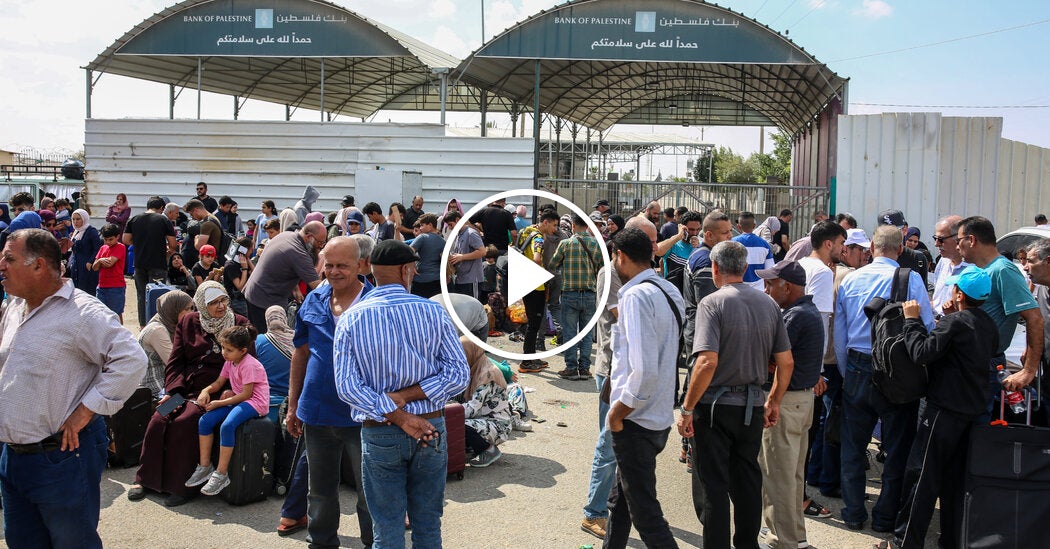
The Israeli government’s decision to reopen the Rafah crossing between Gaza and Egypt within days represents a significant policy shift that could dramatically impact humanitarian conditions in the besieged territory. “The crossing will operate under enhanced security protocols with international oversight,” stated an Israeli Foreign Ministry spokesperson, who indicated the crossing would initially prioritize medical supplies, food aid, and the evacuation of critically injured civilians. The Rafah crossing, situated at Gaza’s southern border with Egypt, has long served as a crucial gateway for Palestinian civilians and humanitarian assistance. Its closure during intense phases of the conflict has exacerbated already dire conditions inside Gaza, where access to essential services has been severely limited. International aid organizations have consistently identified the crossing’s operation as essential to addressing the humanitarian crisis, with UN officials estimating that thousands of tons of medical supplies and food aid have been unable to reach desperate civilians during closure periods.
Regional Diplomacy Intensifies as Humanitarian Crisis Persists
The dual announcements regarding the hostage return and border crossing reopening come amid intensified diplomatic efforts led by regional and international mediators. Sources close to the negotiations revealed that Egyptian and Qatari officials played instrumental roles in facilitating both developments. “This represents incremental but meaningful progress,” noted a senior U.S. State Department official speaking on condition of anonymity due to the sensitivity of ongoing talks. The diplomatic breakthrough occurs against the backdrop of deteriorating humanitarian conditions in Gaza, where the World Health Organization reports that over 80% of medical facilities remain partially or completely non-operational. Civilian infrastructure, including water treatment plants and electrical systems, has suffered catastrophic damage throughout the conflict. International humanitarian law experts have expressed growing concern about conditions facing Gaza’s civilian population, with particular emphasis on access to medical care, clean water, and adequate nutrition. “The reopening of Rafah represents a critical opportunity to address these fundamental needs,” stated the regional director for a prominent international aid organization.
A War-Weary Region Faces Uncertain Path Forward
As news of these developments spread throughout the region, reactions reflected the deep polarization that continues to characterize the conflict. In Tel Aviv, where weekly demonstrations demanding hostage returns have become a fixture of public life, protesters expressed a mixture of relief and continued demands for accountability. “This provides closure for one family, but we cannot forget the cost of this conflict on all sides,” said Rachel Goldstein, who has participated in weekly vigils for hostages. Meanwhile, in Gaza City, residents interviewed expressed cautious optimism about the Rafah announcement but profound skepticism about meaningful improvement in daily conditions. “We have heard promises before,” said Mohammed Al-Najjar, a displaced resident currently sheltering with extended family. “What we need is sustained access to food, medicine, and the ability to rebuild our lives.” The psychological toll of the prolonged conflict has been immense on civilian populations throughout the region, with mental health professionals reporting alarming rates of trauma-related conditions among both Israeli and Palestinian communities. Children have been particularly affected, with UNICEF documenting widespread interruption of education, displacement, and exposure to violence.
International Response and Accountability Questions Intensify
The international community’s response to these developments highlights the complex diplomatic landscape surrounding the conflict. European Union officials welcomed both announcements but emphasized that “more comprehensive measures are needed to address the humanitarian catastrophe and work toward sustainable peace.” The United Nations Secretary-General called the hostage return “a necessary step toward healing” while stressing that “full compliance with international humanitarian law remains an obligation for all parties.” Human rights organizations continue to document alleged violations by all parties involved in the conflict, with calls for international investigations gaining momentum in diplomatic circles. The International Criminal Court has indicated it is gathering evidence related to potential war crimes, though jurisdictional questions remain contentious. Economic impacts of the conflict continue to reverberate throughout the region, with damage to infrastructure in Gaza alone estimated to exceed $15 billion, according to preliminary World Bank assessments.
The Road Ahead: Challenges of Reconstruction and Reconciliation
As attention turns to what comes next, experts on Middle East conflict resolution point to enormous challenges ahead. “The physical reconstruction of Gaza represents just one dimension of recovery,” explains Dr. Sarah Rahman, a specialist in post-conflict reconciliation at Oxford University. “The psychological, social, and political rebuilding will take generations.” Questions about governance, security arrangements, and economic development remain largely unresolved. International donors have pledged billions in reconstruction aid, but disbursement remains contingent on political arrangements that have yet to be determined. For ordinary civilians on both sides, the immediate concerns remain focused on security and basic human needs. Israeli communities near the Gaza border continue to grapple with security concerns and trauma, while Gaza’s population faces the daunting task of rebuilding shattered lives amid rubble and scarcity. Youth on both sides express a complex mixture of hopelessness and determination to break cycles of violence, with grassroots peace initiatives reporting increased interest despite—or perhaps because of—the conflict’s devastation.
The return of the last Israeli hostage’s remains and the reopening of the Rafah crossing represent meaningful developments in a conflict defined by immense human suffering. Yet as this chapter closes, the greater story of building lasting peace remains unwritten, its path forward obscured by the debris of conflict and the weight of historical grievances. What comes next will depend not only on leaders and diplomats but on ordinary people’s capacity for resilience, reconciliation, and the difficult work of building a different future in a region too long defined by its painful past.