






Catastrophic Bridge Collapse: Montana’s Storm-Ravaged Community Faces the Aftermath
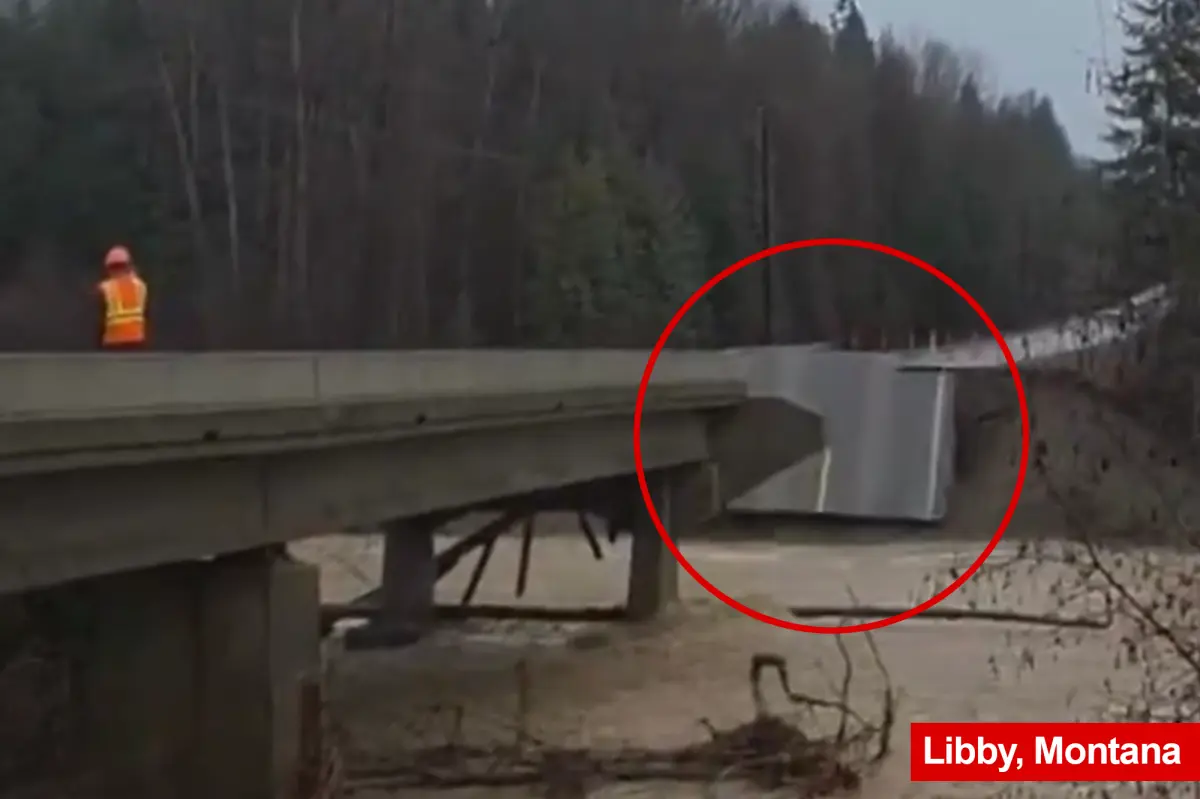
In a stunning display of nature’s raw power, Libby, Montana became the scene of dramatic destruction when an atmospheric river storm system unleashed unprecedented flooding across the Northwest region on December 11. Captured in jaw-dropping footage that has since circulated widely, the moment shows the unbridled force of Libby Creek as it completely tore through a bridge on Farm to Market Road, washing away concrete slabs and infrastructure that had long served the community. Bystanders could only watch helplessly as the raging waters claimed both the bridge and roadway, a visual testament to the immense power water can wield when channeled through narrow creek beds swollen by days of heavy rainfall.
The destruction in Libby represents just one scene in a broader emergency unfolding across Lincoln County and neighboring areas in Northwest Montana. According to local officials, at least five bridges throughout the county have been either severely damaged or completely destroyed by the floodwaters, creating immediate transportation challenges for residents and emergency responders alike. The infrastructure damage has proven so extensive that assessment teams are still working to document the full scope of destruction, even as they simultaneously coordinate recovery efforts. These destroyed bridges don’t merely represent inconveniences—they represent lifelines severed for rural communities that depend on reliable transportation networks to access essential services.
Beyond the visible destruction of roads and bridges, the flooding crisis has triggered cascading public health concerns for residents. The Lincoln County Health Department has issued a boil water advisory for Libby due to potential bacterial contamination in the drinking water system caused by extreme turbidity—essentially, the floodwaters have compromised the clarity of the water supply, potentially introducing harmful pathogens. As the Centers for Disease Control and Prevention explains, such advisories indicate that community water may contain germs capable of causing illness, adding another layer of hardship for residents already dealing with evacuation orders and property damage. The contaminated water supply represents an invisible but serious threat that will likely persist even after floodwaters recede.
The devastation prompted immediate action at the highest levels of state government, with Montana Governor Greg Gianforte declaring a flood emergency in Libby on the same day as the bridge collapse. This declaration mobilizes additional resources and emergency response capabilities to support the affected communities, reflecting the severity of conditions on the ground. The timing proved especially critical as weather forecasts predicted additional rainfall for the region, threatening to worsen already dangerous flooding conditions. The emergency declaration acknowledges both the immediate peril facing residents and the long recovery process that inevitably follows such widespread infrastructure damage.
What makes this flooding event particularly notable is its connection to the atmospheric river phenomenon—a concentrated corridor of moisture in the atmosphere capable of delivering extraordinary amounts of precipitation. These weather systems, sometimes called “rivers in the sky,” can transport water vapor equivalent to 7-15 times the average flow at the mouth of the Mississippi River. When they make landfall and interact with mountainous terrain like that found in Northwest Montana, the result can be catastrophic rainfall totals that overwhelm natural drainage systems and human infrastructure alike. The December atmospheric river event affected not only Montana but swept across much of the Pacific Northwest, creating similar emergencies in neighboring states.
For the people of Libby and surrounding communities in Lincoln County, the road to recovery stretches far ahead. Beyond the immediate emergency response, residents face significant challenges: rebuilding critical infrastructure, ensuring safe water supplies, repairing flood-damaged homes and businesses, and restoring the community connections that the destroyed bridges once facilitated. The dramatic footage of the bridge collapse will likely become an enduring symbol of this disaster—a visual reminder of both nature’s destructive potential and the resilience communities must summon in response. As climate scientists continue to warn that extreme precipitation events may become more frequent and intense in the coming decades, the lessons learned from Libby’s experience may prove valuable for vulnerable communities throughout the American West.