


Community in Uproar Following ICE-Related Shooting in Minneapolis
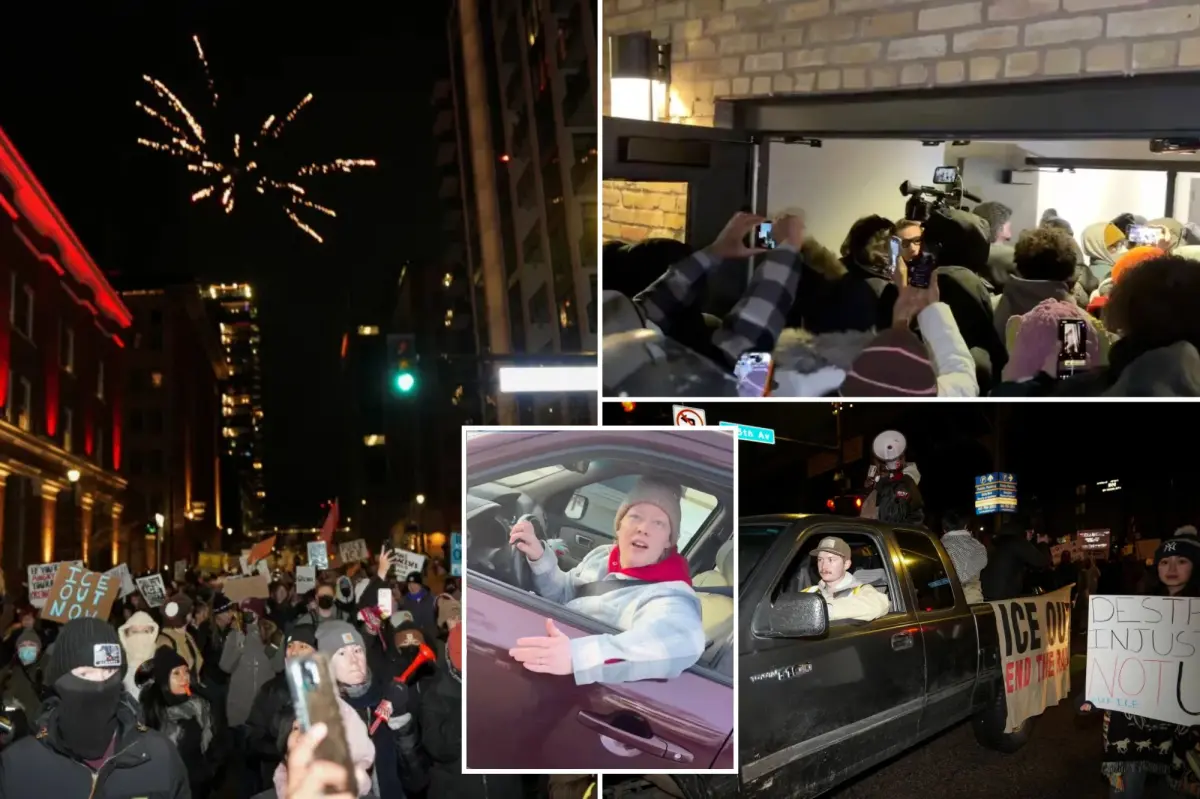
Minneapolis has become the center of intense protests following the tragic death of local activist Renee Nicole Good during a confrontation with Immigration and Customs Enforcement (ICE) officers. On Friday night, hundreds of demonstrators converged on the Hilton Canopy Hotel in Minneapolis, where they believed federal immigration agents were staying. The emotional crowd expressed their outrage through chants, whistles, and drums, while holding signs demanding ICE leave Minnesota. “They need to get the hell out of our city,” expressed one 27-year-old protester with pink hair. The demonstration reflected the deep divisions and raw emotions that have gripped the community in the wake of Wednesday’s fatal incident. Hotel guests looked on with alarm as protesters moved through the area, creating a tense atmosphere that highlighted the heightened emotions surrounding immigration enforcement in the city.
The hotel protest came after another nearby establishment, the Hampton Inn by Hilton in Lakeview, had reportedly canceled reservations for federal officers ahead of an immigration enforcement operation, forcing officials to seek alternative accommodations. This context fueled speculation about ICE agents’ presence at the Canopy Hotel, though it remained unclear if they were actually staying there. Protesters made their intentions clear, with a 31-year-old software developer named Erik telling reporters, “Get out of Minneapolis. They are only fanning the flames. It sucks for the people inside but these corporations need to get the message. These hotels are hosting ICE and we want them out.” The demonstration reflected broader community concerns about federal immigration operations in Minneapolis, a city known for its diverse population and progressive politics. A 41-year-old female protester shared her emotional response: “It feels too good to yell and scream and finally let out all of my feelings. My neighborhood is very diverse. If you were to remove all the diversity, I wouldn’t want to live there. We celebrate difference and diversity here.”
As the evening progressed, the situation grew increasingly tense, with police eventually declaring an “unlawful assembly” in an attempt to restore order. While most demonstrators eventually dispersed from the hotel area, some remained defiant, continuing to bang drums and express their frustration. Reports indicated that arrests began as authorities worked to clear the remaining protesters. This escalation demonstrated the challenge facing local law enforcement caught between federal operations and community outrage. The protests reflected not just anger over Good’s death but deeper concerns about immigration enforcement tactics and their impact on community trust and cohesion. Many demonstrators viewed their actions as necessary to protect their community’s values and stand in solidarity with immigrant residents who feel threatened by ICE operations.
The catalyst for these protests was the death of 37-year-old Renee Nicole Good, who was shot and killed during a confrontation with ICE officers on Wednesday afternoon. Federal officials have stated that Good “weaponized” her purple Honda Pilot by driving it toward ICE agent Jonathan Ross, who fired the fatal shots. The incident occurred during an immigration protest that had already become heated before the deadly confrontation. Video evidence from the scene has become central to understanding what transpired, though interpretations of the footage vary dramatically between federal officials and community members. The incident has sparked intense debate about appropriate use of force by federal agents operating in communities where their presence is already controversial and contested by local residents and some officials.
New details have emerged showing the moments leading up to the shooting. Cellphone video reportedly captured by Agent Ross shows Good’s wife, Rebecca, outside the vehicle taunting ICE officers while Renee remained in the driver’s seat. According to reports, as another agent ordered Good to exit the vehicle, Rebecca can be heard urging her wife to “drive, baby, drive.” Good then allegedly accelerated the vehicle and clipped Ross, who responded by opening fire. In footage taken after the shooting, Rebecca is seen distraught, sobbing and saying “It’s my fault.” These details add complexity to an already polarizing incident, with some viewing Good’s actions as threatening to officer safety while others see the use of deadly force as disproportionate and unnecessary. The couple’s interaction in those final moments has become a painful focal point in understanding the tragic sequence of events.
The aftermath of the shooting has sparked a profound national divide in how the incident is being characterized. President Trump and Department of Homeland Security officials have labeled Good a “domestic terrorist,” framing her actions as a deliberate attack on federal law enforcement. In stark contrast, many local Minneapolis officials have denounced the shooting as a “murder,” arguing that the use of deadly force was unjustified under the circumstances. These competing narratives reflect broader political tensions surrounding immigration enforcement, federal authority in local communities, and appropriate use of force. As investigations continue, the Minneapolis community remains divided and emotional, with protests likely to continue as residents process their grief, anger, and concerns about the relationship between federal agencies and the diverse communities they serve. The tragic death of Renee Nicole Good has become a flashpoint in ongoing national debates about immigration policy, law enforcement tactics, and community autonomy in determining how such policies are implemented in their neighborhoods.