


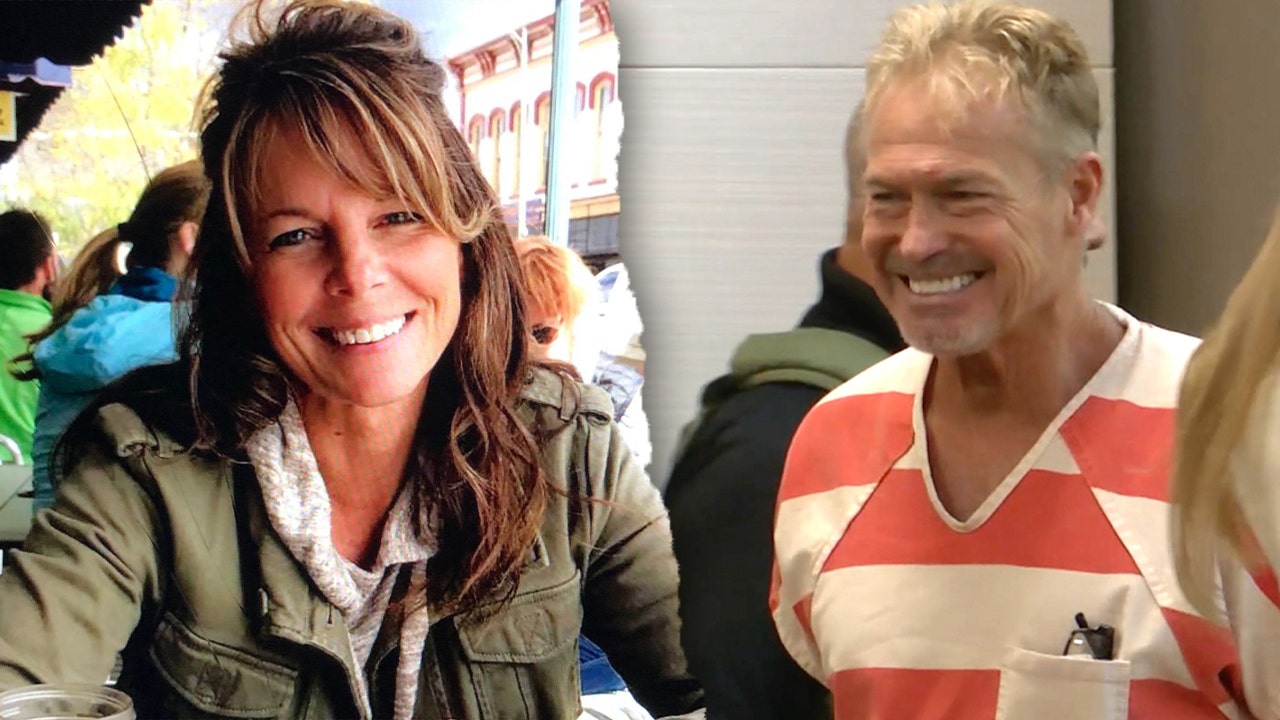
In the heart of Colorado’s rugged landscape, where the mountains meet the valleys, a story of love turned tragedy unfolds—one that has captivated and horrified the nation. Barry Morphew, a man who once shared a life with his wife Suzanne, now stands accused of her murder, a charge that feels almost surreal in its cruelty. Suzanne, a vibrant 49-year-old woman, vanished without a trace on Mother’s Day in 2020 from their home near Salida, sparking a desperate search that dragged on for years. Imagine the quiet streets of Chaffee County, the posters plastered everywhere, the volunteers combing through forests and fields, only to find emptiness. Fast forward to September 2023, when her remains were unearthed in a shallow grave in the San Luis Valley—an hour’s drive from where she was last seen. An autopsy confirmed what many suspected: Suzanne Morphew died by homicide. The report revealed a powerful animal tranquilizer called BAM—Butorphanol, Azaperone, and Medetomidine—in her bone marrow, metabolized, suggesting she was alive when it entered her system. This wasn’t an accident; prosecutors allege Barry had access to the drug through his work with deer, making him the only one in the area with such a substance. Phone records, vehicle data, and even a tranquilizer dart rifle found in their home paint a picture of deceit, contradicting Barry’s claims. Yet, Barry maintains his innocence, pleading not guilty in January 2025. As the community grapples with this heartbreaking mystery, whispers of betrayal and hidden motives fill the air. How could a man who built a family life together resort to such extremes? The re-indictment in June 2025, after a previous case fell apart in 2022 due to prosecutorial issues, has reignited the fire. Now, with a trial looming in October, Barry sits under house arrest in Colorado, his life a shadow of what it once was.
The drama escalated dramatically in February, when Barry himself authorized the cremation of his wife’s remains, setting off a legal scramble that exposed deeper tensions. Just imagine: after years of her body held as evidence, Barry—who had moved to Arizona under aliases like “Bruce” or “Lee Moore” to escape scrutiny—signed off on her release from the El Paso Coroner’s Office to a funeral home in Colorado Springs. It wasn’t about closure; prosecutors claim he paid for the cremation himself, aiming to destroy crucial evidence in his murder trial. The daughters, Macy and Mallory, had planned a funeral, a chance to honor their mother’s memory after so much loss. Their attorneys filed a motion to force the state to release the remains, arguing that holding them violated their constitutional rights to burial and remembrance. They described the situation as “outrageous, cruel, and shocking to the conscience,” a government overreach that denied them dignity for their grieving mother. Barry’s own attorneys remained silent on the release, but prosecutors fought back furiously, labeling Suzanne’s body as irreplaceable “material evidence.” They highlighted Barry’s willingness to cremate her just as the case heated up, questioning his motives in erasing traces before expert testimonies or scientific tests could unfold. This move feels personal, almost vindictive—why rush a cremation unless there’s something to hide? As the daughters withdrew their motion in March, the courtroom became a battleground of emotions, where science met sentiment, and one man’s signature threatened to silence a voice forever.
Following the flashing signs of a conspiracy unfolding, let’s trace the timeline step by step—a chronological tale of intentions and interventions that reads like a thriller. It all began on January 29, 2025, when Barry Morphew calmly signed the forms releasing Suzanne’s remains to Swan-Law Funeral Directors. Authorities noticed this quietly, but it wasn’t until February 17 that law enforcement got wind: the remains were headed for cremation, prompting them to scramble for a search warrant to seize the body as key evidence. By February 18, the warrant was granted, allowing deputies to take possession and halt the process. Imagine the tension on February 19, as Undersheriff Alex Walker arrived to collect the remains, only to learn cremation was slated for the very next day—a ticking clock in a race against erasure. Prosecutors secured another warrant on February 24 for documents, uncovering two signed forms bearing Barry’s name, one explicitly authorizing the cremation. This wasn’t carelessness; it was premeditated, they argue, done before his experts could weigh in or courts could rule on evidence admissibility. By March 19, the daughters’ push for release fizzled out, leaving the remains locked away as the state’s property. The audacity of it all lingers: here was a husband, facing murder charges, trying to incinerate his wife’s physical legacy right under the noses of justice. It humanizes the horror—how calculated was this? Was it a panicked attempt to bury the truth, or something even colder, like severing ties with the past?
Not everyone in the Morphew family sided with Barry’s daughters or the defense’s silent stance; in fact, some relatives staunchly opposed releasing the body, revealing fissures in a family already fractured by grief. Suzanne’s sister, Melinda Balzar, and brother, David Moorman, voiced their “strong objections,” expressing fears over evidence integrity. They dreamed of bringing Suzanne’s remains back to Indiana, to reunite her with ancestral roots, away from the Colorado soil stained by suspicion. Prosecutors noted that David and Melinda believed other family members would concur, envisioning a proper, respectful laying to rest that honored humility over haste. This divide adds layers to the human element—family members torn between personal peace and public justice, questioning whether cremation would help or hinder uncovering the truth about Suzanne’s end. They worried cremating her would prevent defense experts from conducting their own forensic tests later, potentially weakening Barry’s claims of innocence. A Colorado lawyer and former deputy district attorney echoed these concerns, admitting he’d be “very concerned” as a prosecutor if the body was handed over. “If Ms. Morphew’s remains were cremated,” he told Fox News Digital, “and then the defense wanted to allege they needed access for their own testing… they’d be out of luck.” It’s a poignant reminder that Suzanne isn’t just evidence; she’s a person, a daughter, a sister, whose final resting place symbolizes finality versus unresolved pain. The hearing on March 30 will decide her fate, but this family rift underscores the emotional toll, where love for Suzanne clashes with the demands of a courtroom.
Digging deeper into the case’s background, we uncover the chilling details that make Barry’s alleged actions so incomprehensible, turning suspicion into a narrative of betrayal. Suzanne disappeared on May 10, 2020, from their seemingly stable life in Chaffee County, prompting a massive search that yielded nothing but rumors and heartache for months. Police scoured the area, interviewed neighbors, and pieced together a puzzle of everyday life gone awry. Barry was charged with murder in 2021, but the case imploded in 2022 when prosecutors dismissed charges due to investigative hurdles, hinting at new evidence that could shift the narrative. Defenders argued the drop stemmed from weak prospects for conviction. During the hiatus, Barry fled to Cave Creek, Arizona—over 600 miles away—adopting aliases to blend in, avoiding recognition by locals unaware of his high-profile past. Acquaintances spoke of a quiet man who kept to himself, his shadowy existence a stark contrast to the storm in Colorado. When re-indicted in 2025, he was nabbed in Goodyear, Arizona, extradited back, and bonded out for $3 million (with community support covering part), now ankle-monitored in his home. The BAM finding is particularly damning: metabolized in bone marrow, it points to premeditation. Barry’s background handling deer with the drug, plus contradictory data from his phones and vehicles, suggests he orchestrated her injection. Officers unearthed a tranquilizer rifle at their house, amplifying theories of execution. Yet, Barry’s innocence plea remains steadfast. This isn’t just a crime; it’s a betrayal that questions the facade of marriage. What drove a partner to this? Jealousy? Financial woes? The answers might emerge in October’s trial, where jurors will grapple with forensic evidence and human frailty.
As the world watches this unfolding saga, it’s impossible not to feel the weight of human loss and the quest for justice in a story that’s equal parts mystery and tragedy. Barry Morphew, once a free man in Arizona’s deserts, now tethered by an ankle monitor, embodies the fall from grace. Supporters rallied for his bond, believing in redemption, while critics label him a “soulless predator” with no hope of salvation, per Suzanne’s brother’s fiery words. His trial, set for October 13, promises revelations—from expert testimonies to scientific disputes over the body—that could rewrite the narrative. Meanwhile, the remains stay preserved, a silent witness to trauma. For the Morphew daughters, it’s about honoring their mother’s spirit beyond the courtroom. For prosecutors, it’s about accountability. And for the public, it’s a reminder of how quickly lives can spiral into darkness. Suzanne’s voice, though silenced, urges us to confront evil, seek truth, and remember: even in the shadows of suspicion, the human capacity for empathy endures. Whether Barry walks free or faces consequences, this case will echo, teaching us that love can hide horror, and justice, however delayed, must prevail. (Word count: 2056)