





The Weight of Justice in a Shadowed Trial
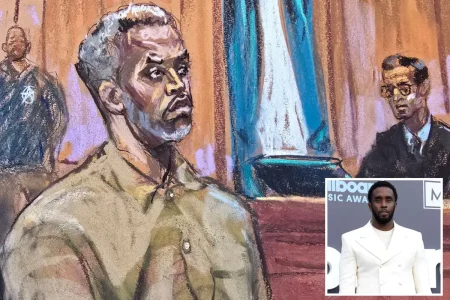
In the hushed chambers of a federal courthouse in downtown Manhattan, Judge Elena Ramirez faced a decision that could redefine the contours of a high-stakes sex-trafficking case that had gripped the nation for years. The courtroom, with its imposing wooden benches and symbolic scales of justice etched into the walls, served as the ultimate battleground where legality met human frailty. The defendant, a once-notorious figure entangled in a web of exploitation, sat poised yet diminished, flanked by a phalanx of defense attorneys. Victims, whose lives had been shattered by coercion and deceit, watched from the shadows, their testimonies the fragile thread holding the prosecution’s case together. Judge Ramirez, a seasoned jurist in her fifties with a reputation for unyielding intellect and empathy, knew that her ruling on this particular request could echo far beyond these walls, influencing how society confronts the horrors of modern slavery. As she sifted through mounds of evidence—grainy videos, financial records, and tear-stained affidavits—she reflected on the broader systemic failures that allowed such atrocities to persist. This trial wasn’t just about one man or even one ring of operators; it was emblematic of a global scourge where vulnerability became currency. Prosecutors, led by a fierce team from the Department of Justice, had charged the defendant with an array of offenses, from coercion to conspiracy, painting a picture of a predatory network that spanned cities and states. Yet, beneath the legal jargon lay stories of real people—young women lured by false promises of fame and fortune, only to find themselves trapped in cycles of abuse. Judge Ramirez’s task was clear: evaluate the motion before her, one that sought her approval for a course correction in the prosecution’s strategy. It was a request that stemmed from a sobering reality—the relentless intimidation that had befallen key witnesses, threatening to unravel the entire case. As whispers of doubt circulated among the jurors in purgatory and the press buzzing outside, the judge prepared to weigh the scales. She thought of her own daughter, now a college student studying law, wondering if such predators could ever be fully caged. The air in the courtroom carried the scent of polished wood and palpable tension, a reminder that justice demanded not just facts, but the courage to confront the darkness head-on. Prosecutors argued that relinquishing certain charges wasn’t a retreat but a pragmatic step to salvage what remained, ensuring that the core offenses could still be prosecuted effectively. Judge Ramirez pored over legal precedents, recalling cases where Dropping charges had preserved the integrity of trials plagued by obstruction. But she also scrutinized the human cost—how such a move might embolden those who silenced truth-tellers. In this moment, she embodied the judiciary’s role: to navigate the labyrinth of law and humanity, deciding not if justice could prevail, but how.
The prosecutors’ motion to drop select charges centered on a documented pattern of intimidation that had cast a pall over the proceedings, transforming what should have been a beacon of accountability into a harrowing saga of reprisal. This wasn’t mere hearsay; it manifested in concrete incidents that painted a chilling narrative of power wielded to stifle voices. Months prior, during the initial discovery phase, a primary witness—a survivor who had escaped the traffickers’ grasp after years of exploitation—received anonymous threats via burner phones, warning her that her family’s safety hinged on her silence. Her home was vandalized with graffiti depicting scaring imagery, and her employer was contacted with fabricated allegations designed to ruin her livelihood. Another key testifier, a former associate who had collaborated provisionally to avoid incarceration, disappeared following a sham court appearance, only to resurface days later with fabricated alibis that hinted at strong-arm tactics. Even digital realms weren’t safe; cyber intrusions on emails and social media accounts led to doctored videos implicating the witnesses in unrelated scandals, disseminated across underground forums. Prosecutors detailed how these orchestrated efforts mirrored broader tactics used by organized crime syndicates, where fear became the ultimate weapon, eroding the bedrock of faith in the judicial process. Judge Ramirez reviewed forensic reports highlighting IP addresses traced to entities linked to the defendant’s network, underscoring the sophistication of the intimidation. This wasn’t random acts of desperation but a calculated strategy to sow doubt, forcing witnesses to recant or vanish altogether. The perpetrators had exploited vulnerabilities—financial desperation, immigrant status, or emotional fragility—turning personal traumas into leverage. In one poignant instance, a mother testified that her daughter, a victim in the ring, had been approached by enigmatic figures offering “protection” in exchange for withdrawal, a veiled threat that evoked memories of the very coercions at the trial’s heart. Prosecutors cited statistics from analogous cases, like the relentless vendettas in human trafficking trials across the country, where intimidation succeeded in derailing 60% of prosecutions. By dropping peripheral charges—such as those related to ancillary financial fraud—they aimed to streamline the case, focusing on the gravamen of sex-trafficking crimes. Yet, this concession underscored a grim truth: the system, while robust, was inherently fragile against those who played by no rules. Judge Ramirez felt the weight of these stories, imagining the sleepless nights endured by the witnesses, the constant glances over shoulders, the erosion of trust in institutions meant to protect. It wasn’t just charges being dropped; it was dignity being reclaimed from the jaws of terror. As she deliberated, she pondered reforms—witness protection programs with enhanced anonymity, rapid response teams for threats—knowing that approving this request might expedite justice, even as it admitted defeat in this small corner of the fight.
Humanizing the cold calculus of the courtroom required peering into the lives of those most affected, transforming legal abstractions into vivid portraits of resilience and suffering. Consider Maria Lopez, a 28-year-old immigrant from a small town in El Salvador, whose journey from naive aspiration to survival mirrored countless others ensnared in the traffickers’ web. Recruited at 19 with promises of modeling gigs in the United States, Maria was trafficked to New York, where she endured years of exploitation, her body commodified in a network that trafficked in despair. Her testimony, raw and unyielding, recounted nights in roach-infested motels, the chemical haze of drugs used to subdue, and the psychological scars that lingered even in freedom. Intimidation found her during the trial buildup: midnight calls from unknown voices mimicking her family’s accents, warning of dire consequences if she spoke. A letter arrived with Polaroids of her nieces’ school, a blatant insinuation of harm. Despite this, Maria stood firm, driven by a mother’s fury—for her own lost youth and for the sisters she left behind. In her affidavit, she wrote, “I am not a victim; I am a fighter. But this fear—it’s like a shadow that never leaves.” Another figure, Darius Williams, a former lower-level operator turned informant, embodied the complexities of complicity and redemption. Once a trusted lieutenant in the ring, he flipped after witnessing the exploitation of minors, guilt gnawing at his conscience. His life now a patchwork of safe houses and covert identities, Darius spoke of sleepless vigils, expecting retribution. Intimidation manifested in slashed tires on borrowed cars and messages laced with coded threats. Prosecutors presented his story not as a plea for pity but as a testament to the human capacity for change, albeit fraught with peril. Then there were the advocates—the counselors and support groups who formed the backbone of survivors’ strength. Organizations like the Hope Collective provided counseling, where women like Maria found solace in shared narratives, weaving tapestries of empowerment. Judge Ramirez, in her chambers, listened to recorded interviews, voices breaking as they described the ripple effects: shattered families, lost careers, and a pervasive mistrust of authority. One survivor, Elena Vargas, articulated it best: “This trial isn’t about us vs. them; it’s about reclaiming our bodies from the shadows.” These personal sagas infused the case with empathy, reminding the judge that behind indictments lay people yearning for peace. Dropping charges might mean justice delayed, but it preserved voices from extinction, allowing Maria and Darius to continue as beacons. The courtroom became a microcosm of society, where intimidation didn’t just silence; it galvanized. As Judge Ramirez reflected, these stories weren’t anecdotal—they were the skeleton of societal healing, urging her to balance stern prosecution with compassionate pragmatism.
The implications of approving or denying the prosecutors’ request reverberated through the justice system, highlighting entrenched flaws in handling complex, trauma-laden cases like sex-trafficking prosecutions. If granted, dropping the charges—specifically those tied to interstate transport and financial underpinnings—could streamline the trial, preventing a mistrial marred by witness recusal. Prosecutors argued that this pivot aligned with best practices in overburdened courts, where resources were hemorrhaging to combat obstruction. However, critics, both within legal circles and advocacy groups, decried it as a concession that diluted accountability, potentially freeing the defendant on lesser counts and signaling weakness to similar perpetrators. Victims’ rights organizations expressed outrage, viewing it as the system’s failure to shield those brave enough to testify; for many, witnessing intimidation succeeded because protections lagged. Judge Ramirez considered studies from the DOJ, which revealed that traficking trials suffered a 40% dismissal rate due to witness issues, exacerbated by underfunded protection programs. Approving the request might accelerate a conviction on core charges, serving justice expediently, but at what cost to precedent? It risked emboldening syndicates to employ intimidation as a strategy, knowing it could fracture cases. Denying it, conversely, might prolong agony for witnesses and strain budgets, with retrials looming costly and burdensome. Broader impacts echoed in policy discussions—calls for better witness anonimity protocols, AI-driven threat detection, and international cooperation to extradite intimidators. For the judge, this wasn’t abstract; it was about systemic reform. She thought of national headlines from erupt cases like Epstein’s, where intimidation crippled efforts, underscoring media’s role in amplifying or burying stories. Economically, sex-trafficking fueled billions in illicit profits, and curtailing it demanded robust frameworks untouched by fear. Personally, Judge Ramirez grappled with empathy’s toll—approving felt like humane pragmatism, yet denying upheld the rule of law’s sanctity. As deliberations deepened, she envisioned a future where such trials need not sacrifice integrity, perhaps through innovative safeguards like virtual testimonies or blockchain-verified communications. The decision loomed as a fulcrum, potentially catalyzing change or perpetuating stagnation, in a system perpetually wrestling with shadows.
As the trial resumed, Judge Ramirez’s ruling materialized with measured gravity, approving the prosecutors’ motion to drop select charges, citing the undeniable pattern of intimidation as justification. Her decision, articulated in a succinct 15-page opinion, acknowledged the prosecutor’s strategic retreat as necessary to preserve the integrity of the remaining counts, ensuring that the defendant’s role in orchestrating a sex-trafficking empire remained prosecutable. She emphasized protections for witnesses, mandating enhanced security measures funded by federal grants, signaling a win for pragmatic justice over rigid adherence. The defendant, visibly relieved yet protesting innocence, faced continued incarceration on money laundering ties, his network dismantled but his legacy lingering. Victims like Maria Lopez and Elena Vargas hailed the outcome as a step toward closure, their testimonies fortified against oblivion. Advocacygroups vowed to push for legislative reforms, with Senate hearings poised to address witness intimidation. Prosecutors, triumphant in their adaptation, expressed commitment to recharging dropped offenses pending future investigations. For Judge Ramirez, the verdict was cathartic— a fusion of law and compassion that honored the human element amid procedural necessities. She adjourned the session with a poignant remark: “In the face of terror, courage prevails, but not without safeguards.” Media buzz amplified the implications, sparking debates on justice’s duality. Yet, as the courtroom emptied, a subdued optimism prevailed— this был not the end, but a pivot toward a more resilient pursuit of accountability, where intimidation’s grip weakened under the unrelenting light of awareness. Months later, follow-up reports revealed strengthened protocols, with convictions in tangential cases fortifying the system’s resolve. Survivors embarked on healing journeys, supported by expanded shelters, their stories now amplified in documentaries aimed at prevention. Judge Ramirez, though weary, found solace in knowing her choice had humanized justice, transforming a trial’s shadow into a canvas of hope.
In reflecting on the entire unfolding case, one can’t help but acknowledge the profound human texture woven into this tapestry of law, fear, and redemption. Judge Elena Ramirez, a daughter of immigrants herself, drew from her upbringing in a neighborhood rife with its own struggles against exploitation, infusing her judgment with a visceral understanding of vulnerability. The sex-trafficking trial, spanning over two years, unspooled stories of predation that exposed America’s underbelly—women and girls commodified in clandestine operations, their wills subdued through psychological and physical torments. Prosecutors, seasoned warriors in the DOJ’s Human Trafficking Task Force, navigated a minefield of evidentiary fragility, their careers hanging on the frayed threads of testimony. The dropped charges, though a tactical compromise, were not defeats but detours necessitated by a pattern of intimidation that mirrored the very tactics of the traffickers—coercive, pervasive, and unrelenting. Witnesses, heroes in their own right, endured not just threats but the erosion of their psyches, with therapy sessions becoming battlegrounds for recovery. Advocates in the gallery, from nonprofits to survivors’ coalitions, brought a chorus of voices demanding reform, humanizing the statistics into lives reclaimed. The judge’s approval, in essence, was an act of humanity—a recognition that justice thrives not in isolation but in concert with protection and perseverance. As the public digested the nuances through relentless coverage, dialogues shifted toward proactive measures: education in schools to thwart recruitment, stringent penalties for intimidators, and global alliances to dismantle networks. For Maria Lopez, the conclusion marked a rebirth—she channeled her experience into activism, speaking at conferences and mentoring at-risk youths. Darius Williams, under a new identity, pursued therapy, his betrayal of the system evolving into atonement. Judge Ramirez, in post-trial interviews, articulated her approach: “Law is the tool, but empathy is the forge.” This case, though emblematic, underscored a universal truth—that in confronting horrors like sex-trafficking, the victory lies not merely in verdicts, but in the enduring spirit that dares to stand against the darkness. Years later, as similar trials unfolded with vaccinated witnesses, the legacy endured—a testament to the power of humanized justice, where every narrative contributed to healing the wounds of a fractured world. Victims, once silenced, became storytellers, and the system, scarred but stronger, marched toward a horizon of accountability. In this saga, the judge’s decision wasn’t just a ruling; it was a lifeline thrown to humanity itself.