







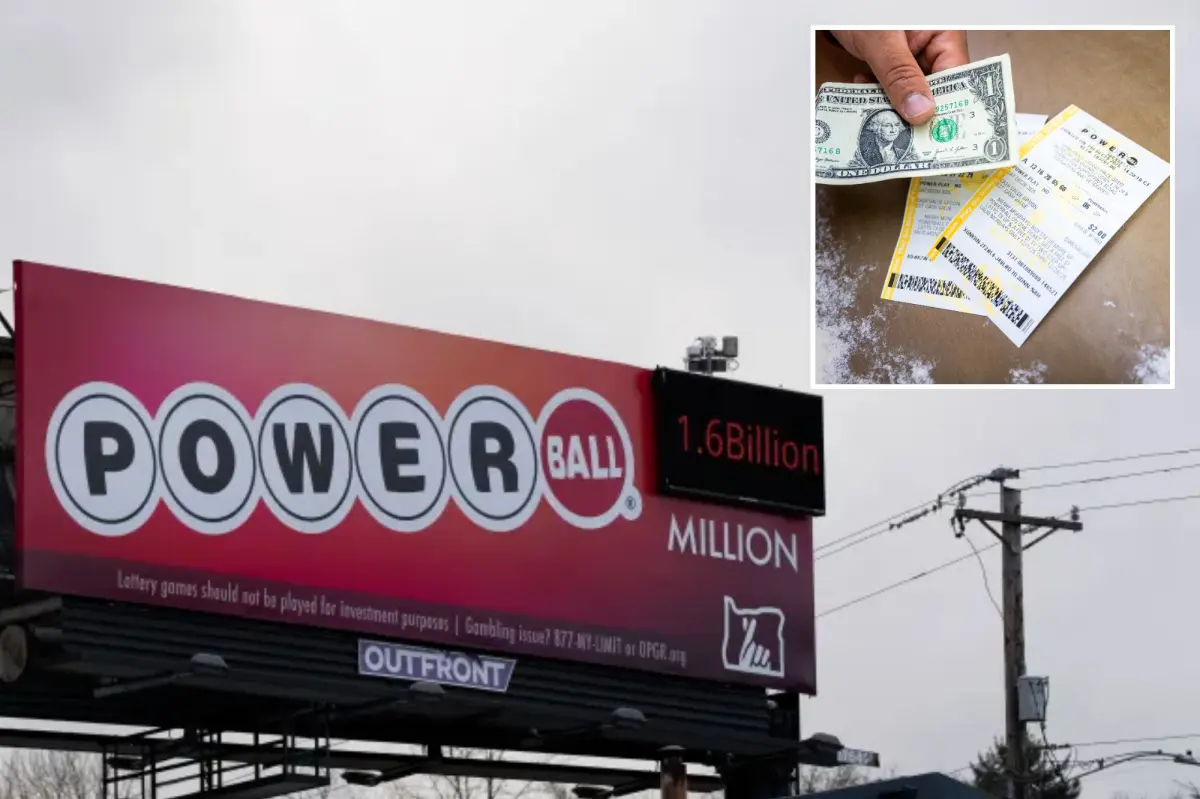
Powerball Jackpot Soars to $1.7 Billion: A Christmas Eve Chance at Life-Changing Fortune
As the holiday season unfolds across America, an extraordinary opportunity shimmers on the horizon—a Powerball jackpot that has climbed to a staggering $1.7 billion after Monday night’s drawing failed to produce a grand prize winner. The numbers 3, 18, 36, 41, 54, with Powerball 7, came and went without anyone claiming the massive prize, marking the 46th consecutive drawing without a jackpot winner since September 6th. This remarkable streak has pushed the prize to become the fourth-largest in U.S. lottery history, creating a nationwide buzz as Christmas Eve approaches with the tantalizing promise of an unprecedented holiday gift for some fortunate player.
The timing couldn’t be more dramatic—Wednesday’s drawing falls on Christmas Eve, potentially transforming someone’s holiday season from ordinary to extraordinary in the blink of an eye. Imagine the scene: families gathered around their Christmas trees, holiday music playing softly in the background, and someone checking their ticket to discover they’ve just become a billionaire. It’s the stuff of modern fairy tales, a rags-to-riches story unfolding in real time during what is already considered the most magical time of the year. For $2—less than the price of a fancy coffee—participants across 45 states, Washington D.C., Puerto Rico, and the U.S. Virgin Islands are purchasing not just lottery tickets but moments of hope and possibility during a season already filled with anticipation.
The astronomical odds—1 in 292.2 million—reveal the clever design behind Powerball’s enduring popularity. These nearly impossible odds ensure that jackpots grow to headline-grabbing amounts as they roll over week after week without a winner. The strategy works brilliantly, creating a cycle where larger jackpots attract more players, which in turn increases the potential size of future jackpots when no one wins. Lottery officials are quick to point out that players have far better chances at winning smaller prizes, which range from $4 to millions of dollars depending on how many numbers match. With drawings held three times weekly (Mondays, Wednesdays, and Saturdays), the game maintains a consistent presence in American culture—a regular rhythm of possibility that pulses through convenience stores, gas stations, and grocery checkouts nationwide.
Behind the excitement lies the practical reality of what winning actually means. The advertised $1.7 billion represents the annuity option—30 payments stretching over 29 years, a steady income stream that would support generations of a family. However, history shows that winners overwhelmingly opt for the immediate cash payment, which for this jackpot would be approximately $735.3 million before taxes. This choice reflects our human preference for immediate gratification, even when it means receiving less than half the advertised amount. Financial advisors often suggest that winners take a deep breath before making this momentous decision—the difference between the two options could be nearly a billion dollars, enough to fundamentally alter not just the winner’s life but potentially their entire community through philanthropic efforts.
The cultural phenomenon of Powerball extends far beyond the simple act of purchasing tickets. It sparks conversations in workplaces across America about dream homes, fantasy vacations, and charitable foundations that might be established. Office pools form, temporarily transforming coworkers into potential business partners in the unlikely but exhilarating prospect of shared wealth. Social media lights up with declarations of intended purchases and imagined resignation letters. Even those who never play find themselves drawn into hypothetical discussions: “What would you do with $1.7 billion?” The question itself becomes a window into values, priorities, and the human imagination—revealing as much about who we are as what we might become with unlimited resources.
As Christmas Eve approaches, millions of Americans will tuck Powerball tickets into wallets, stick them on refrigerators, or place them in holiday cards as stocking stuffers—small rectangles of paper carrying enormous dreams. Most tickets will ultimately be discarded, joining the billions of others that came before them. Yet something profound happens in that space between purchase and drawing—a moment when anything seems possible, when ordinary people allow themselves to imagine extraordinary lives. Whether viewed as entertainment, a voluntary tax, or a legitimate investment strategy, Powerball has become woven into the American experience. And for someone, somewhere, Wednesday night might bring the ultimate Christmas miracle—a $1.7 billion reminder that sometimes, against all odds, dreams do come true.