




Trump’s Bombshell: Iran’s Supreme Leader Reported Dead – A Power Vacuum Looms
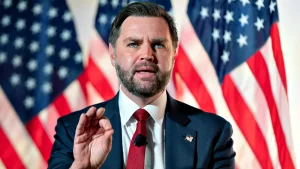
In a stunning turn of events that could reshape Middle Eastern geopolitics, President Donald Trump announced over the weekend that Iran’s Supreme Leader, Ayatollah Ali Khamenei, has died. The declaration, made during a rally in Florida, came without immediate corroboration from official channels, leaving the world to grapple with the implications of such a seismic shift in Iranian leadership. Trump, known for his theatrical style, framed it as a moment of triumph for US policy, declaring, “The supreme leader is no more – it’s a bright day for freedom.” But as news outlets scramble for verification, questions abound about the accuracy of the claim and the inevitable succession battle that would follow.
This announcement arrives at a precarious time for Iran, a nation already teetering under economic sanctions and domestic unrest. Ayatollah Khamenei, who ascended to the supreme leadership in 1989, has been the unyielding architect of Iran’s Islamic Republic for over three decades. His iron grip on power, through the Guardian Council and Revolutionary Guards, has suppressed dissent and steered the country’s nuclear ambitions and regional influence. Rumors of his declining health have circulated for years, fueled by infrequent public appearances, yet his demise – if confirmed – would mark the end of an era defined by defiance against the West. Experts note that Khamenei’s passing isn’t just symbolic; it’s a potential catalyst for upheaval in a regime built on his ideology, potentially destabilizing alliances from Tehran to Hezbollah in Lebanon.
If Trump’s words hold water, the spotlight turns to the intricate machinery of Iranian succession. Unlike presidential elections that draw global attention, the choice of a new supreme leader is an opaque affair handled by Iran’s Assembly of Experts, a body of 88 clerics elected indirectly. The process could take weeks or months, involving consensus-building among factions. Leading contenders include hardliners like Ayatollah Ahmad Jannati, the 98-year-old head of the Guardian Council, who epitomizes orthodox revolutionary zeal, and more pragmatic figures such as Ayatollah Mohammad Yazdi, a septuagenarian jurist with ties to Khamenei’s inner circle. Whispers also point to potential outsiders like Ayatollah Ebrahim Raisi, Iran’s current president, whose record suppressing opposition aligns closely with Khamenei’s legacy, or even younger reformers within the clerical establishment who might soften the regime’s stance.
The geopolitical ramifications extend far beyond Iran’s borders, potentially redrawing the map of Middle Eastern power dynamics. Iran stands as a linchpin in the region’s intricate web of alliances, wielding influence through proxy groups in Syria, Yemen, and Iraq. Khamenei’s death could embolden reformists seeking détente with the West or, conversely, provoke a surge in militancy as factions vie for control. Analysts warn of a “succession struggle” echoing the tensions post-Khomeini’s era in the late 1980s, when internal purges solidified Khamenei’s rise. For the United States, Trump’s assertion adds layers to ongoing talks on nuclear deals and sanctions relief; a moderate successor might ease tensions, while a hawkish one could escalate covert operations or regional conflicts.
Internationally, reactions have been a mix of skepticism and alarm. European allies, already wary of Trump’s unpredictable diplomacy, called for substantiated proof, with German Chancellor Angela Merkel urging restraint. In contrast, Israel’s Prime Minister Benjamin Netanyahu applauded the potential shift, viewing it as a blow to Iran’s “axis of terror.” On the streets of Tehran, shrouded in uncertainty, Iranian citizens expressed cautious optimism; social media buzzed with memes questioning the regime’s future, though censorship swiftly curtailed open discourse. For journalists on the ground, verifying the claim remains elusive, as Iranian officials neither confirm nor deny, maintaining a veil of silence that only heightens global intrigue.
Looking ahead, the confirmation of Khamenei’s death – or its debunking – will hinge on credible reports from diplomatic sources or leaked intelligence. Regardless, this episode underscores the fragility of authoritarian regimes reliant on a single charismatic figure. As the world watches, one thing is clear: the next chapter in Iran’s story could redefine international relations for decades. In the meantime, Trump’s words have ignited a firestorm, reminding us that in the fast-paced theater of global politics, truth and rumor often blur into the same headline-grabbing drama.
Historians might later frame this as a pivotal moment, akin to the 1979 Iranian Revolution that ousted the Shah, illustrating how sudden leadership vacuums can unleash unpredictable forces. For now, the focus remains on potential successors who could either perpetuate Khamenei’s vision of an Islamic caliphate or steer toward incremental reforms. Figures like Ayatollah Mohammad-Taqi Mesbah-Yazdi, an ultra-conservative ideologue with a following among the Basij militia, represent the extreme wing, committed to exporting Iran’s revolutionary model. On the other side, clerics such as Ayatollah Abdol-Nasser Hemmati, less steeped in the old-guard rhetoric, might advocate for economic pragmatism over ideological purity. The decision won’t be democratic; it’s a clerical vetting process that prizes loyalty to velayat-e faqih, the doctrine of guardianship by religious jurists.
Diplomatically, the United States finds itself in a paradoxical position. Trump’s hawkish Iran policy, epitomized by the 2018 withdrawal from the nuclear accord and maximum pressure sanctions, aimed to isolate Tehran economically. If Khamenei is indeed gone, it could present an opportunity for renegotiation, particularly under President-elect Joe Biden’s anticipated return to diplomacy. Yet, Trump’s premature declaration risks alienating allies who perceive it as self-serving political theater. Intelligence officials, speaking anonymously, suggest the announcement might be based on intercepted communications or defectors’ testimonies