




Portland’s Drug Enforcement Shift: Balancing Compassion with Accountability
In a significant policy reversal that contrasts sharply with neighboring Seattle’s approach, Multnomah County District Attorney Nathan Vasquez has announced that Portland will begin prosecuting individuals who fail to engage in treatment after drug possession arrests. This shift comes after a year of attempting a deflection-only strategy following Oregon’s decriminalization of hard drugs—an experiment Vasquez now considers unsuccessful. “Our goal is to get people help and keep them out of the criminal justice system,” Vasquez explained, “but there needs to be real consequences if people refuse to get help.” Under the new policy, individuals arrested for drug possession will still initially be offered treatment and services, but will face prosecution if they fail to meaningfully engage with these programs over a 90-day period.
The decision represents a targeted approach focusing on the one aspect Vasquez’s office directly controls: who gets prosecuted. Rather than an outright abandonment of treatment-first principles, the policy aims to introduce accountability while still prioritizing recovery. The District Attorney’s office is now working closely with the county’s Health Department and commissioners to improve outcomes and establish clear criteria for the deflection program. Adam Gibbs, general counsel for the DA’s office, emphasized that they are “doing the hard work of coordinating with the Health Department and commissioners to promote alignment on program outcomes and criteria,” with prosecution intended only for those who consistently refuse to engage with recovery services. This approach mirrors what surrounding counties have already implemented, suggesting Portland had been an outlier in its purely deflection-based strategy.
Recovery advocates have expressed support for the policy shift, highlighting the critical role accountability can play in addiction treatment. Lance Orton, executive director of CityTeam Portland, praised Vasquez’s approach as “balancing compassion with meaningful consequences,” noting that the current deflection program has shown disappointing results despite significant financial investment. “Nearly 75% of the men and women in our residential recovery program are court-mandated, and every one of them will tell you that being directed into treatment was the turning point in their lives,” Orton said. This real-world evidence suggests that accountability mechanisms, when properly implemented, can significantly improve recovery outcomes by providing the structure some individuals need to commit to treatment. The recovery community’s endorsement adds credibility to the policy shift, framing it as pro-treatment rather than simply punitive.
However, questions remain about whether Multnomah County’s treatment infrastructure can support this tougher enforcement approach. County Commissioner Meghan Moyer has expressed concerns about existing gaps in the addiction treatment system, warning against over-reliance on incarceration when treatment options may be limited. “We have some gaps in our system where we can’t promise that if you go to detox, the minute that you are done, we have a bed for you in the right level of care,” Moyer cautioned. This highlights a common challenge in addiction policy: enforcement mechanisms may be meaningless or even counterproductive without sufficient treatment capacity to support them. Sheriff Nicole Morrisey O’Donnell similarly emphasized that county jails are not equipped to serve as treatment centers, while acknowledging that some level of accountability is necessary when voluntary approaches fail.
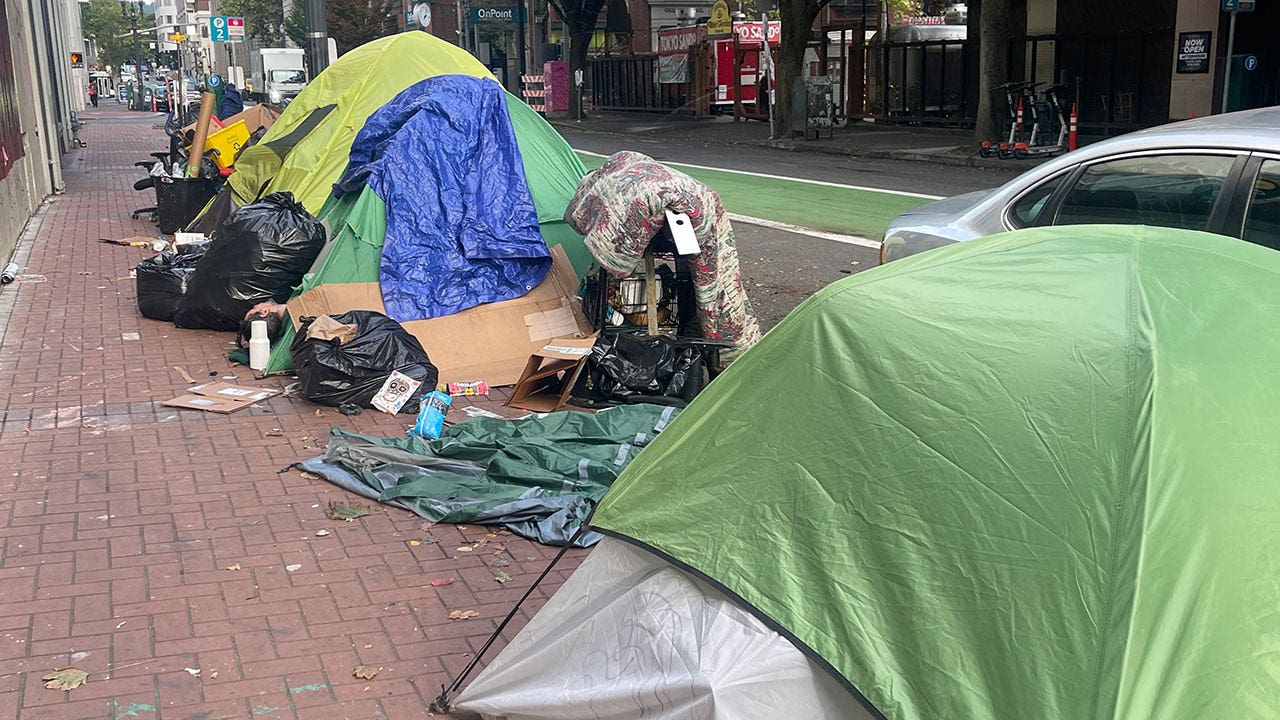
Portland’s policy shift comes as neighboring Seattle moves in the opposite direction, with reduced prosecution of drug possession cases—a contrast that has drawn criticism from those concerned about public safety. Conservative commentator Jason Rantz characterized Portland’s decision as “finally admitting what Seattle’s leaders still refuse to say out loud—that enabling addiction is the kind of ‘compassion’ that kills people.” Vasquez himself pointed to Portland’s own experience with decriminalization as a cautionary tale, noting “devastating” results including hundreds of overdose deaths. “When you stop making arrests, that’s decriminalization, and it’s extremely damaging,” he stated, adding that “nobody wants to walk through clouds of fentanyl smoke—especially downtown.” This direct criticism of Seattle’s approach highlights the growing regional divide in how cities address substance use disorders and public drug activity.
Seattle officials have pushed back against characterizations that the city has abandoned drug enforcement, with police data showing a 21% increase in narcotics-related arrests in 2025 compared to 2024. The Seattle Police Department emphasized its ongoing coordination with the Mayor’s Office and City Attorney’s Office, stating that officers remain committed to enforcement while “treating people with dignity and respect.” This response suggests that even as broader policy approaches diverge, the day-to-day reality of enforcement may be more nuanced than the political framing suggests. Portland’s new approach—with its 90-day window for treatment engagement before prosecution—represents an attempt to find middle ground between the harshest enforcement models and the complete decriminalization that has fallen out of favor as overdose deaths continue to rise. As both cities continue to refine their strategies, the outcomes of these contrasting approaches will likely influence drug policy decisions across the country, particularly in urban areas struggling with similar challenges of public drug use, addiction, and limited treatment resources.