

Pope Leo XIV Stands Firm: “No Fear” of Trump’s Rebuke Amid Nuclear and Policy Tensions
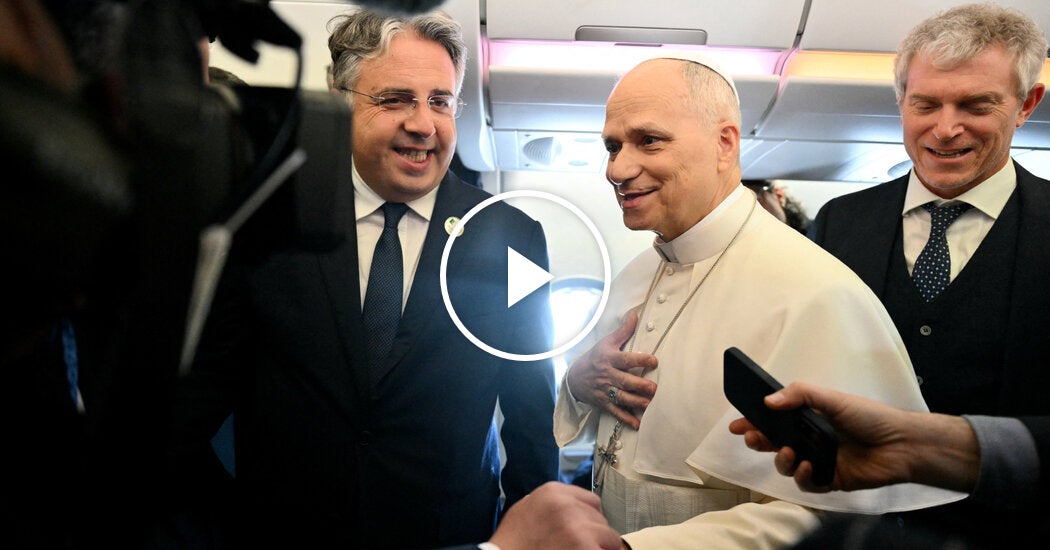
Pope Leo XIV Shaking Hands Aboard an Airplane, Symbolizing His Global Stance. (Credit: NYT)
In the swirling vortex of geopolitics and religious doctrine, a defiant voice from the Vatican has echoed louder than ever. Pope Leo XIV, known for his unwavering critiques of militarism and social decay, has fired back at U.S. President Donald Trump’s sharp criticisms, declaring an unyielding commitment to the Gospel’s message of peace. The pontiff’s words come at a pivotal moment where the lines between spiritual leadership and political power seem destined to collide, raising questions about the Vatican’s role in an increasingly divided world.
The confrontation unfolded on Sunday when Trump took to social media and public statements to lambast the Pope, targeting his positions on America’s foreign policy, particularly the ongoing war with Iran. Trump, a proponent of aggressive military strategies, accused the pontiff of endorsing views that he sees as dangerously permissive. “We don’t like a pope that’s going to say that it’s OK to have a nuclear weapon. We don’t want a pope that says crime is OK in our cities. I don’t like it. I’m not a big fan of Pope Leo,” Trump tweeted, his words dripping with indignation. This outburst isn’t isolated; it’s part of a pattern where Trump has frequently clashed with religious figures who challenge his policies, from immigration restrictions to environmental skepticism. The President’s criticism highlights a broader tension, where religious leaders like Pope Leo are navigating a landscape where outspoken faith can invite political backlash, blurring the sacred and the secular.
Pope Leo, ascending to the papal throne in a time of global upheaval, has consistently positioned himself as a peacemaker in turbulent waters. Formerly known as Cardinal Alessandro Romano before his election in 2020, he inherited the Catholic Church’s rich tradition of advocating for the marginalized, but his tenure has been marked by bold stances against what he views as the excesses of power. As a vocal opponent of the Iran conflict—a war that has claimed thousands of lives and destabilized the Middle East—Leo XIV has repeatedly called for diplomatic resolution over military escalation. His encyclical, “Peace in the Storm,” published in 2024, argued against the proliferation of nuclear arsenals, framing them as moral abominations that threaten humanity’s shared future. This document, drawing parallels to historical calls for disarmament by previous popes like John Paul II, resonated with anti-war activists worldwide but drew fire from hawks in Washington, including Trump, who touted enhanced military capabilities as essential for national security.
Far from backing down, Pope Leo responded with serene resolve in a press briefing on Monday. Clutching his papal seal, he addressed the media with the poise of a leader accustomed to timeless truths. “I have no fear, neither of the Trump administration nor of speaking out loudly about the message of the Gospel. And that’s what I believe. I am called to do what the Church is called to do,” he stated, his voice steady amid the flurry of journalists. He emphasized that the Vatican isn’t in the business of crafting foreign policy, clarifying that his comments stem from spiritual imperatives rather than partisan agendas. “We are not politicians, we are not looking to make ‘foreign policy,’ as he calls it, with the same perspective that he might understand it. But I do believe that the message of the Gospel—’blessed are the peacemakers’—is the message the world needs to hear today.” These words, rooted in the Sermon on the Mount, serve as a counterpoint to Trump’s rhetoric, underscoring the Pope’s view that true leadership transcends political divides to champion compassion and reconciliation.
The ramifications of this exchange extend far beyond a verbal sparring match, delving into the delicate interplay between church and state. Historically, popes have often found themselves at odds with world leaders, from Henry VIII’s rejection of the Church’s authority to more recent tensions with authoritarian regimes. In modern times, Pope John Paul’s influence helped dismantle communism in Eastern Europe, while Pope Francis tread carefully in his dealings with global issues like climate change. Leo XIV’s defiance mirrors those precedents, potentially emboldening other faith leaders to speak out against policies they deem unjust. Analysts point out that Trump’s dismissal could have international repercussions, straining U.S.-Vatican relations at a time when alliances are crucial for addressing global challenges like migration and poverty. Vatican’s diplomatic corps, long adept at navigating political minefields, might leverage this moment to amplify calls for ethical governance, reminding leaders that moral accountability can’t be sidestepped.
Looking ahead, the standoff presents an opportunity for reflection on the evolving role of religion in public discourse. As the 2028 elections loom, Trump’s continued provocations could galvanize constituencies on both sides, with conservatives rallying around his nationalist agenda and progressives embracing the Pope’s pacifist ethos. Experts in religious studies, such as Dr. Elena Marquez from Georgetown University, argue that Pope Leo’s stance reinvigorates the Church’s prophetic voice. “In an age of polarization, figures like Pope Leo remind us that faith can bridge divides rather than widen them,” she notes. Yet, challenges persist—Vatican insiders whisper of internal debates over diplomatic strategies, and Trump’s redefine of American identity test the limits of global cooperation. Whether this clash leads to mutual respect or entrenched division remains to be seen, but one thing is clear: in the tapestry of history, moments like these often define eras, pushing society to confront the essence of peace and power.
As the sun sets on another day of international intrigue, Pope Leo XIV’s response stands as a testament to timeless courage. His words, steeped in centuries of Catholic tradition, echo through halls of power and hearts of believers alike, urging a world weary of conflict to embrace the radical simplicity of the Gospel. While Trump may dismiss him as unfavorably, the Pope’s unwavering gaze toward Jesus’ teachings suggests that faith, not fear, will guide the Church’s path forward. In this era of uncertainty, Leo XIV’s pledge serves as a beacon, proving that even in the face of presidential ire, the call for peace endures.