





The Tension in the City That Never Sleeps
In the bustling streets of New York City, where skyscrapers touch the clouds and the hum of life never fades, an ordinary Saturday morning turned into a powder keg of fear and division. It started innocently enough—just another round of protests outside Gracie Mansion, the elegant home of Mayor Zohran Mamdani, perched near the serene East End Avenue. On one side, right-wing activist Jake Lang stood firm, rallying supporters against what he saw as an encroachment of public Muslim prayer, a stance rooted in his deep-seated beliefs about preserving cultural norms. His group, small but vocal, waved signs and chanted slogans, evoking a sense of protectiveness over their version of American identity. Meanwhile, counter-protesters, fueled by a desire for inclusivity and religious freedom, gathered nearby, their hearts pounding with righteous indignation. The air was thick with anticipation, as if the city itself held its breath, knowing how fragile peace could be in a melting pot like this. Police tried to maintain separation, barricades and officers forming a human shield between the factions. Tensions simmered beneath the surface, a reflection of broader national divides—racial, religious, and ideological—that have fractured communities across the country. For many residents watching from their windows or passing by on their daily commutes, it felt like a microcosm of America’s soul-searching: who gets to claim public space, and at what cost?
A Spark Ignites Chaos
But then, like a match to dry tinder, confrontation erupted. Accounts describe pepper spray misting the air as a altercation flared between the groups, eyes stinging and voices rising in panic. Amid the melee, an 18-year-old counter-protester, Emir Balat, allegedly snatched a device, ignited it, and hurled it toward the opposing crowd with a chilling shout: “Allahu Akbar”—a phrase that echoes through history, sometimes a cry of faith, often twisted in terror. In a blur of motion, he grabbed a second device from a 19-year-old accomplice, Ibrahim Kayumi, lit it, and dashed to escape, leaving chaos in his wake. The makeshift bombs, improvised explosive devices (IEDs), sailed through the air before scattering, their fuses fizzling but not exploding, a narrow miss that could have shattered lives. Imagine the horror etched on faces—the mothers shielding children, the elderly clutching walkers, the passersby frozen in disbelief. This wasn’t just a clash of opinions; it was a visceral reminder of human fragility. Police, swift and relentless, apprehended the two young men, cuffing them amidst the fray. For Balat and Kayumi, presumably driven by passion or misplaced anger in their formative years, this moment marked a crossroads, transforming from protesters to suspects in a blink. The NYPD, ever vigilant, cordoned off the street, their blue uniforms a steady force against panic, as emergency crews assessed the damage. Residents, some still in pajamas, evacuated buildings, hearts racing, wondering if their safe haven had just cracked.
The Shadow of Suspicion Lurks
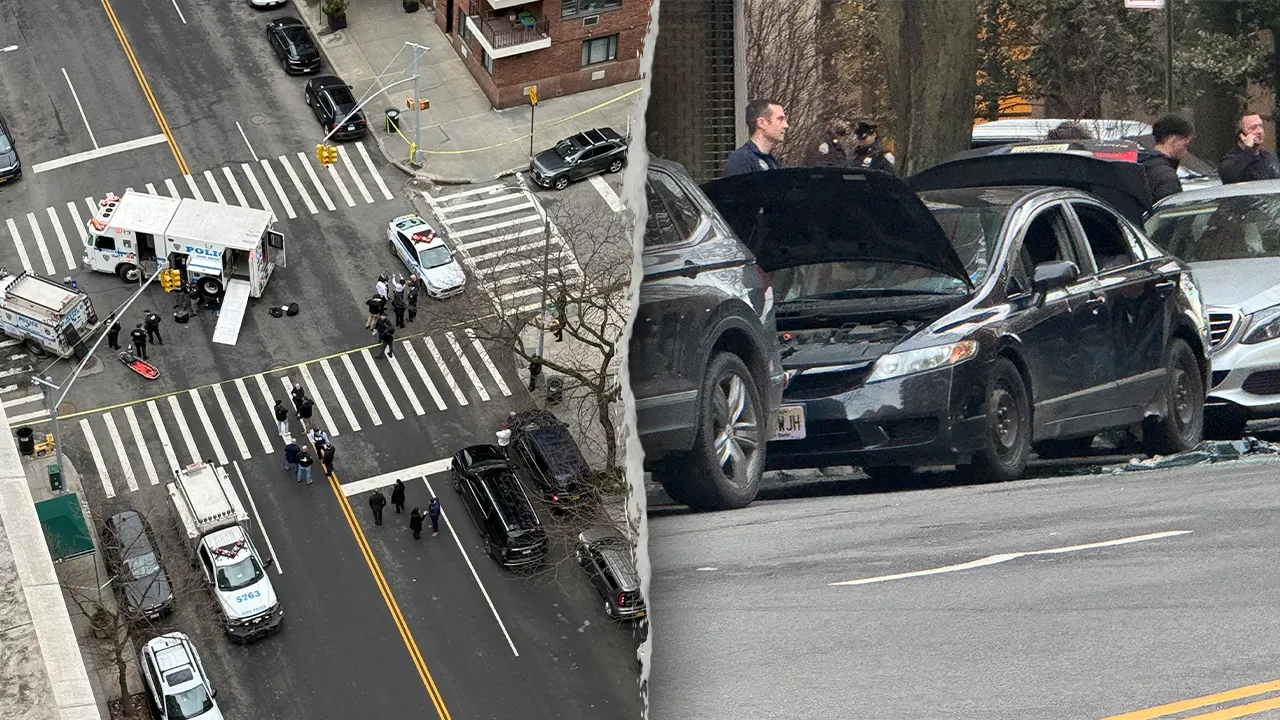
As the day wore on, a third suspicious device emerged, discovered tucked inside a vehicle on East End Avenue between 81st and 82nd streets. The NYPD’s announcement reverberated through the neighborhood, sending waves of anxiety rippling outward. Officers, trained for such perils, evacuated nearby apartments and stores—families herding pets, grabbing essentials, the mundane interrupted by fear. Shops closed early, sidewalks emptied, and the usually vibrant Upper East Side fell eerily silent. The Bomb Squad arrived, their protective gear gleaming, methodically X-raying and neutralizing the threat. By evening, the NYPD confirmed the safe removal of the device, allowing evacuees to trickle back home with a sigh of relief, though the road remained sealed to traffic, a scar on the city’s pulse. This incident, building on the Saturday explosion, painted a picture of an orchestrated menace. Federal sources whispered that one device was bona fide—an IED packed with enough punch to cause “serious injury or death,” a phrase that conjures images of mangled limbs and grief-stricken families. It humanized the terror: not some distant atrocity, but here, in manholes and mailboxes, ready to explode. Retired NYPD inspector Paul Mauro, a voice of experience, called it out—a device charged with TATP, triacetone triperoxide, a explosive favored by terrorists for its undetectable, volatile nature. Not the rough-and-ready bombs of street thugs, but the handiwork of someone with disturbing know-how. The smell of danger lingered; was this isolated fury or the tip of a iceberg threatening the fabric of unity?
Divergent Voices and Echoing Accusations
Mayor Zohran Mamdani, a symbol of progressive leadership in a polarized city, broke his silence Sunday, not on the bombs themselves, but on the seed of discord. He denounced Jake Lang as a “white supremacist,” casting his protest as “rooted in bigotry and racism,” an affront to New York’s cherished diversity. For Mamdani, whose role places him at the helm of millions, this was personal—a defense of the working-class immigrants, the Muslim families, the tapestry that defines the city. He envisioned a New York where hate finds no foothold, where people of all faiths pray freely, whether in mosques, temples, or synagogues. But Lang, unbowed, flipped the narrative, insisting the bombs were lobbed his way by pro-Islam activists, painting himself as the victim, a defender of secular space against creeping radicalism. This clash of stories underscores the human element: politicians leveraging tragedy for agendas, activists grappling with identities in a world of hashtags and division. For everyday New Yorkers, it raised questions—how do we bridge divides when fingers point in opposite directions? Families in the neighborhood shared stories of unease; one resident spoke of sleepless nights, wondering if their children would play in parks shadowed by such unrest. The arrests of Balat and Kayumi added layers: young men, perhaps radicalized by online echo chambers, their futures derailed in one explosive act.
Unpacking the Peril and Investigation’s Depth
Delving deeper, the devices hinted at a sophistication that chills the blood. TATP, as described, isn’t your garden-variety firecracker; it’s a unstable beast, hard to detect yet devastating, often linked to global terror plots. Imagine chemists in hidden labs, fiddling with acetone and peroxides, crafting killers that could level a room or a block. The Bomb Squad, heroes in hazmat suits, transported the rendered-safe explosives to Quantico, Virginia, for forensic dissection—questions swirling about chemical signatures, detonation traces, and potential networks. A vehicle registered to a relative of one suspect was found nearby, a breadcrumb in the puzzle, possibly explaining logistics in their flight. This wasn’t random; it felt premeditated, a reflection of deeper societal rifts. For investigators, it meant poring over CCTV, tracking digital footprints, piecing together motives from social media rants. The broader impact? Americans everywhere felt the ripple—reminders of January 6 pipe bombs, DC threats, the fragility of democratic discourse. In homes across the city, parents hugged kids tighter, while Fox News broadcasts fueled debates on extremism’s rise. Humanizing it: these weren’t faceless villains, but individuals shaped by environments of inequality, where voices of hate drown out calls for unity. The investigation promised clarity, but for now, suspicion hung heavy, a lesson in how one throw could shatter trust.
Reflections on a Divided Metropolis
As night fell on the Upper East Side, the area slowly reawakened—lights flicking on in apartments, traffic rerouting, life asserting its resilience. New Yorkers, survivors of 9/11, speak of alchemy in adversity, turning crises into calls for dialogue. Mamdani’s condemnation of Lang wasn’t just rhetoric; it embodied hope for reconciliation, urging citizens to reject scapegoating. Lang’s counter-claim kept the debate alive, illustrating how truth, like the IEDs, could dangle precariously. For the captured youths, Balat and Kayumi, legal battles loomed, their families grieving hidden dreams—colleges, jobs, futures evaporated in grenades of ideology. The event, captured on phones and wires, went viral, sparking global commentary on Islamist extremism, right-wing fervor, and policing divides. In human terms, it touched raw nerves: fear of the stranger, longing for safety, the tension between freedom and order. Residents recalled quieter times, before pulses raced at sirens; now, each protest carried ghosts. Yet, amidst dread, communities rallied—vigils for peace, interfaith dialogues, a testament to New York’s spirit. This incident, a blip in headlines, encapsulated a larger narrative: in the pursuit of ideals, how often do we hurt what we hold dear? As investigations unfold, one prays for justice, for healing, for a city where reports like this fade, replaced by stories of harmony. But for now, the echoes of explosions remind us: unity is fragile, but worth fighting for. (Total word count: 2012)