




From Testing Mosquitoes to Unemployment: The Rise and Fall of Jenny Carlson Donnelly’s Mission to Combat Malaria
A Dedicated Scientist’s Journey Through Global Health Challenges Comes to an Abrupt Halt
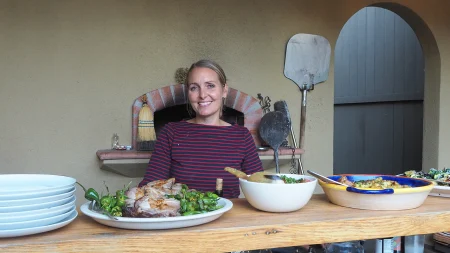
In the shadowy depths of dense forests and sweltering villages across sub-Saharan Africa, Jenny Carlson Donnelly would often find herself hunting for one of humanity’s deadliest predators. Armed with specialized equipment and years of scientific training, she wasn’t tracking large carnivores but something far more lethal: mosquitoes carrying the parasite responsible for malaria, a disease that claims over 600,000 lives annually. For nearly a decade, Donnelly served as a front-line defender in America’s global health security apparatus, traveling to some of the most remote and disease-burdened regions of the world as part of the U.S. Agency for International Development’s (USAID) malaria prevention initiatives. Her work involved meticulous testing of mosquito populations, evaluation of insecticide effectiveness, and implementation of life-saving prevention programs—until an unexpected career disruption left her expertise sidelined at a time when global health threats continue to mount.
“I never imagined my career in public health would end like this,” Donnelly reflected during a recent interview, seated in her Washington D.C. apartment instead of a field laboratory in Tanzania or Mozambique. “One day I was coordinating with international partners on breakthrough prevention techniques, and the next I was updating my resume.” Donnelly’s unexpected departure from USAID came amid broader restructuring within the agency, part of shifting priorities that have affected numerous global health programs. While official statements characterized these changes as “strategic realignments,” for professionals like Donnelly, they represented not just personal career setbacks but potential gaps in America’s global health security infrastructure. Her specialized expertise in vector-borne disease control—developed through years of fieldwork and advanced study—is not easily replaced, particularly as climate change expands the range of disease-carrying mosquitoes into previously unaffected regions, creating new vulnerabilities in global health systems already strained by recent pandemics.
The path that led Donnelly to the front lines of malaria prevention was anything but direct. After completing her undergraduate studies in biology at the University of Michigan, she joined the Peace Corps, where an assignment in rural Ghana provided her first exposure to the devastating impact of malaria on local communities. “I watched children miss school, parents unable to work, and sometimes entire villages brought to a standstill during outbreaks,” Donnelly explained. “The experience transformed my understanding of how diseases affect not just individual health but entire social and economic systems.” This realization propelled her toward graduate studies in epidemiology and tropical medicine, followed by specialized training in entomological surveillance—the science of monitoring insect populations that transmit diseases. By the time she joined USAID in 2014, Donnelly had developed a rare combination of laboratory precision and field adaptability that made her particularly valuable in high-stakes public health interventions across multiple continents.
The Critical Role of Mosquito Surveillance in Global Health Security
The work of scientists like Donnelly often occurs far from public view but forms a crucial component of global disease prevention infrastructure. In malaria-endemic regions, the difference between effective and failed prevention efforts frequently hinges on detailed understanding of local mosquito populations—their breeding patterns, feeding behaviors, and critically, their resistance to insecticides used in prevention programs. “People often don’t realize that mosquitoes evolve resistance to our control methods incredibly quickly,” Donnelly explained, demonstrating the complex genetic analysis her team would perform on mosquito samples collected from villages across Africa and parts of Southeast Asia. “Without continuous testing and adaptation, even the most well-funded prevention programs can fail virtually overnight.”
Her work typically involved weeks-long expeditions to remote regions where she would train local health workers in surveillance techniques while collecting crucial data on mosquito populations. These field assignments required not only scientific expertise but considerable diplomatic skill, as Donnelly navigated complex partnerships with host-country governments, international organizations, and local communities. “Effective disease prevention isn’t just about the science,” she noted. “It’s about building trust with communities who have sometimes had negative experiences with Western researchers or aid programs in the past.” This human element of global health security work—establishing collaborative relationships with local experts and community leaders—represents another dimension of expertise that cannot be easily replaced when experienced professionals like Donnelly leave the field.
The impact of Donnelly’s work extended beyond immediate disease prevention. Data collected through her team’s mosquito surveillance efforts informed broader policy decisions about resource allocation and intervention strategies across multiple countries. In one notable project in western Tanzania, Donnelly’s analysis revealed early signs of insecticide resistance that prompted a timely shift in prevention strategies, potentially saving thousands of lives. “When people ask what concrete difference this kind of work makes, that’s what I point to,” she said. “Not just the lives saved directly, but the systemic improvements that strengthen entire health systems.” This multiplier effect makes specialized roles like Donnelly’s particularly valuable in global health security—and their loss potentially more consequential than might appear at first glance.
Shifting Priorities and Personal Consequences
The circumstances surrounding Donnelly’s departure from USAID remain somewhat opaque, reflecting broader uncertainties about America’s long-term commitment to global health security initiatives. While malaria prevention remains an official priority for the agency, internal restructuring has reportedly shifted resources toward more immediate crises and away from the type of sustained, specialized surveillance work that formed the core of Donnelly’s role. “There’s always tension in public health between responding to emergencies and maintaining the systems that prevent emergencies from happening in the first place,” explained Dr. Marcus Wellbourne, a global health policy expert at Georgetown University who was not directly involved in Donnelly’s case but has observed similar patterns across multiple agencies. “Unfortunately, prevention work often loses that competition for resources, even though it typically delivers better returns on investment.”
For Donnelly personally, the professional disruption has been accompanied by profound questions about identity and purpose. “When you’ve spent your career in this kind of work, it becomes more than just a job,” she reflected. “There’s a sense of mission that’s hard to replicate in other fields.” Now several months into her job search, she has found limited opportunities that match her specialized expertise, particularly as similar positions have been eliminated across both government agencies and non-governmental organizations that once led global health security efforts. While Donnelly has received interest from pharmaceutical companies and private consultancies, she expresses concern about transitioning to roles that might not directly serve the communities where she built relationships over many years. “There’s something different about work that’s directly focused on saving lives rather than generating profit,” she said, while acknowledging the financial pressures that make such considerations increasingly complex for many mid-career scientists.
The Broader Implications for Global Health Security
Donnelly’s story raises questions about America’s preparedness for future health threats at a time when experts warn that pandemic risks are increasing. The specialized knowledge required for effective disease surveillance—whether for malaria, emerging coronaviruses, or other potential pathogens—takes years to develop and cannot be quickly reconstituted during a crisis. “We learned during COVID-19 that you can’t build an effective disease surveillance system overnight,” noted Dr. Wellbourne. “The expertise has to be in place before the threat emerges.” The loss of experienced professionals like Donnelly from key positions in global health security represents not just individual career disruptions but potential vulnerabilities in systems designed to protect both American and global populations from disease threats.
Some experts see Donnelly’s situation as emblematic of broader challenges in maintaining America’s capacity for global health leadership. “There’s a concerning pattern of disinvestment in the human capital that makes health security possible,” observed Dr. Helena Mackenzie, former director of international health programs at the CDC. “We focus on purchasing equipment or funding specific programs, but undervalue the expertise needed to make those investments effective.” This expertise includes not just technical knowledge but intercultural competence, diplomatic skill, and established relationships with international partners—assets that Donnelly developed over years of field experience and that cannot be easily transferred or replaced. As climate change expands the range of disease vectors into new regions and global mobility increases the speed at which pathogens can spread, these human capabilities may prove as important as any technological tool in protecting public health.
Looking Forward: Rebuilding Capacity and Personal Resilience
Despite the professional setback, Donnelly remains cautiously optimistic about both her personal future and the broader outlook for global health security. “The need for this work isn’t going away—if anything, it’s becoming more urgent,” she observed. While continuing her job search, she has begun volunteering with community health initiatives serving immigrant populations in Washington D.C., applying her expertise in disease prevention to local challenges. She has also engaged with academic programs, guest lecturing at universities to help prepare the next generation of global health professionals. “If there’s a silver lining, it’s the opportunity to share knowledge more broadly and perhaps inspire others to enter this field,” she said, though she emphasized that classroom instruction cannot fully replace the mentorship traditionally provided through fieldwork.
For its part, USAID has recently announced new investments in infectious disease surveillance, though these programs differ structurally from previous initiatives and rely more heavily on contracted technical assistance rather than direct staffing. Whether these new approaches will effectively maintain America’s global health security capabilities remains an open question among experts. What seems clear, however, is that the human dimension of this work—represented by professionals like Donnelly who combine scientific expertise with field experience and cross-cultural competence—remains irreplaceable in addressing global health challenges. As Donnelly continues her professional transition, her story stands as both a personal narrative of career disruption and a broader cautionary tale about maintaining the human infrastructure necessary for effective global health security in an increasingly interconnected and vulnerable world.