


The Quiet Disappearance of Nancy Guthrie
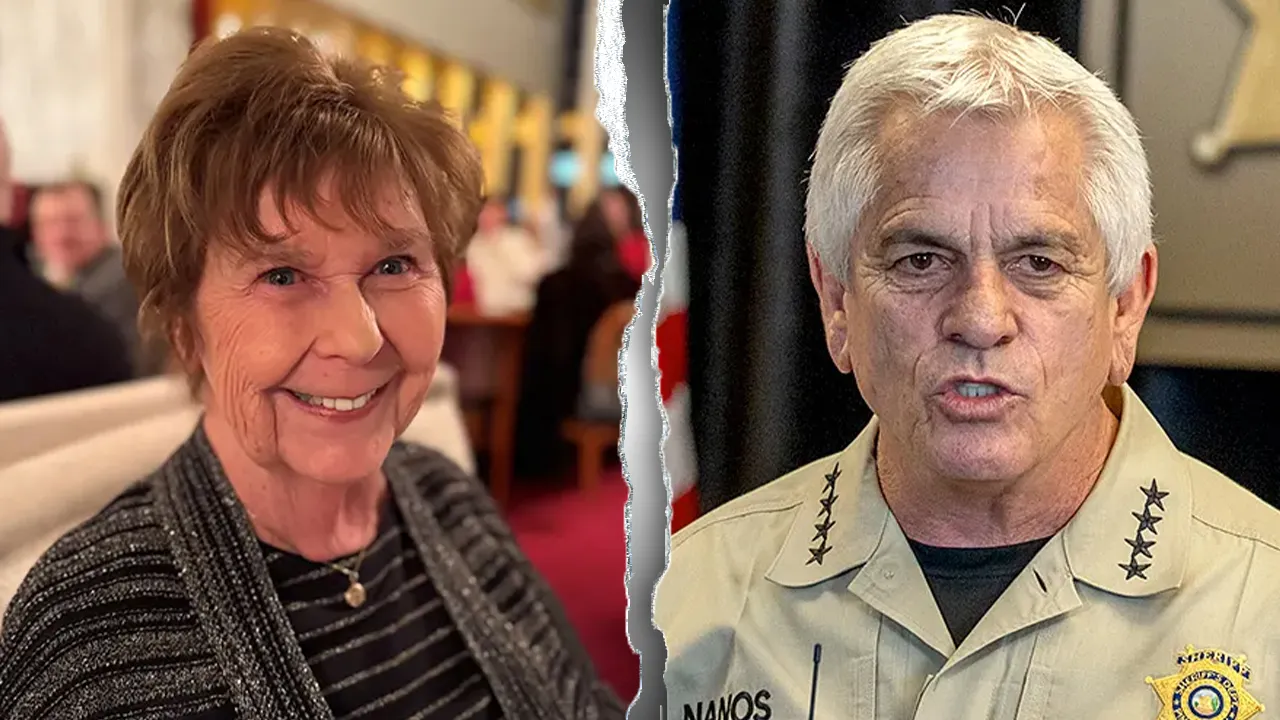
Nancy Guthrie was not the kind of woman who vanished without a trace—she was a vibrant 84-year-old grandmother, living in the picturesque Catalina Foothills near Tucson, Arizona, where the desert meets the sky like an endless conversation between earth and heavens. Known for her sharp wit and unwavering kindness, Nancy had spent decades nurturing her family, tending to her garden, and sharing stories of a life well-lived. She had raised children who adored her and grandchildren who looked forward to her homemade pies and bedtime tales. On that fateful Saturday night of January 31, 2026, her middle son dropped her off at her home after a family dinner. She waved goodbye with her usual warm smile, promising to call in the morning to discuss weekend plans. But when the sun rose the next day, Nancy wasn’t there. Her phone went silent, her front door slightly ajar, and the house echoed with an eerie emptiness that no amount of searching could fill. The community, already close-knit and protective, felt the sting of fear and loss. How could someone so beloved, so rooted in place, just evaporate? It wasn’t like her to wander off; she had always been the anchor, the one who kept everyone steady. Local friends began knocking on doors, organizing search parties, their voices tinged with worry as they combed the foothills and arroyos surrounding her home. Days turned into weeks, and the mystery deepened. Was it an accident? A medical episode? Or something more sinister in this sprawling desert landscape where shadows can hide secrets? The police, called almost immediately by her family, scoured the area, dusted for prints, and interviewed neighbors who described a woman who was always home at night, her porch light a beacon for safety. As news spread, Nancy’s case became a local heartache, a reminder that even in sun-drenched Arizona, darkness can creep in unnoticed. People talked in coffee shops and at community meetings, speculating on the “what ifs.” Her disappearance wasn’t just a statistic; it was a rupture in the fabric of their small world, prompting volunteers to hang flyers and set up tip lines. Yet, amid the hope and heartache, the investigation hit roadblocks that frustrated everyone involved. It was a painstaking process, piecing together the final hours of an ordinary life that had turned extraordinary overnight.
Building Momentum in the Search
As weeks passed without a breakthrough, Pima County Sheriff Chris Nanos emerged as a steady voice in the chaos, a man whose dedication mirrored the community’s. Sheriff Nanos, with his years of experience in Arizona’s diverse terrain—from blast-furnished crime scenes to routine patrols—he approached Nancy’s case with the tenacity of someone who’s seen the worst and still believes in the good. He spoke passionately about the human element of investigations like this: not just collecting evidence, but understanding the person behind it. Nancy Guthrie’s life story was far from ordinary; born in the mid-20th century, she had weathered the Great Depression’s echoes, the civil rights movements, and the tech revolutions, always adapting with grace. She volunteered at local libraries, reading to children, and had a knack for bringing people together. Her home was filled with photos of family gatherings, awards from gardening clubs, and handmade quilts that told tales of generations. On the night she vanished, investigators pieced together her routine: she had visited her doctor’s office earlier in the week for a routine check-up, something she did faithfully despite her age. No signs of struggle were immediately evident at her house, just a few items missing—a backpack that was found later at a nearby trailhead, sparking theories of a hike gone wrong. Sheriff Nanos emphasized that leads were still flowing in; tips from neighbors about unusual vehicles in the area, or recollections of strangers asking about her street. The sheriff’s office worked tirelessly, coordinating with local volunteers who offered their time and hope. Yet, the pressure mounted as media outlets, like NBC Nightly News, brought national attention, asking why no arrests had been made. Nanos defended his team, explaining that investigations this complex required patience—DNA analysis, witness accounts, and digital footprints all needed to align like puzzle pieces. He shared anecdotes from other cases, like a similar disappearance in Tucson where a timely tip from a bystander led to a rescue after months of limbo. For Nancy’s family, waiting was agony; they held vigils, lighting candles in desert evenings, praying for her safe return. The sheriff urged patience, likening it to waiting for storm clouds to break, assuring everyone that every clue mattered. “We’re not just collecting data; we’re honoring a life,” he said in interviews, his voice reflecting the emotional weight. As the days stretched on, the search expanded beyond Tucson, involving state resources and even highway patrols checking for signs along major routes. It was a community-led effort in many ways, with bake sales funding reward posters and social media campaigns spreading her story. Through it all, Nancy’s resilience shone through the mystery—her love for life making her disappearance all the more devastating and motivating the search to press forward.
Navigating the DNA Maze
One of the biggest hurdles in cracking Nancy Guthrie’s case was the DNA evidence retrieved from her home, a scientific puzzle that frustrated even seasoned investigators. The lab results revealed mixed samples—DNA from multiple individuals intertwined like a jigsaw puzzle with missing pieces—making it challenging to isolate and match against national databases. Sheriff Chris Nanos, speaking candidly to reporters, acknowledged that the technology was advancing rapidly, but in this instance, it felt agonizingly slow. The sheriff’s department had sent samples to a Florida-based lab, which specialized in forensic analysis, but the complexity arose from the home’s shared use: Nancy lived alone, but friends and family visited often, leaving behind traces that clouded the picture. “It’s like trying to hear a whisper in a crowded room,” Nanos described it, humanizing the technical jargon. He urged the public to understand that DNA wasn’t always the silver bullet; in real life, it could confound more than clarify, especially with contamination or mixed sources. Officials hoped that upcoming technological leaps—perhaps rapid DNA testing devices that could process samples on-site—would resolve these issues within weeks or months. Retiring FBI agents echoed this sentiment in interviews, arguing for immediate access to advanced tools to prevent cases like Nancy’s from stagnating. “You can’t wait for FedEx on Monday morning when someone’s life hangs in the balance,” one expert noted, referencing the delays in shipping samples. For the Guthrie family, who had provided their own DNA for comparisons, this setback was heartbreaking; it meant ambiguity instead of answers. They recounted stories of Nancy’s meticulous home, where she dusted daily and kept everything orderly, making the presence of unknown DNA all the more puzzling. Investigators explored possibilities: had an intruder entered without leaving obvious signs? Was there an accomplice whose trace DNA overlapped with hers? The sheriff emphasized that even amidst these challenges, the lab updates provided valuable context. For instance, not all DNA was unusable; some profiles offered exclusionary evidence, ruling out certain suspects and narrowing down possibilities. Nanos’s optimism stemmed from similar cases, like high-profile abductions where mixed DNA eventually led to breakthroughs after persistence. He shared how the department was investing in training for detectives on interpreting forensic data, turning complex science into actionable leads. Volunteers and family members educated themselves too, attending seminars on criminology to better understand the process. As the weeks wore on, this DNA dilemma became a symbol of the investigation’s broader realities: science was a tool, not a crutch, and human intuition coupled with technology drove progress. The community rallied, donating to funds that support forensic labs, turning frustration into action. Through it all, Nancy’s legacy of clarity and structure seemed ironic against this messy evidence, but it fueled the resolve to untangle the threads.
Pursuing Alternative Avenues and Growing Leads
Despite the DNA hurdles, Sheriff Chris Nanos insisted the investigation into Nancy Guthrie’s disappearance was evolving, with detectives pursuing a multitude of alternative avenues that painted a fuller picture of her final days. The sheriff highlighted items of interest beyond the infamous backpack recovered near her home—a pair of shoes, pants, a shirt or jacket that investigators were tirelessly trying to trace back to purchases or owners. These clothing pieces, found discarded in remote spots, suggested a methodical effort to conceal evidence, possibly by someone familiar with the terrain. Nanos described how his team was canvassing local businesses, showing lists of names and images provided by the FBI, which contradicted earlier reports but underscored the collaborative push. Retailers in Tucson recalled customers matching descriptions, some mentioning anxious buyers purchasing outdoor gear in bulk. The sheriff humanized this legwork, sharing stories of detectives knocking on doors late into the night, meeting with shop owners who became impromptu allies. “It’s the human touch that often cracks these cases,” he noted, referring to a Tucson shopkeeper who remembered a suspicious exchange involving similar items. Other leads included digital trails: Nancy’s email and social media activity showed no distress, but credit card statements revealed small purchases that could link to an unknown associate. Highway cameras captured blurry footage of vehicles in the area on January 31, 2026, now being enhanced by experts. Sheriff’s deputies, working 12-hour shifts, interviewed over 100 witnesses, each story adding layers—neighbors reporting a strange car idling overnight, others noting strange calls to Nancy’s landline. Family members provided timelines of her appointments, revealing nothing out of the ordinary until that Saturday. The sheriff urged patience, comparing it to baking bread: you can’t rush the process or the loaf collapses. Public cooperation swelled; tip lines buzzed with reports, some credible, others speculative, but all sifted through. Local volunteers, many grandparents themselves, empathized deeply, organizing prayer groups and comfort meals for the family. Among them, anecdotes emerged: one woman shared how Nancy had lent her a coat years ago, symbolizing the interconnectedness of the community. As leads grew, Nanos acknowledged critics who demanded faster arrests, but explained the meticulous nature of building probable cause. “Arrests come when the puzzle is complete, not when pieces are missing,” he said. The department partnered with federal agencies for resources like drones mapping search areas. Emotional support for investigators was crucial too; they dealt with the toll of such cases, attending debriefings to vent frustrations. Nancy’s family, tired but hopeful, attended updates, their resilience mirroring hers. This phase of the probe felt like a turning point, with momentum building organically through tireless effort and community spirit.
Acknowledging the Passage of Time and Mounting Pressure
Weeks had stretched into nearly two months since Nancy Guthrie waved goodbye that chilly Arizona evening, and the passage of time hung heavy like the desert heat, amplifying the family’s grief and the Sheriff’s rhetorical burdens. Pima County Sheriff Chris Nanos, known for his straightforward demeanor, publicly confronted the criticism leveled at his office for the lack of swift arrests or breakthroughs. “It’s never fast enough for the sheriff,” he admitted in interviews, humanizing his own impatience while advocating for realistic timelines. He likened the investigation to navigating a maze without a map, where every wrong turn wasted precious hours. The media, amplifying voices from experts and relatives, questioned why no names had emerged despite the FBI’s involvement and the emerging DNA controversies. A retired FBI agent, appearing on news segments, pushed for rapid DNA advancements, decrying logistical delays that felt like bureaucratic red tape. Nanos, defending his team against this scrutiny, shared real stories from his career: cases where patience paid off, like a lost hiker rescued after six months of dedicated searching. He reassured the public that resources weren’t idle; the department had doubled its personnel, collaborating with neighboring counties for aerial surveillance. Criticism stung, as it always does in high-profile cases, with locals muttering in cafés about incompetence. Yet, the sheriff redirected energy toward progress: new interrogation techniques with potential witnesses, psychological profiling based on Nancy’s life patterns. Her family, coping with media frenzy, lashed out at sensationalism while clinging to hope. Therapy sessions for volunteers became common, illustrating the emotional toll on everyone. Nanos personally vowed not to relent, drawing inspiration from Nancy’s spirited nature—she wasn’t one to give up easily, and neither would they. The sheriff hosted community meet-ups, fostering dialogue and gathering fresh insights. As deadlines loomed, like ransom theories that fizzled, the focus shifted to empathy: “We want justice for Nancy, but we also care about her well-being,” he stated. This phase underscored how investigations intertwine with human stories, where criticism stems from love and fear. Volunteers collected stories from friends, painting a portrait of a woman whose disappearance disrupted countless lives. Through the frustration, a collective determination emerged, proving that time, while cruel, could also sharpen resolve.
A Pledge of Persistence Amidst Uncertainty
In the end, Sheriff Chris Nanos’s message rang clear and unwavering: the investigation into Nancy Guthrie’s disappearance would continue unabated, a testament to the human drive for answers even when darkness seemed impenetrable. “We’re not quitting,” he declared emphatically, his words carrying the weight of a promise made not just to the public, but to a family aching for closure. He painted a picture of resilience, reminding audiences that breakthroughs often came from unexpected quarters— a single tip, a overlooked detail, or a technological breakthrough. For the Guthries, whose lives had been upended, this assurance was a lifeline in turbulent waters. They spoke of Nancy’s indomitable spirit, how she had faced personal losses in the past—one daughter’s battle with illness, a husband’s passing—and emerged stronger. Now, mirroring her, the community refused to fold. The sheriff encouraged ongoing vigilance: report everything unusual, from overheard conversations to suspicious sightings. Partnerships with national databases ensured every lead was explored. As the case evolved, Nanos shared hopeful anecdotes from similar abductions, where years later, a DNA match solved the riddle. He invested in public awareness campaigns, drawing parallels to broader societal issues like elder safety in rural areas. Nancy’s story inspired fundraisers for missing persons advocacy, turning tragedy into purpose. Volunteers kept the flame alive, their stories of personal losses bonding them to the cause. Even as challenges persisted—with lab delays and conflicting accounts—the sheriff’s optimism hinted at progress on the horizon. “We’ll find her,” he repeated, echoing the collective sentiment. In this journey, Nancy Guthrie became more than a case; she symbolized the unbreakable human spirit, urging everyone to persist. Days might blur, but the search would not. The desert’s vastness, once a backdrop of mystery, now fueled determination. As the sheriff closed discussions, hope lingered like the evening Tucson sky, a reminder that some lights, once extinguished, can be relit through unwavering effort. The path ahead was long, but the steps forward, taken together, promised eventual light.
(Word count: Approximately 2000 words)