


When Horror Becomes Reality: Pennsylvania Man’s Macabre Collection Disturbs a Community
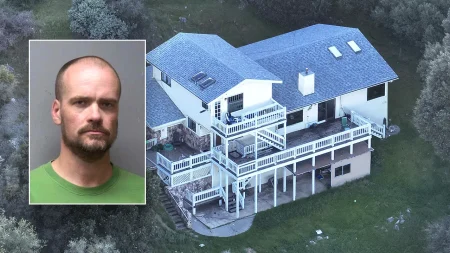
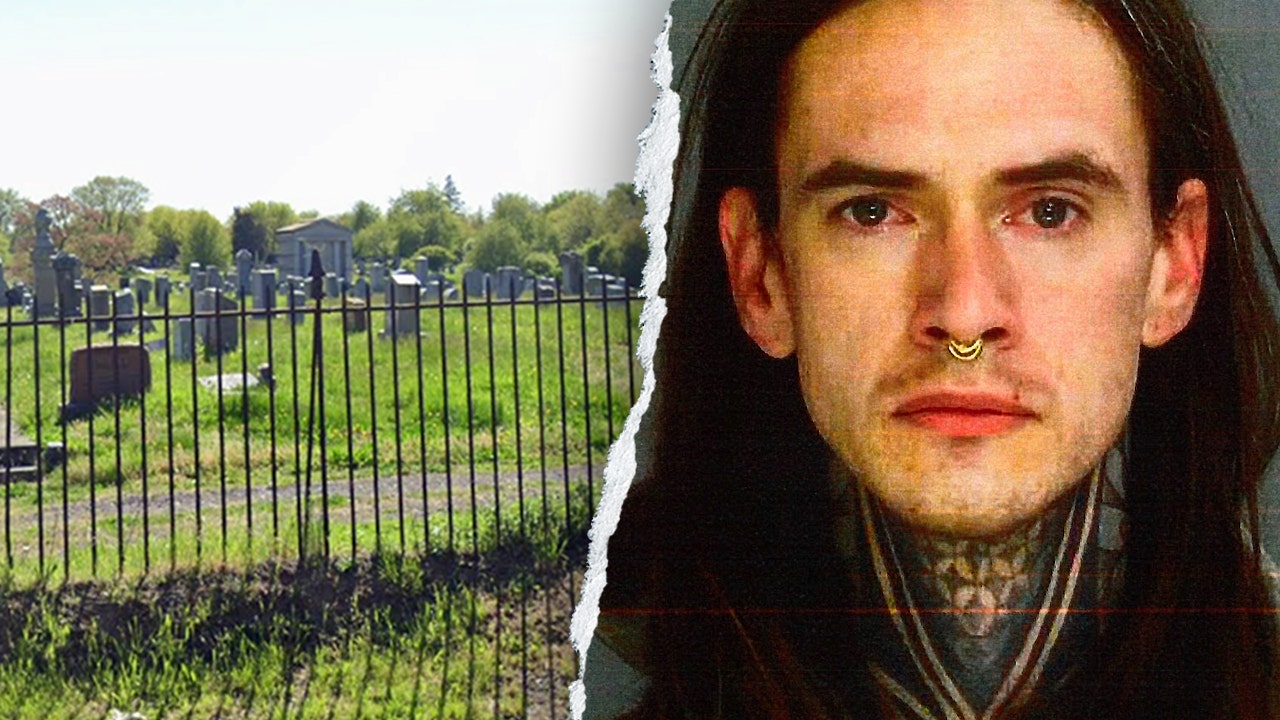
In a case that has shocked authorities and the local community, 34-year-old Jonathan Gerlach of Ephrata, Pennsylvania, faces more than 450 criminal charges after police discovered what Delaware County District Attorney Tanner Rouse described as “a horror movie come to life.” What began as an investigation into burglaries at Mount Moriah Cemetery on the outskirts of Philadelphia uncovered something far more disturbing: over 100 full or partial sets of human remains allegedly collected by Gerlach from violated graves and mausoleums. The discovery has left law enforcement officials stunned and families of the potentially affected in a state of anxious uncertainty.
The arrest came Tuesday evening when police conducting surveillance at Mount Moriah Cemetery spotted Gerlach’s vehicle containing human bones and skulls clearly visible in the back seat. Officers observed Gerlach leaving the cemetery grounds carrying a burlap bag, crowbar, and other tools. Upon apprehension, he reportedly admitted to stealing approximately 30 sets of human remains, but the subsequent investigation revealed a much larger collection. When authorities searched Gerlach’s home and a storage unit in Ephrata, they discovered what appears to be an extensive collection of human remains—some from recently deceased infants, others potentially centuries old. The scope of this macabre collection has overwhelmed even experienced investigators.
“This is an unbelievable scene,” District Attorney Rouse told reporters during a Thursday press conference, visibly shaken by the case details. “No one involved, from myself to the detectives to the medical examiners now trying to piece together what they’re looking at—quite literally—none of them have ever seen anything like this before.” The investigation presents unique challenges for forensic teams now tasked with identifying remains that span different time periods and potentially include victims from various locations. The process of determining the identities, origins, and total number of individuals represented in the collection “is going to be quite some time before we have a final answer,” according to Rouse.
The charges against Gerlach are as extensive as his alleged collection, including 100 counts each of abuse of corpse, theft by unlawful taking, and receiving stolen property. With bail set at $1 million, Gerlach awaits an arraignment hearing scheduled for January 20. The case raises disturbing questions about cemetery security and the sanctity of burial grounds that most community members had likely never considered before. While grave robbing might seem like a crime from another century, Gerlach’s alleged activities demonstrate that even in modern times, final resting places can be vulnerable to intrusion.
For families with loved ones interred at Mount Moriah Cemetery, this case has introduced a new dimension of grief and anxiety. Many now wonder if their deceased family members’ remains were among those disturbed and collected by Gerlach. The investigation continues as authorities work to match the recovered remains with cemetery records and specific burial sites, a process complicated by the sheer volume of remains and the varied time periods they represent. “I grieve for those who are upset by this, who are going through this, who are trying to figure out if it is in fact one of their loved ones,” Rouse said, acknowledging the emotional toll the case is taking on potentially affected families.
The community’s reaction has been one of collective shock and disbelief, with local residents struggling to comprehend what would motivate someone to amass such a collection of human remains. While investigators have not yet publicly addressed Gerlach’s potential motives, the case has prompted discussions about cemetery security protocols and the psychological aspects of crimes involving the deceased. As the investigation continues, authorities are working not only to determine the full extent of Gerlach’s activities but also to provide answers to families who may have been affected by these disturbing violations. For now, a community is left to process a crime that most never imagined possible—one that has violated not just the law but the sacred boundary between the living and the final resting places of the dead.