





A Grave Disturbance: The Unsettling Case of Mount Moriah Cemetery
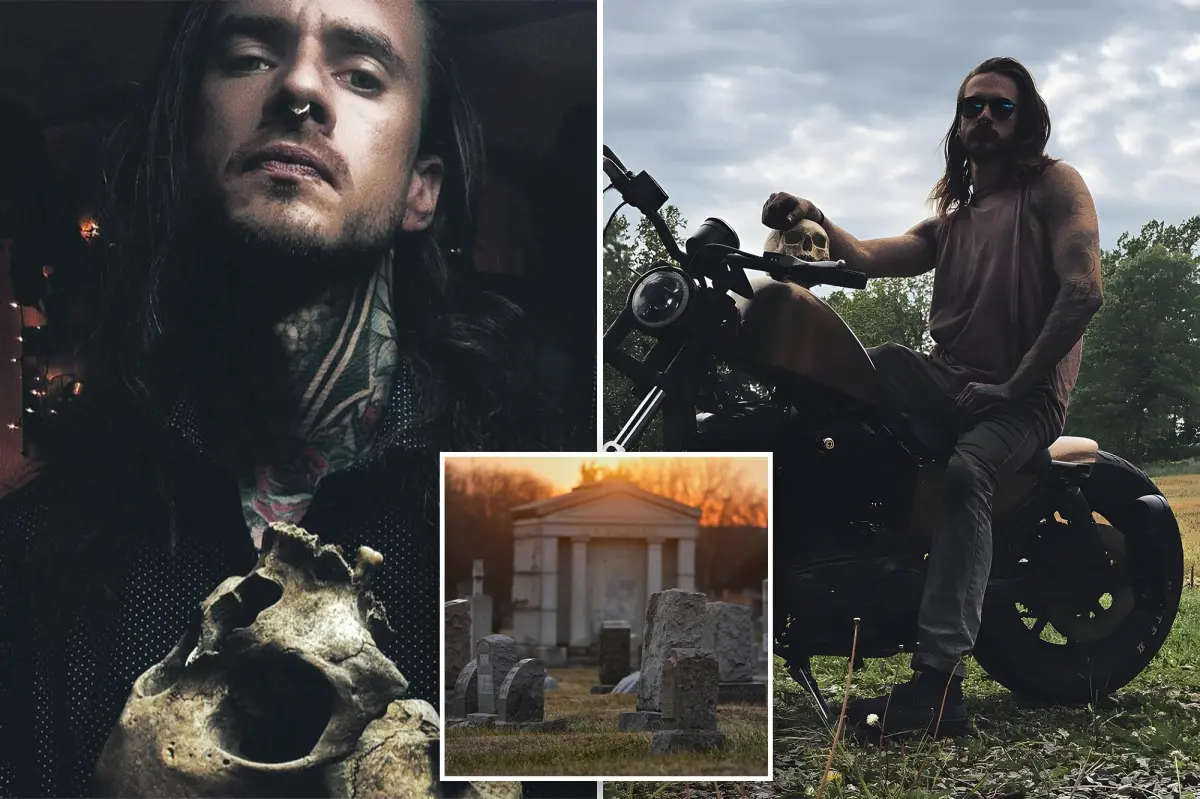
In a disturbing investigation that has shocked the Philadelphia region, authorities have uncovered what they describe as one of the most macabre cases of cemetery desecration in recent memory. The discovery began innocuously enough when police spotted human bones and skulls visible in the back seat of a parked car near the historic Mount Moriah Cemetery on Philadelphia’s outskirts. What followed was the revelation of a basement filled with human remains—approximately 100 sets of human bones, skulls, and body parts—allegedly hoarded by 34-year-old Jonathan Christ Gerlach. The Tuesday night arrest marked the culmination of a month-long investigation into a series of break-ins at the cemetery, where at least 26 mausoleums and vaults had been forcibly entered since early November. The scale and nature of this case have left investigators and community members struggling to comprehend the motivation behind such disturbing acts.
The scene discovered in Gerlach’s Ephrata home and storage unit has been described by authorities as something out of a horror film. “They were in various states. Some of them were hanging, as it were. Some were pieced together, some were just skulls on a shelf,” Delaware County District Attorney Tanner Rouse told reporters, visibly unsettled by what investigators had found. The basement contained more than 100 human skulls, long bones, mummified hands and feet, two decomposing torsos, and other skeletal remains. Perhaps most disturbingly, some of the remains still contained personal effects—jewelry believed to be from the graves was recovered, and in one particularly haunting instance, a pacemaker remained attached to human remains. These details have painted a picture not just of desecration but of a methodical collection that has left authorities searching for explanations beyond the typical motives of theft or vandalism.
Mount Moriah Cemetery itself represents a significant historical landmark in the Philadelphia area. Established in 1855, it’s considered the country’s largest abandoned burial ground, spanning 160 acres and containing an estimated 150,000 grave sites. The cemetery has been maintained in recent years largely through the efforts of a volunteer organization, Friends of Mount Moriah Cemetery. According to police reports, Gerlach specifically targeted sealed vaults and mausoleums containing older burials, using force to smash open stonework and gain access to the remains inside. The historical significance of the site has only amplified community outrage over the desecration, with many locals expressing concern about ancestors and loved ones interred at the cemetery. The violations occurred at a place meant to offer eternal peace for the deceased, making the crimes feel particularly violative to many in the community.
The investigation that led to Gerlach’s arrest demonstrates how modern investigative techniques can solve even unusual crimes. Police had been investigating the string of cemetery burglaries when an investigator noticed something unusual—Gerlach’s vehicle had been repeatedly detected near Yeadon during the timeframe when the burglaries occurred. This lead ultimately culminated in Gerlach’s arrest as he walked back to his car carrying a crowbar and a burlap bag. When officers examined the bag’s contents, they discovered the mummified remains of two small children, three skulls, and various other bones. Following his arrest, Gerlach allegedly admitted to taking approximately 30 sets of human remains and cooperated with investigators by showing them the specific graves he had violated. The methodical nature of both the crimes and the investigation has created a paper trail that prosecutors believe will help build a compelling case.
The legal response to these disturbing acts has been appropriately severe, reflecting the gravity with which authorities view crimes against the deceased. Gerlach now faces an extensive list of charges: 100 counts each of abuse of a corpse and receiving stolen property, along with multiple counts of desecrating public monuments, venerated objects, and historic burial places, plus burglary, trespassing, and theft. He remains jailed on $1 million bond, and court records do not yet list legal representation for him. While the physical evidence appears overwhelming, the question of motivation remains elusive. “Given the enormity of what we are looking at and the sheer, utter lack of reasonable explanation, it’s difficult to say right now, at this juncture, exactly what took place. We’re trying to figure it out,” District Attorney Rouse explained to reporters, highlighting the psychological puzzle at the center of the case.
This case has sparked broader conversations about cemetery security, the treatment of abandoned historic burial grounds, and the psychological factors that might lead someone to collect human remains. For the families of those interred at Mount Moriah, there is now the painful process of determining whether their loved ones’ remains were among those disturbed. For the wider community, there’s a collective sense of violation—a sacred boundary crossed that reminds us of the vulnerability of even our final resting places. The Friends of Mount Moriah Cemetery organization has already announced plans to review security measures and restoration of the damaged mausoleums, though the emotional damage to the community may take far longer to heal. As the legal process unfolds, many are left wondering not just about the facts of the case, but about the deeper question that may never be fully answered: what would drive someone to commit such acts against the dead who can no longer defend themselves, and the living who trusted their loved ones would rest in peace?