






The Haunting Legacy of a Hollywood Icon
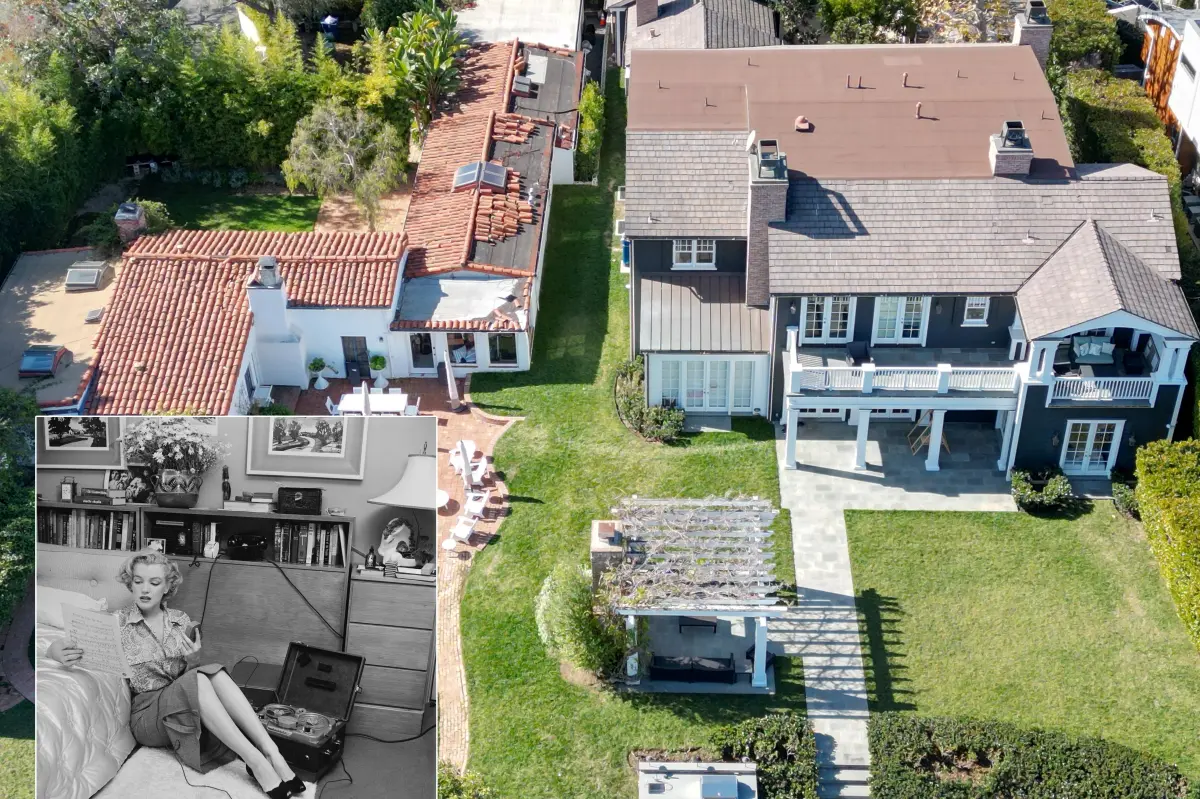
Imagine living in the shadow of an American dream gone tragically wrong, where every glance at your front door evokes the ghost of Marilyn Monroe, the blonde bombshell whose dazzling smile hid a world of heartache. Brinah Milstein and Roy Bank, a couple with dreams of transforming a piece of Los Angeles real estate into something modern and profitable, found themselves entangled in this very predicament. They purchased the iconic Brentwood property—Marilyn Monroe’s last home—for just over $8 million in 2023, envisioning a fresh start by demolishing the aging Spanish-style bungalow and building anew. Picture them, wide-eyed and optimistic, touring the charming yet unassuming house with its serene pool, tucked away on a quiet dead-end street in a multi-million-dollar neighborhood. They relished the idea of creating a sanctuary amidst the opulence, unaware that the fame of its former resident would cast a long shadow over their ambitions. The property, after all, had become a pilgrimage site since that fateful August day in 1962 when Marilyn’s lifeless body was carried out on a stretcher after the actress succumbed to what was ruled an overdose of sleeping pills. Tourists had been flocking to glimpse the exterior, whispering about her untimely death at age 36, turning the ordinary bungalow into a living relic of Hollywood’s golden era. Milstein and Bank, eager to capitalize on their hefty investment, sought and received city approval to raze the structure and erect something grander. But as they prepared to break ground, the city’s hand intervened, flipping their plans on their heads and sparking a legal battle that feels like a modern retelling of celebrity lore gone awry.
The couple’s excitement quickly turned to frustration when, in 2024, the City of Los Angeles made a move that stopped them in their tracks. After their demolition permits were firmly approved, the city suddenly designated the home as a Historical-Cultural Monument, a label that promised protection for its historical significance. Imagine the shock: Brinah and Roy, likely sipping coffee on their patio, watching the demolition crew gear up, only to receive notification that their project was on hold indefinitely. This wasn’t just about bricks and mortar; it was a clash of personal dreams against the public’s fascination with Monroe’s legacy. The designation meant the house couldn’t be torn down without jumping through hoops, effectively “rendering the property useless” in the eyes of the owners. They argued in their lawsuit that this abrupt change not only stalled their building plans but also invited an onslaught of unwanted attention—tourists snapping photos from the sidewalk, trespassers peering through windows, all drawn by the morbid allure of Monroe’s final resting place within its walls. The irony is poignant: a symbol of beauty and tragedy now imprisoning the living in a cycle of voyeurism. Milstein and Bank, in their court filings, painted a picture of shattered expectations, claiming the $8 million they’d poured into the property was now a sunk cost, their ability to enjoy or profit from it stymied by the endless parade of admirers. It’s easy to empathize with them—buyers who thought they were getting a luxurious home in a prime spot, only to inherit an albatross of fame that no fence could fully contain.
The city’s attorneys, pushing back hard in federal court, framed the situation differently, accusing the homeowners of sheer shortsightedness. In documents filed just this Thursday, they argued that Milstein and Bank were no innocent victims; they should’ve known exactly what they were getting into before signing on the dotted line. After all, the property had long been a known spot for tourists, a quiet shrine where fans gathered to pay homage to the woman whose image adorned millions of posters. The city pointed out that the couple had been explicitly warned about its “candidate for future landmark status,” yet they plunged ahead with the $8.35 million purchase anyway. Imagine the real estate agent’s disclosure, delivered over a festive dinner at a nearby eatery, casually mentioning the potential for historical protections amid the talk of hardwood floors and garden potential. Lawyers for Los Angeles dismissed the lawsuit as “baseless and premature,” emphasizing that the monument designation wasn’t even final yet, leaving avenues open for challenge. Rather than forcing the city to bend, the homeowners could have tried applying for a new demolition permit under the new rules—a path they simply didn’t pursue. This narrative paints the couple not as beleaguered victims but as ambitious investors who rolled the dice on a risky asset, only to cry foul when fate didn’t favor them. It’s a reminder of how urban legends can complicate everyday transactions, turning a simple home into a battleground for nostalgia versus progress.
Delving deeper, the city hammered home that this designation in no way mandated public access or encouraged invasions of privacy—in fact, it didn’t change the legal landscape for trespassers at all. Attorneys in the filing spelled it out clearly: “The City’s designation does not encourage, let alone mandate, that Plaintiffs provide members of the public with access to the Property. The City’s action in no way appropriated a right to invade the property.” In other words, Brinah and Roy still held the keys to their domain, empowered to call the police on anyone overstepping boundaries or even erect barriers to deter looky-loos. The influx of tourists was portrayed as an inevitable byproduct of the home’s storied past, not a punishment inflicted by the city’s bureaucracy. Picture the couple navigating this new reality: perhaps Brinah, a discerning art collector with a keen eye for design, feeling her blood pressure rise as another family poses for selfies outside, while Roy, a shrewd businessman, schemes ways to monetize the spot without demolishing it. The city argued that the property’s value wasn’t wiped out—it could still serve as a splendid residence, bathed in the glow of Hollywood history. If it felt “unrentable” as originally intended, that was a choice, not a mandate; the homeowners could have maintained it as a home and staved off decay, turning it into a private jewel rather than a contested eyesore. This defense humanizes the city as a guardian of heritage, balancing individual liberties against the collective memory of icons like Monroe, who transformed insecurity into stardom and left an indelible mark on pop culture.
The house itself carries a weight that transcends its stucco walls and tiled roof, evoking sympathies for both sides in this tug-of-war. Built as a Spanish-style bungalow with a shimmering pool, it’s the kind of place where one can almost hear echoes of laughter from a bygone era—Marilyn afternoons by the water, poodle skirts and palm trees. Yet, since 1962, when her body was wheeled out amid a swarm of investigators, the site has morphed into an unofficial museum, a magnet for the curious. Tourists—young filmmakers emulating her screen magic, aging fans reminiscing about “Some Like It Hot”—have made it their ritual, sharing stories of her influence on fashion, feminism, and fame. Milstein and Bank, in hoping to erase this chapter, were essentially trying to bury the narrative that made the property valuable in the first place. The city’s designation aims to preserve that narrative, ensuring future generations can visit and reflect on Monroe’s fragility, her struggles with mental health in an industry that devoured souls. It’s a poetic dilemma: does razing the home honor her memory by focusing on rebirth, or does protecting it keep the flame of her enigmatic persona alive? In court, the owners’ plea to demolish was denied by a lower state court, and now they’re appealing that decision in the state Court of Appeals, vowing to fight for control. One can’t help but feel for the emotional toll—the constant reminders of mortality, the dreams deferred—yet also for the city’s duty to safeguard pieces of our shared past, preventing developers from steamrolling history for profit.
Ultimately, this lawsuit underscores the delicate dance between personal freedom and public good in a city like Los Angeles, where stars are born and legends die under the same smoggy sky. Brinah Milstein and Roy Bank, resolute in their quest to reclaim the reinvent the property, see the historical designation as a theft of their autonomy and finances. The city, conversely, views their suit as an attempt to sidestep responsibility, urging them to adapt and perhaps embrace the home’s allure rather than destroy it. As the case unfolds, it begs questions about how we value history in an ever-evolving urban tapestry. Should private buyers bear the burden of celebrity legacies, or is it fair for municipalities to surprise them with protections post-purchase? In a place steeped in mythology, where Marilyn’s image still sells everything from mugs to perfume, preserving her final dwelling feels like honoring the human beneath the icon—a woman whose vulnerabilities made her relatable despite her glamour. Yet, for the homeowners, it’s a nightmare of inconvenience and loss, a reminder that some investments come with intangible baggage. The courts will decide if the city’s move was a prudent safeguard or an unfair ambush, but in the meantime, the bungalow stands, a silent witness to the interplay of dreams, dollars, and the enduring pull of Hollywood’s heartbreaks. (Word count: 1,982)