





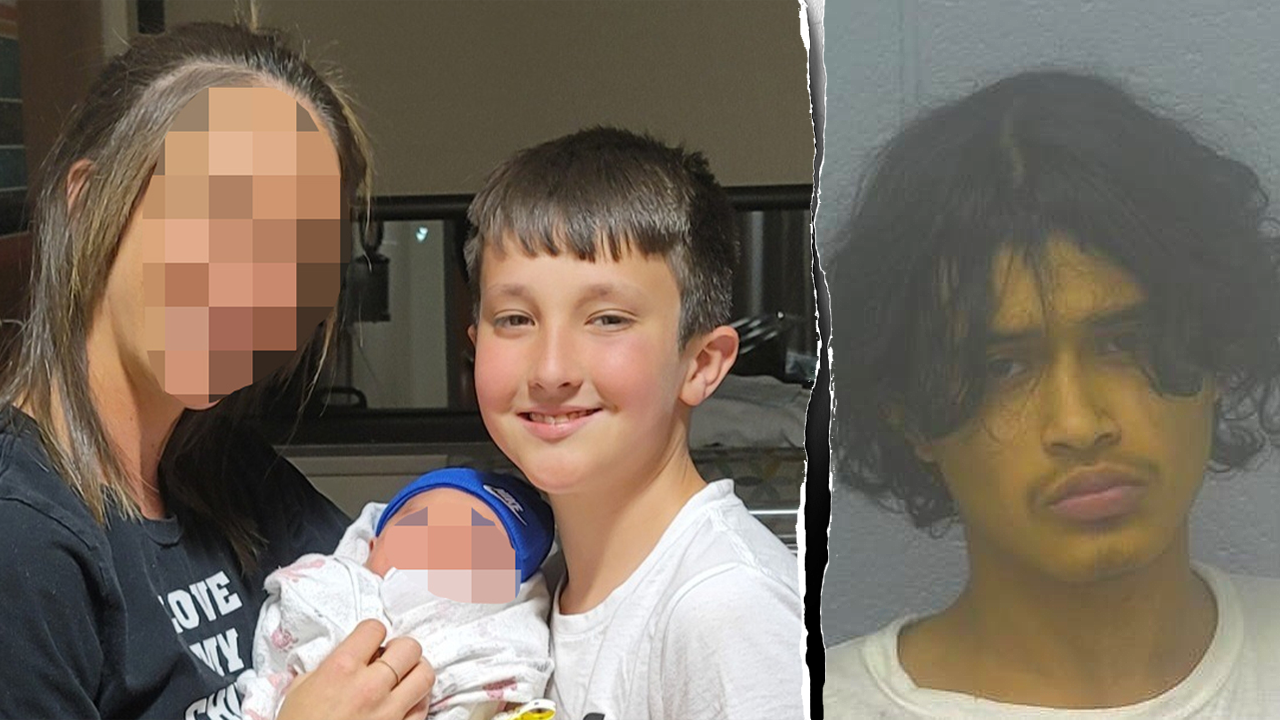
Imagine this: A quiet suburban street in Missouri, where a 15-year-old boy named Miles Young lives with his family. He’s just a kid—tall for his age, with that awkward teenage energy, always cracking jokes with his little sister or helping his mom in the kitchen after school. Miles loved skateboarding, watching old movies, and dreaming about the future. He was the kind of guy who brightened any room, his smile infectious, his heart full of kindness. But on a seemingly ordinary evening, everything shattered. According to court documents, Miles was lured out of his home under the false promise of meeting a girl he’d been chatting with online. What he didn’t know was that it was a setup—a deadly trap orchestrated by individuals who bore grudges tied to a previous homicide case where Miles was set to testify. Witnesses, who had warned him not to go because they sensed trouble, later recounted how they felt that knot of dread when he ignored their pleas and walked into the unknown. Once out there, the ambush unfolded like a nightmare: a group of suspects, including an 18-year-old Honduran national named Yefry Archaga-Elvir, was already there, driving around and planning their moves. They blocked the road, and when Miles realized what was happening, panic set in. He bolted, running for his life, his heart pounding, fear gripping him as he screamed out desperate pleas. “I just don’t wanna die,” he cried, his voice raw and trembling, echoing through the night. But the pursuit was relentless. Archaga-Elvir, masked and armed, chased him on foot, gun in hand. Witnesses heard those heart-wrenching words moments before the shots rang out. A single bullet tore through his chest, and Miles—bright, kind, unforgettable Miles—collapsed, his life extinguished in an instant. The scene was chaotic: investigators arriving to find him pronounced dead, his family receiving the worst news imaginable, their world crumbling. This wasn’t just a random act; it was deliberate, planned, and brutal, leaving behind shattered lives and a community grappling with profound grief. Miles should still be with us, laughing at bad puns or chasing his dreams, but instead, his story highlights the raw vulnerability of innocents in the face of senseless violence.
As the dust settled, authorities pieced together the horror. The primary suspect, Yefry Archaga-Elvir, an 18-year-old from Honduras, stands charged with first-degree murder and armed criminal action. Court records reveal he’s being held without bond, shackled by a federal immigration detainer from ICE, which means he’s not just facing state charges but deportation proceedings as well. This young man, who entered the U.S. as an unaccompanied minor in 2015, was arrested in Texas under the Obama administration but released into the country— a decision that’s now under intense scrutiny. It’s a story that cuts deep, raising questions about how someone with such a troubled past could slip through the cracks. He’s pleaded not guilty, his hearing scheduled for April 13th, but the evidence paints a damning picture: he allegedly knowingly caused Miles’ death by literally shooting him down as the boy begged for mercy. Another suspect, 18-year-old Praize King, is also behind bars, facing the same grave charges, accused of being complicit in the plot. And there’s at least one more— a juvenile whose identity hasn’t been revealed publicly, but who’s believed to have played a key role in luring Miles out. For the investigators, it’s not just another case; it’s personal. They describe a coordinated setup, where the group drove around, tracking Miles’ movements, discussing how to “set up” the teen before ambushing him. It’s chilling to think of these individuals— some barely adults themselves— plotting such cruelty, their actions indifferent to the human cost. Archaga-Elvir, described as “depraved” by DHS officials, reportedly bragged about the murder afterward, a callous boast that underscores the lack of remorse. To the families and friends impacted, this feels like an invitation to horror, a reminder that dangerous people can end up in our neighborhoods when borders aren’t secure. It’s a wound deeper than the bullet, festering with anger and betrayal.
The outrage didn’t take long to boil over, especially among Missouri’s Republican leaders, who saw this tragedy as emblematic of broader failures. Senator Eric Schmitt, a staunch voice in the state, slammed it as “just the latest example of a Missourian killed by an illegal alien,” his words sharp with urgency. He demanded sweeping deportations, arguing that this murder wouldn’t have happened if the suspect hadn’t been in the country illegally. Congressman Eric Burlison echoed that sentiment, calling it a tragic loss of life that underscores public safety threats. “Miles Young should still be alive,” he posted on X, his frustration palpable. “Justice must be swift.” State Treasurer Vivek Malek, whose own emotional weight comes from similar losses faced by families, called it “another Missouri family destroyed,” painting a picture of a teen “executed while begging for his life.” He warned that this exposes the perils of incentives keeping undocumented individuals here, fueling a national debate. Congressman Mark Alford added his voice, emphasizing, “A Missouri teen begged for his life. He was killed by an ILLEGAL alien. Our children should NEVER fear murder on our streets.” Schmitt went further, questioning why there aren’t mass protests like we saw for other causes, pointing to the Democrats’ perceived role in an “invasion” that leads to ruined lives. Even the Republican Party of New Mexico weighed in, noting the tragedy “transcends politics” and that if elected officials can’t condemn such violence, they don’t deserve office. It’s a cascade of voices, from Senate chambers to social media, each one humanizing the pain by tying it to a failed system— not just statistics, but real lives, real sobbing families, real fears for communities where kids should feel safe walking home.
Digging deeper into the investigation, the human element emerges even more starkly. Prosecutors allege this was no impulsive crime but a calculated execution. A juvenile suspect, unnamed but central, reached out to Miles, spinning a tale of romance that drew him out into the dark. Friends and neighbors, who tried to intervene, described their helpless worry, knowing tensions from a prior case made this risky. Miles was set to testify in a homicide investigation, a burden for a 15-year-old, and it’s heartbreaking to think he carried that weight, only to pay the ultimate price. The probable cause statement details the group’s cold deliberation: driving around, setting up the ambush, blocking the road, and then the chase. When Miles ran, his instinct for survival kicking in, Archaga-Elvir pursued him relentlessly, mask obscuring his face, handgun ready. Witnesses recount hearing those final, gut-wrenching pleas—”I just don’t wanna die”—before the gunfire silenced him forever. It’s a scene that haunts: a boy, sweat-soaked and terrified, evading a masked pursuer, his cries for mercy ignored. Department of Homeland Security officials described it bluntly: “Miles Young was lured to his death believing he was going to meet a girl. Instead, he was ambushed and killed in cold blood by this illegal alien who went on to brag about the murder.” They pointed fingers at the Obama-era release, calling Archaga-Elvir an “animal” released into communities. This isn’t abstract; it’s the lived reality of systemic breakdowns, where a child’s light is snuffed out in broad daylight, metaphorically speaking, leaving parents to grapple with “what ifs” that never end.
At the heart of it all are the people left behind—the family whose world stopped that night. Miles, they say, was more than a statistic; he was a compassionate force, loving and kind, bringing light wherever he went. His mother, in a poignant online post, described him as “bright, kind, and unforgettable,” her words dripping with a grief that words can barely contain. Imagine the emptiness now: the empty chair at dinner, the untouched skateboard in the garage, the dreams deferred. “We are grieving a loss that words cannot fully express,” she shared, her voice echoing the collective heartache of a community mourning. Miles’ dad, no doubt replaying moments of teaching him to ride a bike or watching him grow from toddling to teen, faces an unbearable void. Friends who reminisced about his jokes and generosity now carry the burden of survivor guilt—why didn’t they stop him? It’s a ripple effect, touching coaches, teachers, neighbors, all wondering how to heal from such a preventable tragedy. The investigation continues, with at least one more suspect out there, but the focus remains on honoring Miles’ memory, on amplifying his humanity over the crime that took him. He wasn’t a random victim; he was a son, a brother, a friend—a reminder that every loss chips away at the fabric of society.
As the story unfolds, it screams for change, a call to action that’s as much human as political. Leaders like Senator Schmitt demand the country stop “sacrificing our children at the altar of mass migration,” pushing for tougher border enforcement and mass deportations to prevent such atrocities. The Republican outcry ties into broader fears of public safety, where integration fails and danger persists unchecked. Yet, it’s not just rhetoric; it’s a plea from families who’ve seen their worlds implode. Think about the unbearable reality for parents waking up each day missing their child, or communities once trusting now filled with suspicion. The incident highlights failures in immigration policies and sanctuary laws elsewhere, like in Illinois, drawing parallels to other tragedies. For instance, similar outrages in other states underline a pattern: preventable deaths linked to unchecked entries. DHS’s Lauren Bis emphasized, “ICE lodged an arrest detainer requesting Missouri not release this depraved killer from jail into American neighborhoods,” underscoring the need for accountability. To humanize this further, imagine gatekeeping our borders not as cold policy but as protecting the playgrounds where kids play, the streets where teenagers dream. As Fox News reports, you can now listen to articles like this—perhaps to stay informed, to honor voices demanding justice. Miles’ story isn’t just a headline; it’s a wake-up call to empathetically confront the pain of those affected, to envision a safer world for all. In his memory, let outrage fuel real change, ensuring no more families endure this agony. And as the case progresses, with hearings on the horizon, we watch, hope, and demand reform—for Miles, for his family, and for a nation yearning to heal from wounds inflicted by negligence and division. Ultimately, this narrative isn’t about blame alone; it’s about reclaiming humanity in the face of inhuman acts, turning tragedy into advocacy, and remembering that behind every policy debate are real faces, real stories, real lives like Miles’ that deserve compassion and justice. The road ahead is long, filled with grief-fueled determination, but by humanizing these events, we inch toward a future where such ambushes are unimaginable relics of the past. Let’s listen to the cries for mercy that Miles uttered, and let them inspire action that echoes through generations. For in honoring him, we honor all vulnerable souls deserving of peace.