






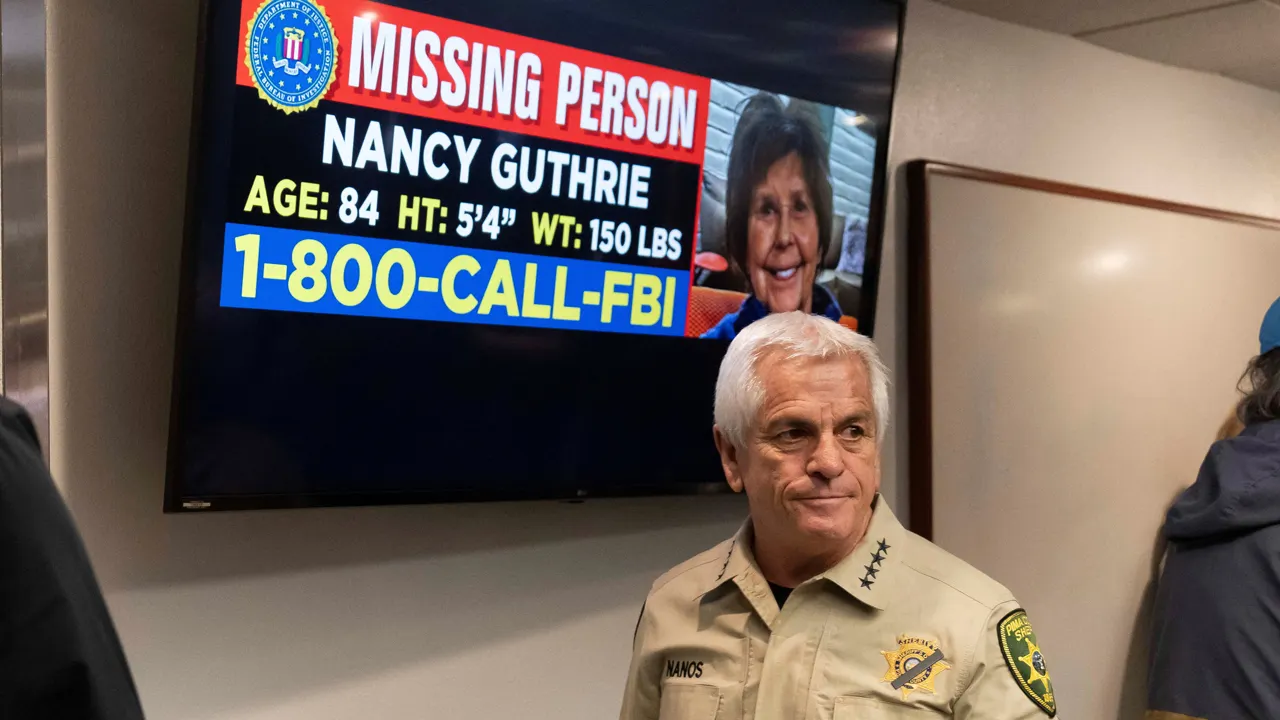
The story of Nancy Guthrie’s disappearance is one that tugs at the heart, unfolding in the quiet suburbs of Tucson, Arizona, where an elderly woman known for her warmth and connections suddenly vanished without a trace. Imagine waking up on February 1 to a home invasion so swift and terrifying that 84-year-old Nancy was forcibly taken from her residence in the early morning hours. It wasn’t some mistaken wander off; the Pima County Sheriff, Chris Nanos, confirmed she was abducted, and the community gasped at the thought of such violence targeting someone so vulnerable. Nancy, a beloved figure with ties to media royalty through her daughter Savanna Guthrie, the “Today” Show host, became the center of a frantic hunt. Her family, grappling with fear and uncertainty, released heartfelt pleas online, begging for her safe return. As days turned into weeks, the case revealed layers of complexity—a ransom note hinting at cryptocurrency demands, suspects lurking in the shadows, and law enforcement racing against time. This isn’t just a missing persons case; it’s a gripping tale of resilience, with investigators piecing together clues from neighborhood surveillance and witness accounts, all while the clock ticks ominously. Nancy’s life, from her days as a trailblazer in journalism to her retirement filled with granddaughters and quiet joys, makes her story all the more poignant. Each day without answers amplifies the agony for her loved ones, who recall her as a fierce independent spirit, always the one organizing family gatherings or sharing wisdom from her adventures. Yet, in this nightmare, strangers and experts alike are drawn in, turning it into a community-wide vigil. The abductors’ choice of ransom via elusive crypto adds a modern twist, evoking images of faceless criminals scheming in the dark web, where money vanishes into anonymity. How does a family even begin to negotiate such a demand? It’s heartbreaking to picture Nancy alone, possibly frightened, her routine of morning walks and crossword puzzles shattered. The case has sparked debates about safety in residential areas, prompting neighbors to double-check locks and install better cameras. Amid the chaos, Sheriff Nanos has emerged as a key figure, his decisions under public scrutiny. But beyond the headlines, this is about human fragility and the unyielding hope that fuels searches, with candlelight vigils and social media threads rallying support. Every tip from a passerby or dash cam footage becomes a lifeline, reminding us of the interconnectedness of lives in crisis. As the sun rises over Tucson’s desert landscapes, the hope persists that Nancy will soon reunite with her family, her story transforming from tragedy to triumph through collective effort and unwavering love.
Diving deeper into the investigation, one can’t help but wonder about the detectives tasked with unraveling this mystery, each wearing the weight of expectation like a heavy cloak. Sources close to Fox News Digital reveal that just one homicide detective from the Pima County Sheriff’s Department has over two years in that specific role, a veteran amidst a team where no one qualifies as a rookie in the department—they’ve all held positions elsewhere, though their past roles remain shrouded in mystery. It’s a setup that should inspire confidence, with experienced eyes scanning crime scenes for the tiniest threads of evidence, like fingerprints on a shattered vase or footprints in the dew-covered grass of Nancy Guthrie’s yard. Picture these investigators, bleary-eyed from long nights pouring over forensic reports, sifting through the remnants of an early morning break-in that left no room for doubt about foul play. The abduction occurred around dawn, suggesting meticulous planning by perpetrators who likely cased the neighborhood beforehand, blending into the ordinary rhythm of suburban life until striking with precision. Detectives have likely interviewed neighbors who might have glimpsed suspicious vehicles or heard muffled noises, painting a picture of a community on edge. Each detective brings their own backstory—perhaps one honed skills in robbery cases, another in violent felonies—turning this into a tapestry of professional expertise. They’re not just following protocol; they’re channeling empathy, imagining what Nancy endured, using that to drive relentless pursuit. But resources are finite, and with only a handful on the case, it’s a reminder of how overburdened local departments can be in high-stakes scenarios like this. The detectives’ daily grind involves coordinating with tech experts to trace potential digital breadcrumbs, whether from the ransom demands or surveillance footage, all while balancing personal lives that might include their own families awaiting their return. Their experience isn’t green; it’s tempered by countless hours in gritty precint rooms, studying body language in interrogations or reconstructing timelines from chaos. Yet, the human element shines through—the frustration when a lead fizzles, the quiet determination to honor victims like Nancy. In interviews, they might share how cases like hers fuel their passion for justice, transforming a job into a calling. As the investigation unfolds, these detectives stand as unsung heroes, their diligence a beacon in the fog of uncertainty, pushing forward with the hope that every clue leads closer to Nancy’s doorstep.
As the case expands, the involvement of the FBI injects a layer of national horsepower, though not without initial hitches that highlight the intricacies of inter-agency cooperation. Federal agents have descended on Tucson, setting up a 24/7 command post buzzing with analysts, crisis managers, and investigators from far-flung field offices, all converging to tackle what they’ve deemed a kidnapping orchestrated for ransom. The FBI’s pledge to work around the clock evokes images of agents poring over maps, encrypting communications, and collaborating with local counterparts in marathon sessions where coffee flows like a lifeline. Yet, whispers from law enforcement sources point to an early delay in local cooperation, with precious days slipping by before federal teams were fully integrated into the fold. Why the lag? Perhaps bureaucratic entanglements or territorial sensitivities in a sheriff’s jurisdiction notoriously independent, leading to friction that could have cost crucial time. In the grand scheme, these agents bring advanced tools—from forensic linguistics analyzing the ransom note’s wording to cyber sleuths tracking cryptocurrency trails that vanish like smoke. On a recent weekend, they returned to Nancy’s home, not as tourists, but to seize cameras, methodically removing evidence that could capture faces or voices from the abduction scene. It’s a scene straight out of a thriller: gloved hands delicately unplugging devices, bagging them for labs where pixels might reveal the unthinkable. The FBI’s spokesperson emphasized the deployment of extra personnel, underscoring the seriousness, while appealing to the public for that elusive tip—perhaps someone spotted a suspicious van or overheard a cryptic message. For Nancy’s family, this federal swoop must offer solace, knowing national resources are mobilized, bridging gaps in capability. But the human toll on the agents themselves is palpable; many have families too, juggling redeployment’s disruption. One can envision late-night calls home, explaining absences to spouses or kids, all for a case that demands everything. The FBI’s track record in high-profile kidnappings, like those resolved through patient negotiation or breakthroughs in ransom evidence, fuels optimism. In this narrative, their presence symbolizes a safety net in turbulent waters, turning individual grief into a shared mission, where every agent carries the weight of uniting a broken family.
Criticism from inside the ranks adds a sharper edge to the story, with former FBI agent Jonathan Gilliam weighing in sharply on the leadership overseeing Nancy Guthrie’s case. Gilliam, drawing from his own vault of experience, doesn’t mince words: he points to Sheriff Chris Nanos as the root of potential pitfalls, suggesting that assigning inexperienced leads to such a high-profile investigation screams of control issues at the top. It’s a candid assessment that humanizes the flaws in a system meant to protect, painting a picture of a sheriff perhaps overwhelmed by the spotlight, making decisions that favor ego over efficacy. Gilliam’s remarks resonate deeply—”If the bulk of detectives are inexperienced, it points to massive control issues by the sheriff himself”—evoking the chaos of a poorly orchestrated symphony where every note is out of tune. Imagine the frustration felt by seasoned investigators forced into roles they’re untested in, their best efforts stymied by directives that prioritize optics over substance. Nancy’s case, with its ticking ransom deadline and media frenzy, demands seasoned hands, not novices fumbling in the heat of the moment. Gilliam doesn’t stop there, calling out Nanopragmatic leadership as unsuitable for high-pressure scenarios, where split-second judgments can mean life or death. It’s a damning critique from someone who’s walked the same halls, witnessing how strong, decisive command can turn the tide in abductions. For the public, this insider’s perspective underscores the fragility of justice systems reliant on fallible leaders. Sheriff Nanos, speculated to have risen through political channels rather than sheer merit, represents the human failings embedded in power structures. Gilliam’s comments echo a broader dialogue on accountability, reminding us that behind every badge, there’s a person capable of error. In Nancy’s story, this criticism amplifies the stakes, urging reflection on how leadership failures can prolong suffering, turning a rescue operation into a study in missed opportunities. Yet, Gilliam’s voice also offers hope—by highlighting flaws, it calls for reform, ensuring future cases like Nancy’s benefit from wisdom earned in the trenches. His advocacy for competent guidance feels personal, as if speaking directly to the family’s anguish, pledging that transparency could salvage what’s at risk.
Amid the swirling investigations and critiques, Sheriff Chris Nanos himself has drawn attention for his visible whereabouts, spotted at a University of Arizona basketball game on Saturday night, a scene that juxtaposes grim duty with public spectacle. In the glow of arena lights, as cheers erupted for the Wildcats, Nanos mingled like any fan, perhaps seeking a brief respite from the relentless murmur of the case. Yet, this weekend outing coincided with a poignant family plea released on Instagram by “Today” host Savanna Guthrie and her siblings, their video a raw, emotional outcry begging for Nancy’s return, the woman’s frailty amplified by their tears and heartfelt words. It’s a humanizing moment, reminding everyone that sheriff isn’t an infallible robot but a person balancing personal life amid chaos. Savanna’s siblings, echoing the plea, shared memories of their mother—her laughter during holidays, her tireless support through careers—transforming the abduction into a deeply personal saga. The siblings’ bond, forged in the shadow of media fame, shines through, their vulnerability a stark contrast to the Sherlock Holmes-esque pursuit by law enforcement. One can empathize with Sheriff Nanos’ apparent need for normalcy; investigations drain the soul, and a game might offer fleeting solace. But critics like Gilliam would argue such appearances distract from the core mission, where every minute counts. The family’s Instagram post has gone viral, hands clasped in prayer, voices trembling as they describe Nancy not just as a mother, but as the family’s heart. This plea humanizes the elite realm of celebrity journalism with raw grief, bridging the gap between public figures and everyday heartbreak. In Tucson, communities discuss the sheriff’s choices, some defending his right to unwind, others questioning priorities. For Nancy’s loved ones, these distant events underscore their isolation, waiting for word as ransom deadlines loom. The basketball game’s roar fades into the night’s silence, a metaphor for life’s juxtaposition—joy amid sorrow, duty interwoven with humanity. Savanna’s Instagram message, with its personal anecdotes and desperate hope, resonates universally, turning the case into a shared yearning for closure.
As the final ransom deadline passed on Monday at 5 p.m., the Nancy Guthrie saga hangs in a delicate limbo, with no fresh communications from alleged kidnappers, leaving family and investigators in a suspended state of uncertainty. The FBI’s spokesperson calmly asserted unawareness of any ongoing dialogue, hinting at a chilling silence that could signal negotiation breakdowns or perpetrators’ retreat into obscurity. For over a week, federal teams have operated tirelessly, deploying reinforcements from across the nation to man the Tucson command post, where specialists in crisis management and analytics toil around the clock, dissecting every fragment of evidence. Yet, the absence of identified suspects or persons of interest looms large, a frustrating void that fuels speculation about homegrown crooks or organized networks exploiting vulnerabilities in elderly care. Public appeals continue fervently, with the FBI urging anyone with knowledge to dial 1-800-CALL-FBI, emphasizing that a solitary tip might shatter the stalemate. Nancy’s family likely clings to faint glimmers of hope, surrounded by support networks that include friends retelling stories of her vivacity. The Pima County Sheriff’s Department, despite Fox News Digital’s outreach, remains shrouded in silence, adding to the intrigue. Experts warn of criminals pivoting to cryptocurrency for ransoms, rendering traditional tracking obsolete and amplifying risks in an era of digital anonymity. For Nancy, this protracted ordeal denies the simple pleasures of aging gracefully—walks in the park, calls from grandchildren—all while her captors, faceless and motivated, potentially revel in their impunity. The human cost ripples outward: investigators battling burnout, families grappling with grief, and communities vigilant against similar fates. Savanna Guthrie’s media presence amplifies the pleas, drawing national empathy to elevate what might otherwise fade. As days stretch, prayers for Nancy’s reunion persist, her story a testament to unwavering human spirit in the face of bewildering cruelty. The FBI’s persistent efforts symbolize collective resolve, each agent a custodian of hope. In this waiting game, every update carries weight, every quiet moment a canvas for miracles, urging all to contribute what they can. Nancy’s disappearance, initially a local shock, evolves into a poignant reminder of kinship that transcends boundaries, where one family’s nightmare becomes a catalyst for communal action and enduring faith in justice’s eventual triumph.