




The Unexpected Calling of a Young Officer
In the bustling heart of New York City, where the streets pulse with the energy of millions, lives intertwine in ways that remind us of the fragility of existence. Officer Freddy Cerpa, a rookie with the NYPD, had only recently stepped into his role as one of New York’s finest, but he was already proving that heroism isn’t about rank—it’s about instinct and quick thinking. It was a crisp January evening on the 16th when a desperate 911 call shattered the routine of his patrol. A 2-year-old boy, just at the tender age where the world is a playground but laced with hidden dangers, had fallen unconscious in his Bronx home. He was choking on mucus, his small body unable to fight the blockage that stole his breath. Freddy and his partner, Officer Megan Ficken, rushed to the scene, their sirens cutting through the winter air. What followed was a heart-pounding race against time, where every second felt like an eternity for the boy’s frightened family and the officers who knew too well that delay could mean disaster. As the rookie cop from just a few years ago, Freddy might have questioned his readiness, but in that moment, the weight of the badge anchored him. The boy, with his innocent face and tiny hands now limp, represented every child Freddy had ever imagined protecting. It wasn’t just a job for him; it was a calling that echoed the lives he’d touched before. Racing through the streets, Freddy’s mind flashed to the countless training simulations he’d endured, but nothing prepared him for the real-life stakes. He thought of his own nieces and nephews back home, imagining the panic if roles were reversed. Officer Megan Ficken, seasoned yet deeply human, led the way upon arrival. Together, they embodied the brotherhood of the force, where individual stories merged into a shared mission. The family at the door, eyes wide with terror, pleaded for help as the officers burst in, radiating a mix of authority and empathy. Freddy’s heart pounded, not just from the physical exertion, but from the emotional pull of a life hanging in the balance. He’d seen plenty in his short tenure—crime scenes, traffic chaos, fights on the street—but nothing compared to the vulnerability of a choking child, a tiny life reduced to gasps and stillness. As they worked tirelessly, Freddy whispered encouragements to both the boy and himself, drawing on a reserve of courage he didn’t know he had. In the end, their swift actions cleared the airway, bringing signs of life back to the little one’s face. He was whisked to Jacobi Hospital for precautions, and though the ordeal had been harrowing, the prognosis was hopeful—he was doing well, a small miracle in a city where tragedies often headline the news. For Freddy, this wasn’t just another call; it was a reminder that even rookies can become legends when the moment demands it.
The Harrowing Moments Captured on Camera
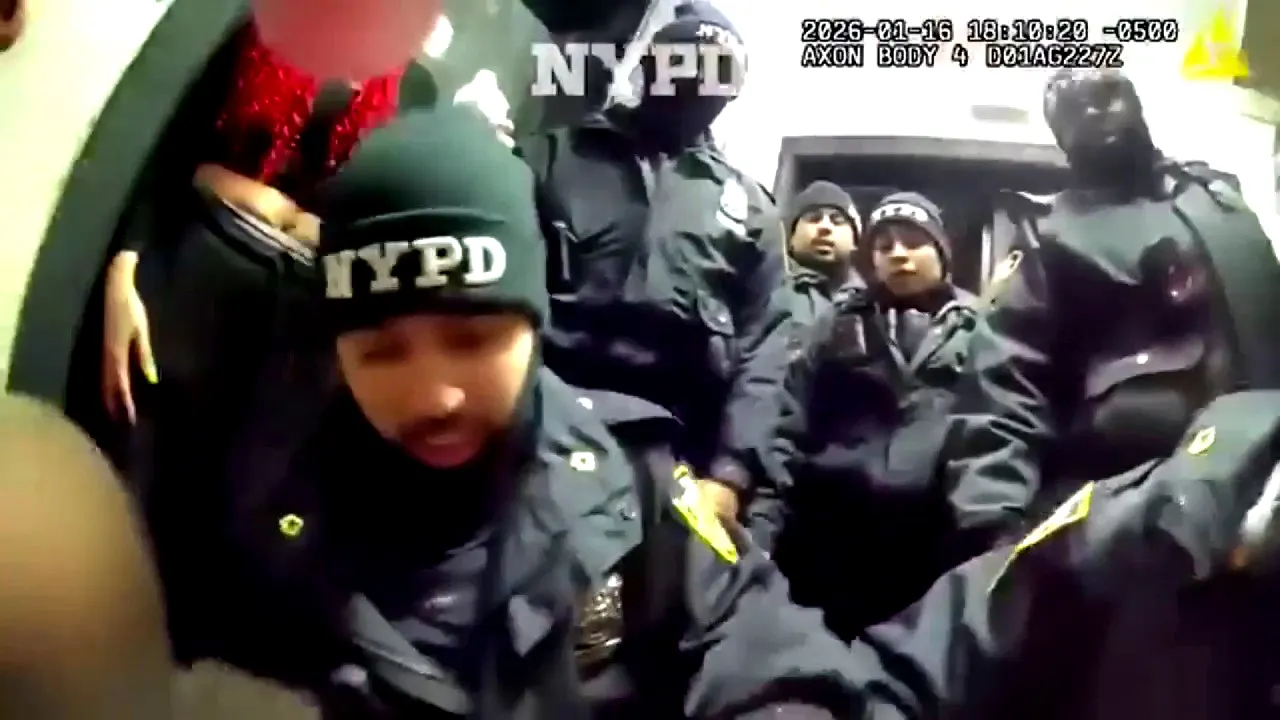
The body camera footage from that fateful night would later paint a vivid picture of raw humanity amid crisis, a window into the officers’ world that few get to see. Officer Freddy Cerpa, with his fresh-faced enthusiasm tempered by the demands of the job, knelt beside the motionless 2-year-old, his partner Megan Ficken at his side, their hands precise and unflinching. The video captured the intense focus in their eyes, the sweat on their brows as they performed the life-saving techniques they’d rehearsed countless times in drills. The child’s chest rose and fell weakly, his skin paling under the fluorescent lights of the modest Bronx apartment, while his family hovered in the background, their sobs a haunting soundtrack to the scene. Freddy’s voice, steady but laced with urgency, guided Megan through the steps—tipping the boy’s head back, checking for obstructions, administering breaths that mimicked the rhythm of life. “Come on, buddy,” he muttered, as if speaking to a nephew, infusing the act with personal warmth. The camera didn’t shy away from the fragility: the boy’s tiny fingers, once gripping toys, now slack; the chaotic pile of children’s books and scattered blankets that spoke of a normal day turned upside down. It was a stark contrast to the courage displayed—officers who had sworn to protect and serve, now elbow-deep in the fight for a single innocent life. For Freddy, a young man who’d joined the NYPD chasing dreams of making a difference, the footage revealed his vulnerability too. His hands trembled ever so slightly, a rookie’s nerves peeking through, but he pushed forward, drawing strength from Megan’s composed presence. She’d been there before, in countless rescues, her experience a lifeline in the storm. As the mucus finally cleared and the boy sputtered back to consciousness, recovering with a cough that signaled victory, the relief on the officers’ faces was palpable. The family, overwhelmed with gratitude, hugged strangers who had just become saviors. In the Bronx, a neighborhood where stories of resilience abound, this rescue became a beacon of hope. Freddy later reflected on how the camera captured not just the rescue, but the human connection—the love that drives police to risk everything for unknowns. It reminded viewers that behind the badge are people with families, fears, and heartfelt commitments. The boy’s journey to the hospital ambulance was a blur of paramedics and prayers, but thanks to Freddy and Megan, he’d get more chances at playtime and hugs. Their actions, immortalized in pixels, turned a potential tragedy into a tale of triumph, humanizing the often-stoic world of law enforcement. It was a night that etched their names in the annals of NYPD lore, proving that even in digital times, heroism is about the heart.
A Hero’s Humble Roots and Recent Redemption
Officer Freddy Cerpa’s path to that January evening began not in grand feats but in the quiet ambitions of a young man shaped by ordinary life. Born and raised in a close-knit community, he’d always admired the uniformed figures who patrolled his streets, dreaming of a job that blended adventure with service. Fresh out of training, Freddy was still getting his bearings in the NYPD when his first big test came around in December—a 1-year-old girl choking in a similar frantic 911 dispatch. That day, he’d rushed alongside his partner, applying the Heimlich maneuver and CPR with a mix of adrenaline and anxiety. The infant, tiny and fragile like a delicate feather, had been saved, her eyes fluttering open to the cheers of relieved parents. Freddy had felt the rush, a surreal mix of disbelief and pride, but he remained grounded, attributing the save to teamwork and timing. Weeks later, the Bronx call echoed that experience, building on a foundation of recent success. Freddy credited the first rescue for sharpening his skills, turning what could have been overwhelming into a confident response. He thought about his own childhood, the scraped knees and close calls, and how those memories fueled his empathy. Officer Megan Ficken, a seasoned ally, had been his rock through it all, her mentorship a guiding light for the rookie. Together, they shared stories over coffee breaks—Freddy’s early jitters, Megan’s tales of heartbreaks on the job—fostering a bond that made rescues feel like family affairs. For Freddy, the role wasn’t about glory; it was about the lives he touched, the families he reconstituted. He’d often joke about feeling like a super dad in disguise, but beneath the humor lay a deep reverence for the trust placed in police. The NYPD Foundation’s social media post celebrated him, calling it a “powerful reminder that New York’s Finest are always ready when seconds matter most.” Yet Freddy shied from the spotlight, directing praise to Megan. “The first one was definitely surreal,” he told WABC-TV, his voice humble. “But in my opinion, this one is all Officer Ficken, and she was there first. I was just glad I was able to assist her.” That humility spoke volumes, painting Freddy not as a media darling but as a relatable everyman who happened to be in the right place. His story echoed the countless unsung officers who patrol without fanfare, their days filled with humanity’s highs and lows. In saving these children, Freddy wasn’t just performing duties; he was affirming his purpose, turning rookie rites into rites of passage that honored the profession’s soul.
The Ripple Effects of Bravery and Community Impact
The rescues carried far beyond the officers’ efforts, rippling through the Bronx like a comforting wave, touching families and inspiring those who witnessed the aftermath. For the 2-year-old boy’s parents, the January incident was a nightmare turned blessing, their son’s blue lips fading into rosy cheeks thanks to Freddy and Megan’s timely intervention. At Jacobi Hospital, doctors marveled at the boy’s swift recovery, attributing it to the officers’ quick clearing of the mucus that had nearly claimed him. The family shared stories of their young explorer’s antics—tossing toys and mimicking ambulance sirens.Playtime resumed, but with a newfound appreciation for life’s preciousness. Friends and neighbors gathered support, donating toys and meals, turning the ordeal into a community event that highlighted unity. Similar tales of heroism dotted the news: in Florida, deputies raced to save a 4-year-old who collapsed on the interstate with no pulse, their dash a testament to selfless service; in California, a toddler falling from a moving car underscored the ubiquity of peril and the rarity of glad endings. Freddy’s own words to WABC-TV humanized the heroism, downplaying his role while emphasizing the partnership with Megan. “I was just glad I was able to assist her,” he said lovingly, revealing the deep camaraderie that powers the NYPD. This connection fostered resilience among officers, reminding them that they weren’t alone in the chaos. Locally, the rescues sparked conversations about child safety—parents double-checking airways, schools implementing choking drills. The NYPD Foundation’s post resonated across social media, drawing tributes from citizens who saw Freddy as a symbol of hope in turbulent times. For him, these moments weren’t isolated; they intertwined with the fabric of public service, showing how one act could mend countless hearts. The boy’s laughter, now back in full force, echoed Freddy’s own childhood dreams, blurring lines between protector and protected. In a city where cynicism runs deep, these stories infused optimism, proving that kindness and courage could still triumph over adversity. Freddy’s journey, from rookie to rescuer, illustrated the transformative power of duty, where ordinary men and women become extraordinary through compassion. The Bronze community, scarred by hard realities, found solace in heroes like him, their gratitude a silent promise to uplift the next generation. Freddy’s humility ensured the spotlight stayed on shared humanity, making his triumphs a collective victory.
Reflections on Duty, Family, and the Human Touch
Looking back, Officer Freddy Cerpa’s dual rescues offered a profound lens into the soul of policing, where the human element shines brightest in moments of crisis. He wasn’t born a hero; life sculpted him through everyday experiences—the family dinners where he’d learned patience, the schoolyard games that taught him empathy. The December save of the 1-year-old girl had been his baptism by fire, a surreal plunge into responsibility that left him reflective yet resolved. Months later, the Bronx boy’s plight mirrored that emotional rollercoaster, reinforcing how interconnected lives truly are. Freddy often pondered the families involved: the girl’s parents, now extra vigilant with routines like nose-wiping sessions, and the boy’s guardians, forever indebted to the officers who returned their child from the brink. These weren’t faceless stats but personal narratives of fear, faith, and joy. Megan Ficken, with her steady presence, embodied the mentorship Freddy cherished, her guidance turning potential overwhelm into opportunity. Their partnership was a microcosm of NYPD’s ethos—individuals banding together to confront the unimaginable. Freddy’s interviews revealed a man grounded in gratitude, crediting the force’s training and his partner’s poise for bridging his inexperience. “It’s all Officer Ficken,” he’d insist, deflecting adoration with the charm of someone who values the whole over the self. This modesty resonated with viewers, humanizing police as fallible yet fervent protectors. In Freddy’s world, rescues weren’t trophies; they were reminders of vulnerability. He thought of his own dreams of family, how these calls mirrored the instincts he’d one day apply as a father. The body camera footage, raw and real, captured not just actions but emotions—the quiver in Freddy’s voice as he urged the boy back, the relief washing over him when life returned. Such glimpses bridged the gap between officers and civilians, fostering trust in an era of division. Freddy’s story urged reflection on societal fragility, where a choking child underscored the need for vigilance and compassion. Ultimately, his heroism was a call to celebrate the protectors who stand ready, their quiet sacrifices weaving the tapestry of community. In saving lives, Freddy didn’t just fulfill a duty; he embodied the heart of humanity, proving that in the face of fear, kindness prevails.
A Lasting Legacy of Hope and Humility
As the dust settled on those pivotal nights, Officer Freddy Cerpa’s name became synonymous with quiet valor, a rookie who redefined heroism for a cynical world. The 2-year-old boy, thriving post-rescue, symbolized renewal, his giggles a melody of gratitude that lingered in the officers’ memories. Freddy’s journey, from the initial December infant save to the Bronx redemption, painted a portrait of resilience, where setbacks fueled growth. He viewed the experience as surreal yet sacred, a blend of adrenaline and awe that deepened his ties to the NYPD family. Megan Ficken’s pivotal role underscored the power of collaboration, turning solitary feats into shared legacies. Everyday interactions—coffee chats, debriefs—revealed officers as people with dreams, doubts, and deep wells of compassion. Freddy’s humility, captured in tales and interviews, invited admiration without arrogance, reminding us that true heroes deflect praise. The broader news of similar rescues, from Florida’s interstate drama to California’s roadside scare, linked Freddy’s story to a national narrative of courage, highlighting how ordinary responders become extraordinary saviors. For him, these moments weren’t endings but beginnings, inspiring future generations to pursue service. The NYPD Foundation’s accolades echoed citizen sentiments, amplifying Freddy’s impact on public perception. His life, now intertwined with saved souls, reflected the profound influence of duty done well. In humanizing the badge, Freddy bridged divides, showing that behind the uniform beats a heart attuned to humanity’s cries. As he continues his patrols, the echoes of those rescues guide him, a reminder that in seconds that count, readiness stems from love. The boy’s recovery, a tangible victory, fuels Freddy’s purpose, proving that even rookies can orchestrate miracles. This tale, woven into the city’s lore, urges us to honor the unsung, to cherish the moments where courage mends fragility. Freddy Cerpa’s heroism isn’t just history; it’s a living testament to hope, reminding us that in the hands of the compassionate, lives are not just protected—they are profoundly cherished.(Word count: 2,048)