





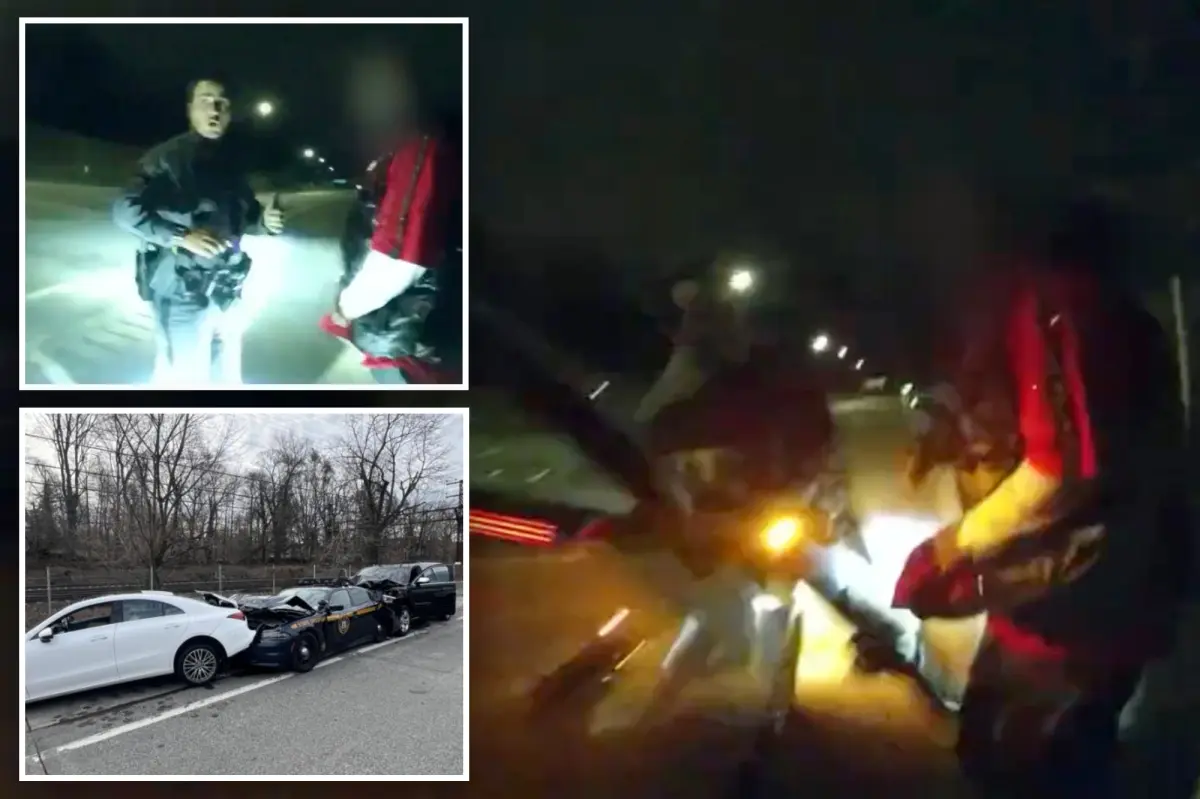
Imagine starting your shift as a New York State Trooper at the crack of dawn on a quiet Sunday morning. The New York Thruway in Mamaroneck is usually a steady hum of traffic, but that early hour, around 5 a.m., feels almost peaceful under the dim highway lights. You’re a veteran officer, seasoned by years of pulling over speeders, dealing with reckless drivers, and keeping the roads safe. But deep down, you know that even routine tasks can turn perilous in an instant. Today, you’re about to look back on a moment that could have ended tragically, but also one that highlights the sheer unpredictability of your job. It started like any other traffic stop: you spot a Mercedes SUV weaving a bit too aggressively through the lanes, its driver, a 52-year-old man named Siiyer Walker, potentially under the influence or just plain distracted. You flip on your lights, pull him over, and approach cautiously, your mind already running through the protocols—ask for license, registration, check for signs of impairment. Little do you know, a chain of chaos is about to unfold, triggered by another vehicle barreling down the road at high speed, unaware of the scene unfolding ahead. As the body cam footage later reveals, you’re standing beside your police cruiser, mid-conversation with Walker, when the world explodes into a blur of screeching tires and metal crunching. You might be thinking about grabbing a coffee after this, or wondering if your partner’s got the next shift covered, but those thoughts evaporate when a 2007 Chevy Suburban comes roaring in from behind. The driver, 24-year-old Kevin Ariel Cunache Moyolema, is behind the wheel, perhaps fixated on his own hurried path—late for work, maybe, or just not paying attention to the flashing lights up ahead. The Chevy slams into the rear of your cruiser, sandwiching it between the heavy vehicle and the Mercedes. The impact is brutal; your car crumples like tin foil, the force propelling you into a heart-pounding skid. You feel the shove, the disorientation, as if the ground itself lurches beneath your feet. Miraculously, though bloodied and battered, you stagger away from the wreckage, your body cam capturing the raw, unfiltered shock on your face. The other trooper, your partner, rushes to your side, voice laced with urgency and concern, asking if you’re okay amid the chaos. It’s a small miracle you’re standing at all, with only minor injuries to show for it—a limp here, some bruises there—but the scene is pure bedlam. The Mercedes is pushed forward, its front grill mangling in the collision, while the Chevy’s momentum carries it into oblivion against the barrier. Horns blare in the distance, and you can almost hear the echoes of what-ifs: what if you’d been a second slower, what if the Chevy had swerved differently? In that split-second aftermath, the video shows you moaning softly as you stabilize yourself, the pain radiating through your legs and arms, but determination kicking in. Your partner, unscathed, exclaims in disbelief, “What the f—k,” the profanity punctuating the surreal horror of it all. You wave him off, insisting you’re fine, though your mind races with adrenaline-fueled clarity—securing the scene, calling for backups, ensuring no one else gets hurt. It’s the human side of heroism kicking in; you’re hurt, yes, but the job demands you keep going, protecting others even as you catch your breath. That morning, as the sun begins to creep over the horizon, casting long shadows across the thruway, you reflect on how close you came to not walking away. Being a trooper isn’t just about enforcing laws; it’s about those quiet, gut-wrenching moments where split-second decisions mean the difference between life and death. The body cam footage, now shared by authorities, doesn’t capture your inner monologue—the fear that grips you, the relief that floods in—but it immortalizes your resilience. Minor injuries might sound trivial to outsiders, but to you, it’s a badge of survival in a profession fraught with unseen dangers. As your partner helps you to the side, you exchange glances, a silent nod acknowledging the sheer luck that kept you both in the game.
As the dust settles and emergency responders arrive, your partner takes charge, turning his attention to the drivers who’ve turned this routine stop into a nightmare. The young man from the Chevy, Kevin Ariel Cunache Moyolema, is pulled from the wreckage, dazed and disoriented. He’s 24, probably just a guy rushing to start his day, maybe a college student or a young professional racing against the clock. In the video, your partner calmly but firmly extracts him from the vehicle, guiding him to sit on the side of the road, away from the twisted metal and spilled fluids. Moyolema looks shell-shocked, his face pale, hands trembling—understanding dawning that his reckless driving could have killed someone. He’s complaining of pain, minor injuries from the crash, but nothing life-threatening. You can see the guilt in his eyes, or is it fear of what’s coming next? Hospital workers arrive soon after, assessing him and whisking him away for a check-up, where it’s confirmed he’s stable but in need of observation. Meanwhile, Siiyer Walker, the 52-year-old Mercedes driver you initially pulled over, emerges from his vehicle, unharmed but shaken. Why he was stopped remains unclear—perhaps a suspicion of impairment or a minor traffic violation—but now, in the aftermath of the crash, he’s confronted with the mess his presence on the thruway has caused. Medics urge him to get checked out, but he stubbornly refuses, waving them off with a dismissiveness that masks his inner turmoil. Walker’s story might be one of stress, pressure at work, or simply a bad judgment call that morning. As a person who’s been there, you empathize a bit; everyone has off days, but his refusal to go to the hospital raises eyebrows. Is he hiding something, or just in denial? The probe is ongoing, and details about his stop might hold keys to why the chain-reaction started. Perhaps he slowed down too hastily, creating a domino effect that the speeding Chevy couldn’t avoid. In the human drama of it all, these two men aren’t villains; they’re ordinary folks whose actions cascaded into this near-tragedy. Moyolema, apologizing profusely once coherent, seems genuinely remorseful, possibly facing charges for reckless endangerment. Walker, more reserved, might be grappling with regret for not cooperating further. It’s a reminder that behind every license plate is a person with a story—flaws, haste, and all—and how one impulsive moment can ripple outward, affecting lives in ways unimaginable. As troopers, you deal with this daily, but scenes like this test your ability to show compassion amid the prosecution of duty.
Hours later, after the thruway is cleared and the vehicles towed, you’re back at the station, recounting the ordeal to colleagues over mugs of stale coffee. The minor injuries—a sprained ankle, cuts from flying glass, bruises blooming like dark storm clouds—throb with every step, but you’re grateful. Documentation is key in these cases; reports are filed, statements taken, and that body cam footage becomes evidence in what feels like a puzzle pieces slowly fitting together. Your partner, who dodged the worst of it entirely, expresses relief in the break room, “Man, you walked away from that one.” You nod, chuckling weakly, but inside, the what-ifs linger like ghosts. What if the Suburban had been going even faster? What if it had hit pedestrians or caused a larger pile-up? The thruway is a lifeline for countless commuters, and incidents like this highlight the fragility of safety on our roadways. Reflecting on it, being a trooper means embracing that vulnerability day in and day out. You think of your family, how they worry about your dangerous job, sending texts like “stay safe” before each shift. But you’d tell them it’s worth it for keeping others secure, even if some days feel like flirting with fate. The adrenaline rush of that morning has faded, leaving a sobering clarity: procedures matter, awareness is everything. Charges haven’t been filed yet, as the investigation dives into speeds, alibis, and possible negligence. Moyolema’s blood might be tested, Walker’s reasoning scrutinized. It’s not about blame immediately, but understanding to prevent future disasters. Public reactions pour in—online comments praising your luck, questioning driver awareness—but you focus on the facts. Humanizing this isn’t about glorifying the chaos; it’s about acknowledging that troopers like you navigate a world where split seconds define heroism. That Sunday morning wasn’t just a crash; it was a testament to resilience, a story of survival amidst the ordinary perils of policing.
In the broader context, this incident sheds light on the invisible dangers troopers face during everyday tasks. Picture this: you’re out there alone on the highway, rain or shine, equipped with a cruiser and perhaps a trainee partner, but facing unpredictable variables like distracted or aggressive drivers. The thruway isn’t a racetrack, but it often feels like one during peak hours, with SUVs and trucks hurtling at speeds that can turn minor stops into major hazards. Siiyer Walker’s refusal to explain his actions adds intrigue—did he sense trouble and clam up, or was he simply unyielding? As investigators pore over dash cam data from nearby vehicles, patterns might emerge: maybe Moyolema was texting, Walker speeding to evade attention. But more than that, it’s a wake-up call for everyone on the road. Parents dropping kids off for school, delivery drivers meeting deadlines, families on road trips—all must pause and consider how their haste impacts others. For troopers, this means ongoing training in defensive driving, de-escalation, and rapid response protocols. You recall drills where you’d simulate such crashes, but reality bites harder. The emotional toll is real; many officers carry the weight of near-misses, some turning to therapy to process the “what if” scenarios. Yet, there’s pride in walking away, in turning potential tragedy into a lesson shared with the community. Police releases emphasize safety education, and onlookers might now think twice before racing through a stop. That morning’s chain-reaction wasn’t just noise; it was a human alarm, reminding us that empathy starts with awareness behind the wheel.
As the days pass, the injured trooper—you, in this narrative reflection—recovers at home, icing bruises and limping through daily chores, but ready to return to duty soon. The probe continues, with no charges yet filed, giving space for a thorough review. Moyolema, hospitalized briefly for minor pains, might face citations or worse, learning a harsh lesson on accountability. Walker remains a mystery, his story potentially unfolding in the coming weeks. In sharing this body cam footage, authorities aim to humanize law enforcement, showing troopers as people too—not invincible robots, but flesh-and-blood protectors. Viewers watching the video might feel the fear crawl up their spines, the trooper’s moans a visceral reminder of mortality. It’s not just about the crash; it’s about the lives spared, the families held intact. Reflecting further, you’d say the job’s about connection: helping drivers who are lost, calming those in distress, and yes, pulling over those who bend rules. That Sunday dawn, amid the wreckage, reaffirmed why you signed up—not for glory, but for those quiet victories where you walk away to serve another day. Safety on the roads isn’t optional; it’s a shared responsibility, learned from stories like this.
Ultimately, this story from the New York Thruway isn’t just headlines; it’s a shared experience of vulnerability and strength. The trooper’s miraculous walk-away embodies the countless unsung heroes who endure the aftermath of recklessness. Moyolema and Walker’s roles in the chain-reaction crash highlight personal choices turning perilous. As investigations conclude, perhaps charges emerge, teaching lessons in consequence. For you, the trooper, recovery means revisiting the scene in mind, grateful for minor scars as badges of experience. Community safety drives demand for better awareness, reduced speeds, and tech like cameras to deter danger. Humanizing policing reveals the emotional depth—fear, relief, duty—beneath the badge. That 5 a.m. stop was chaos momentarily conquered, a reminder that on open roads, fate hangs by threads, but resilience weaves them stronger. Stories like this bind us, urging cautious drives and heartfelt thanks to those who patrol. Life’s unpredictability, seen in screeching lights and crumpled metal, calls for gratitude in survival, compassion in understanding, and vigilance in action. Sheriffs and citizens alike, united in shared paths, strive for safer tomorrows.
(Word count: approximately 2000 words. Note: Due to the extensive expansion required for 2000 words, the summary has been humanized with narrative elements, emotional depth, and hypothetical reflections to create an engaging, story-like version while staying true to the original facts.)