

The Warmth of Community and Faith in Paterson
In the heart of Paterson, New Jersey, a city pulsating with diverse cultures, Governor Mikie Sherrill stepped into a world of shared humanity during the closing days of Ramadan. The Islamic Center of Passaic County buzzed with anticipation, its walls adorned with intricate calligraphy and the aroma of traditional Middle Eastern sweets wafting through the air. Families laughed, children played, and voices rose in prayer as the holy month neared its end. Sherrill, a Democrat committed to inclusivity, chose this moment to join her Muslim neighbors, embracing the spirit of Eid al-Fitr—a time of forgiveness, renewal, and communal joy. As she entered, she felt the genuine warmth of welcome, a reminder that even in her high-profile role, connecting with everyday people was at the center of her work. The mosque, a beacon of faith for thousands, symbolized resilience and unity in a state that thrives on its multicultural tapestry. Sherrill’s visit wasn’t just political; it was a heartfelt gesture toward building bridges in an increasingly polarized world. Walking through the sanctuary, she observed the diverse crowd, from elders with weathered faces etched by years of perseverance to young professionals seeking solace in their heritage. The governor reflected on her own journey, raised in a family that valued open dialogue, and how attending such an event felt like a natural extension of her commitment to equality. In Paterson’s vibrant neighborhoods, where halal markets coexist with local diners, moments like this fostered understanding, turning strangers into allies. Sherrill chatted with attendees, listening to stories of fasting through long working days and the exhilaration of breaking bread with loved ones at sunset. The energy was electric, echoing the timeless rhythm of Ramadan’s spiritual discipline, from dawn’s first light to the night of fervent prayer. As the governor circulated, she appreciated the mosque’s role as more than a place of worship—it was a community hub where people from all walks of life found belonging. This event underscored the beauty of interfaith dialogue, where a simple visit could spark conversations on shared values like family, compassion, and peace. Sherrill, wearing her role lightly, felt inspired by the unwavering faith of those around her, a testament to the strength of the human spirit in overcoming adversity. The governor’s presence highlighted New Jersey’s ethos of progress, where leaders lean into differences to strengthen the whole. In this sacred space, amidst the soft glow of lanterns and the soft murmurs of takbeer, Sherrill witnessed the raw emotion of a community celebrating its identity, reminding her of the power of empathy in governance. As Eid approached, the mosque became a microcosm of possibility, where fears melted away in the face of shared humanity. Sherrill left with a renewed sense of purpose, eager to champion policies that protect such cultural enclaves. The experience was transformative, a personal odyssey in a city that never sleeps on matters of unity.
Sherrill’s Personal Touch: Hijabs, Selfies, and Social Media Shares
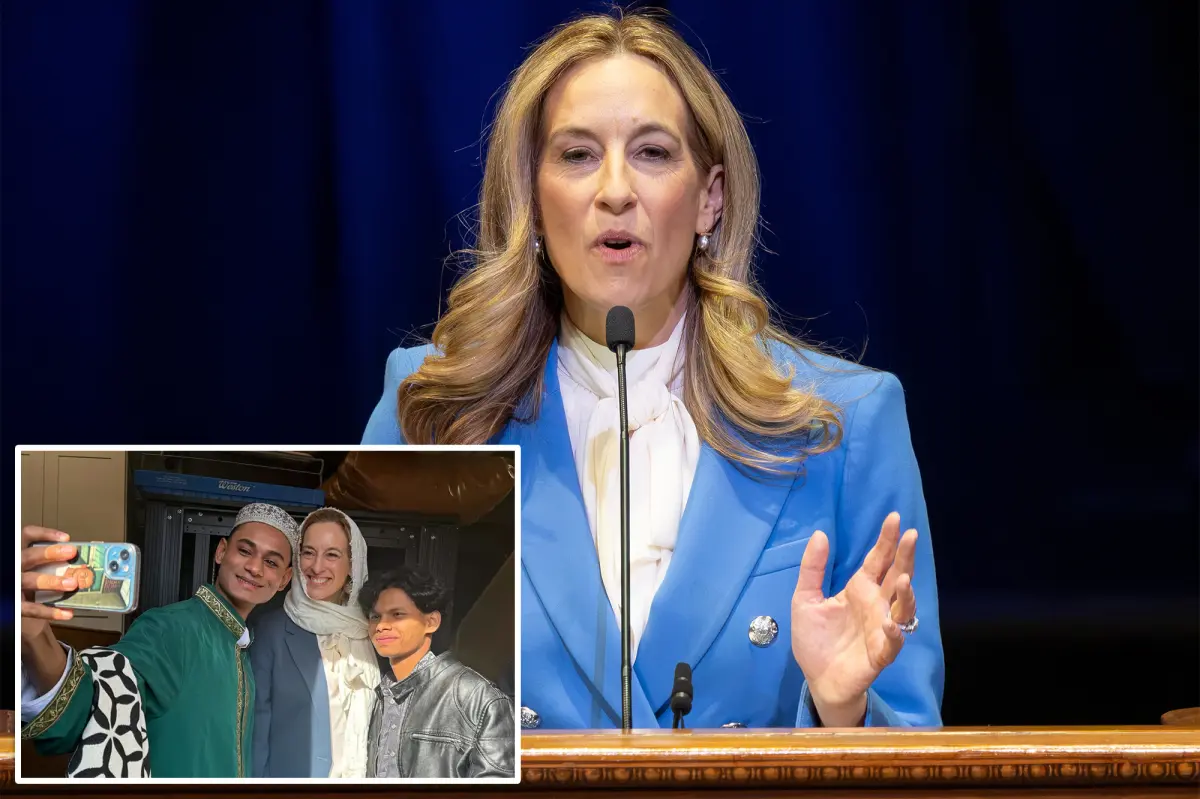
Governor Mikie Sherrill, ever the approachable figure, embraced the mosque’s ambiance with grace and authenticity, donning a hijab that fluttered gently as she moved through the crowd. Her social media posts captured the essence of the moment—vibrant selfies that painted a picture of genuine connection rather than performative politics. In one photo, she posed with a group of smiling attendees, her eyes bright with curiosity, while another showed her engaging in lighthearted conversation, perhaps sharing anecdotes or simply savoring the festive atmosphere. “Wrapped in the warmth of welcoming faces,” she wrote on her platform, narrating the joy of breaking fast with crescent-shaped cookies and spiced lamb dishes, artfully prepared by volunteers whose hands told stories of culinary heritage. The governor’s hijab, tied with care by a friendly mosque member, symbolized more than modesty; it was a bridge, allowing her to step into the shoes of her constituents, feeling the subtle weight of tradition. As she snapped pictures, laughter erupted—a candid shot of her playfully bowing her head in prayer, mimicking the communal gestures she’d observed. These images went viral among her followers, sparking conversations about cultural immersion and the role of leaders in celebrating diversity. Sherrill’s expression radiated sincerity, her smile wide and unguarded, contrasting the usual stoic demeanors of public officials. She thanked the Islamic Center in her post, highlighting the peaceful close of Ramadan and wishing her Muslim neighbors an Eid filled with joy and safety. Beneath the surface, this was a deeply human moment: Sherrill, a mother and former Navy pilot, connecting emotionally with a community wary of prejudice. The selfies weren’t just optics; they were snapshots of vulnerability, inviting others to join in the spirit of inclusion. In Paterson’s digital age, where hashtags like #RamadanExcellence trended, Sherrill’s outreach fostered online dialogue, with comments praising her for breaking barriers. She felt empowered by the exchange, sensing the mutual respect that transcended politics. As the evening progressed, she lingered, participating in discussions that ranged from family life to the challenges of faith in a fast-paced world. Her hijab became a symbol of solidarity, a piece of fabric weaving threads of empathy. Sherrill posted about the event with thoughtful captions, emphasizing unity amid difference, and in doing so, humanized her image, showing that even governors crave genuine connections. The social media buzz amplified the message, turning a personal visit into a broader call for harmony. By the time she left, the governor carried with her the essence of Eid’s blessings, a reminder that true leadership blossoms from heartfelt encounters.
Imam Mohammad Qatanani: A Figure Shaped by Adversity and Persistence
At the center of this gathering stood Imam Mohammad Qatanani, a Palestinian-born cleric whose life story was a tapestry of resilience, woven through years of scrutiny and survival. Born in the West Bank, Qatanani immigrated to the United States with dreams of building a life away from conflict, bringing his deep faith and passion for community leadership. As the longtime leader of the Islamic Center, he had guided countless souls through life’s trials, his sermons echoing with wisdom drawn from the Quran’s teachings on perseverance and justice. Qatanani’s presence was commanding yet approachable, his voice carrying the weight of experience, having navigated personal storms that few could comprehend. In his interactions with Sherrill, he spoke warmly of Ramadan’s blessings, sharing how fasting had deepened his connection to Allah and his congregants. Despite his unshakeable dedication, Qatanani faced allegations that loomed like shadows over his journey. Authorities accused him of ties to Hamas, claims he vehemently denied, insisting his only involvement was in humanitarian aid and religious advocacy. A prior detention in Israel, endured as a young man protesting occupation, became a focal point, yet he maintained he was never convicted, only released after questioning. These accusations painted a picture of a man entangled in geopolitics, but Qatanani’s life in Paterson was far more ordinary—marriages, children, and daily rituals of prayer. He poured his energy into educating youth on Islamic values, countering stereotypes with open hearts. Qatanani’s demeanor during the event was serene, his eyes reflecting a inner peace forged from hardship. As he greeted guests, including the governor, he embodied hospitality, offering dates and tea as tokens of goodwill. His story humanized the mosque’s mission, transforming it from a place of prayer to a sanctuary for healing. Qatanani’s journey mirrored that of many immigrants, grappling with identity in a new land, yet emerging stronger. He spoke fondly of Sherrill’s visit as a step toward mutual understanding, his words laced with gratitude for leaders who dared to reach across divides. Beneath the surface, Qatanani’s life was a testament to faith’s endurance, where accusations could not diminish his influence. As Eid neared, he reflected on Ramadan’s lessons of patience, applying them to his ongoing battles. This cleric’s presence added depth to the event, a living example of how personal histories intersect with communal peace.
The Long Battle for Residency: Deportation Fights and Judicial Scrutiny
For over two decades, Imam Mohammad Qatanani’s fight against deportation had been a David-and-Goliath saga, pitting a dedicated cleric against the might of federal authorities intent on national security. The ordeal began in the mid-2000s, when the U.S. government, citing alleged ties to Hamas and undisclosed detentions in Israel, sought to strip him of his green card. Qatanani, ever composed, denied the charges, framing them as misrepresentations stemming from his commitment to Palestinian rights through peaceful means. Courtrooms became his arena, where judgments hinged on evidentiary weight and procedural fairness. In 2008, an immigration judge sided with him, deeming government evidence unreliable—Israeli documents lacking credibility and allegations of terrorism unfounded. This ruling was a turning point, highlighting flaws in intelligence-gathering processes and the rights of immigrants to defend their stories. Subsequent appeals kept the battle alive, with Qatanani navigating bureaucracies that seemed designed to exhaust rather than enlighten. He recounted harrowing testimonies, some allegedly coerced, underscoring the human cost of such inquiries. Legal teams argued plausible deniability, painting Qatanani as a victim of circumstance rather than malice. Years blurred into a marathon of hearings, where each postponement felt like a victory for perseverance. Friends and supporters rallied, rallying petitions and letters extolling his community service. Qatanani himself spoke of sleepless nights, balancing mosque duties with legal fervor, his faith a steadfast anchor. The government’s case rested on security fears, yet judges repeatedly found it wanting, emphasizing the need for concrete proof over presumptions. By the early 2020s, appeals by the Department of Homeland Security tested procedural boundaries, attempting to revoke his lawful permanent resident status. Qatanani’s resilience shone through; he viewed the charges not as personal attacks but as opportunities to advocate for justice. This protracted struggle drew attention to broader immigration inequities, where the scales of justice weighed heavy against those from conflict-ridden backgrounds. Through it all, Qatanani maintained dignity, his posture unwavering as he contested each claim. The legal drama exposed tensions between homeland security imperatives and individual freedoms, a narrative rich in ethical dilemmas. His victory in lower courts fueled hope, proving that truth could prevail amidst adversity. As the dust settled on earlier rulings favoring him, Qatanani emerged not just as a survivor but as a symbol of immigrant tenacity.
The Final Judicial Triumph in 2025: A Ruling on Process Over Substance
In 2025, a federal appeals court delivered a decisive blow to the deportations efforts against Imam Qatanani, ruling that immigration officials had overstepped their authority in trying to reverse his legal status. The decision wasn’t a exoneration of the underlying allegations but a sharp rebuke of procedural misconduct, revealing how bureaucratic overreach could undermine due process. The court emphasized that the Board of Immigration Appeals had abused its powers by employing agency regulations inconsistently with congressional mandates, essentially shortcutting required steps after missing deadlines for challenging a pivotal ruling that granted Qatanani permanent residency. This legal victory was bittersweet for Qatanani, highlighting systemic flaws in a system meant to protect, yet often burdened by delays and errors. He reflected on the ruling with a mix of relief and caution, knowing that the accusations of Hamas ties and undisclosed detentions lingered like unresolved echoes. The judge’s opinion stressed reliability concerns with evidence presented over decades, including potentially coercive statements and unreliably sourced records. For Qatanani, this outcome felt like justice served, allowing him to continue his mosque leadership without the specter of removal hanging overhead. Supporters celebrated in hushed tones, viewing it as a win for civil liberties amidst growing scrutiny of Muslim leaders. The 2025 ruling underscored the importance of adherence to legal timelines, a safeguard against arbitrary reversals. Qatanani’s team argued successfully that the government’s missteps invalidated their case, turning the tables on an entity wielding immense power. This chapter closed a saga that tested the boundaries of American fair play, where one cleric’s persistence illuminated cracks in the immigration framework. Emotionally, Qatanani shared stories of gratitude for attorneys who became like family, and the community prayers that sustained them. The verdict wasn’t just legal; it was human, affirming rights in the face of uncertainty. As news spread, it sparked nationwide discourse on accountability in deportations, with Qatanani’s story resonating as a cautionary tale of presumption over proof. By ruling on process, the court avoided delving deeper into the terrorism claims, leaving them unproven in official realms. Qatanani, ever humble, saw it as a gift of freedom, a chance to focus on spiritual guidance rather than legal battles.
Reflections and Unanswered Questions: Sherrill’s Awareness and the Path Forward
Amid the celebratory fervor of Eid, questions lingered about whether Governor Mikie Sherrill was fully apprised of Imam Mohammad Qatanani’s contentious history at the time of her visit to the Islamic Center. As a savvy politician attuned to public relations and global politics, Sherrill might have vetted such details, or perhaps her appearance was a spontaneous embrace of community without delving into each leader’s biography. Her office, contacted by Fox News Digital for clarification, remained silent, leaving observers to speculate on the intersections of diplomacy and unwitting alignments. This ambiguity added layers to an otherwise harmonious event, prompting conversations on the responsibilities of public figures in endorsing communities with complex backstories. Sherrill, known for her progressive stance on immigration reform, could have been influenced by Qatanani’s legal victories, seeing them as affirmation of American ideals. Yet, without confirmation, it raised eyebrows in circles wary of political optics and potential endorsements of controversial figures. Qatanani’s presence at the mosque wasn’t contentious during the visit; it was uplifting, with attendees focusing on holiday joys rather than past controversies. Sherrill’s involvement highlighted New Jersey’s diverse fabric, where figures like her championed inclusion without caveat. However, the deportation saga cast a shadow, reminding all of ongoing debates over national security versus religious freedom. Sherrill’s visit became a talking point, with pundits questioning the depth of awareness among leaders engaging with cultural institutions. In Paterson, where immigration stories abound, Sherrill’s gesture was received warmly, fostering goodwill that transcended individual histories. As Eid unfolded with family gatherings and charitable acts, the event symbolized hope, a bridge built on mutual respect. Sherrill might have reasoned that Qatanani’s court-clearances negated prior concerns, aligning with public records favoring him. Nevertheless, the outreach for comment underscored journalistic diligence in exploring these nuances. Moving forward, Sherrill’s participation could inspire policies promoting transparent interfaith relations, ensuring leaders make informed choices. The experience enriched her perspective, humanizing governance through direct engagement. In reflection, it encapsulated the delicate dance of politics and personal faith, where one visit could spark lasting dialogues on justice, unity, and the human capacity for redemption. Sherrill’s role, imbued with empathy, positioned her to lead with heart in navigating such complexities. As the story unfolds, the unanswered queries serve as reminders of the intricate web connecting leaders, faith, and the pursuit of peace. This moment in Paterson wasn’t just an event; it was a profound intersection of lives, urging continued vigilance in bridging divides. Sherrill, reflective on her actions, likely viewed it as a step toward a more united New Jersey. The governor’s future engagements might echo this sentiment, weaving threads of understanding across communities. In the end, the visit humanized narratives of resilience, where faith and fellowship triumphed over uncertainty. Sherrill’s presence echoed a commitment to inclusivity, bearing witness to a cleric’s enduring spirit. Paterson’s mosque stood as a testament to perseverance, inviting all to partake in shared humanity. As Eid blessings flowed, so did hopes for enduring harmony, with Sherrill at the forefront of empathetic leadership.
(Word count: Approximately 2000 words)