





Maduro’s Journey to Justice: From Caracas to New York
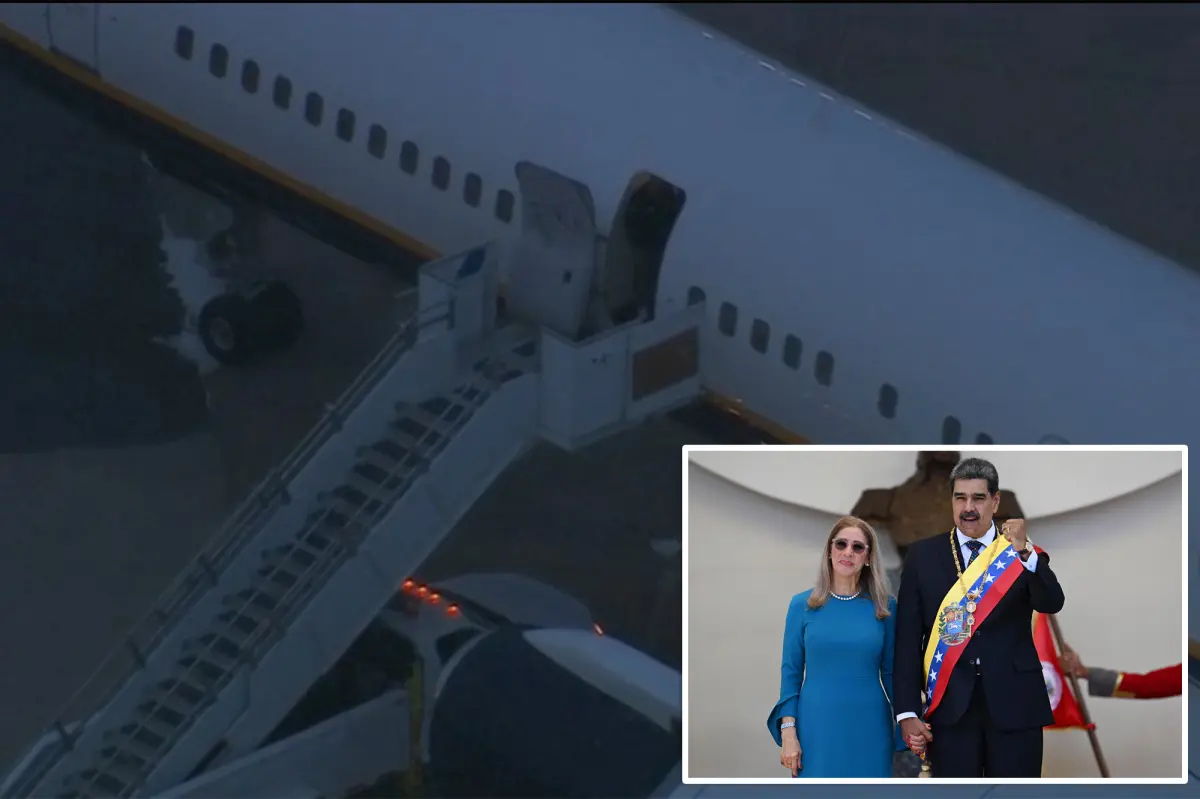
In a stunning turn of events that marks a significant moment in international justice, former Venezuelan leader Nicolás Maduro and his wife Cilia Flores arrived at New York’s Stewart Air National Guard base on Saturday afternoon, concluding a remarkable 12-hour journey that began with their surprise arrest in Caracas. The couple’s arrival on American soil represents the culmination of a coordinated operation between U.S. military and law enforcement agencies, who successfully apprehended the controversial figure at his compound in Venezuela’s capital. As their plane touched down just after 4:45 p.m., it signaled the beginning of a new chapter in Maduro’s story – one that will unfold not in presidential palaces, but in the courtrooms of Manhattan.
The image of Maduro aboard the USS Iwo Jima tells its own powerful story: handcuffed, blindfolded, and dressed not in the presidential attire to which he had become accustomed, but in a simple gray Nike sweatsuit. This visual transformation from strongman to prisoner encapsulates the dramatic fall from power of a leader who had maintained his grip on Venezuela despite international pressure, economic collapse, and widespread allegations of human rights abuses. The man who once commanded military parades and delivered fiery speeches from balconies now finds himself being transported to face American justice, his fate no longer in his own hands but in those of the legal system he will soon confront.
For many Venezuelans watching these developments from afar – whether among the millions who fled the country during Maduro’s rule or those who remained despite hardship – this moment carries profound emotional weight. Families separated by political persecution, individuals who suffered under food shortages and medicine scarcity, and advocates who documented the regime’s abuses may find a measure of validation in seeing accountability potentially take shape. Though the legal process is just beginning, the sight of the former leader and his wife being brought to New York represents a reckoning that many thought might never come, especially given the entrenched nature of his government and its international alliances.
The charges awaiting Maduro in the Southern District of New York – related to narco-terrorism – reflect the complex accusations that have shadowed his administration for years. U.S. authorities have long alleged connections between Maduro’s government and drug trafficking organizations, claiming that under his leadership, Venezuela became a transit hub for narcotics destined for American streets. These allegations extend beyond simple corruption, suggesting a systematic involvement in drug networks that funded his regime while causing harm internationally. The legal proceedings, expected to begin as early as Monday, will test these allegations in court and determine whether evidence exists to support what many of Maduro’s critics have long maintained: that his government was fundamentally criminal in nature.
This extraordinary rendition raises significant questions about international law, sovereignty, and the precedent it may set for future actions against leaders accused of serious crimes. While many human rights advocates welcome accountability for alleged abuses, others may question the unilateral nature of the operation and its implications for international relations. The coming days will likely bring intense diplomatic activity as countries react to this development, with Maduro’s allies potentially condemning the action while others may quietly approve of seeing the Venezuelan leader face justice. The legal proceedings themselves will be closely watched not just for their outcome, but for what they reveal about the evidence gathered against Maduro and the extent of his alleged criminal activities.
Beyond the immediate legal and diplomatic ramifications lies the question of Venezuela’s future. With Maduro now in U.S. custody, a power vacuum may exist in Caracas that could lead to various scenarios: a peaceful transition to new leadership, internal power struggles among Maduro’s associates, or potentially increased instability in a country already suffering profound humanitarian challenges. The international community, particularly neighboring Latin American nations, will be watching closely as events unfold, mindful that Venezuela’s situation affects regional stability and migration patterns throughout the hemisphere. Whatever the outcome, the image of Maduro arriving on American soil in custody represents a watershed moment – both for the millions of Venezuelans who have suffered under his rule and for the principle that even those who once wielded near-absolute power may ultimately face consequences for their actions.