




The Rise and Fall of a Trusted Teacher
Julie Rizzitello seemed like the epitome of a dedicated educator, a 37-year-old English teacher at Wall High School in Wall Township, New Jersey, where she had been shaping young minds since 2013. With an annual salary of about $62,000, she immersed herself in her community, even drawing from her family’s roots in the area. Her family owned a bagel shop in Belmar, a spot that later became unwittingly tied to her darkest secrets. On the surface, Julie appeared to embody the caring teacher archetype—passionate about literature, engaged in school activities, and trusted by parents to guide their teenagers through the turmoil of adolescence. Little did anyone suspect that beneath this facade lurked a predator who would manipulate her position of authority for personal gratification. It started innocently enough, or so she probably justified it to herself. In the world of education, teachers often form close bonds with students, helping them navigate academic pressures, personal struggles, and the confusing transition to adulthood. Julie leveraged this trust in ways that were textbook examples of grooming, as prosecutors would later describe. She met her first victim when he was a freshman, an impressionable young man eager for guidance in a high school world full of social hierarchies and self-doubt. Spotting his vulnerability, she cultivated a friendship that extended beyond the classroom, offering advice, support, and the illusion of a safe space. Months turned into something more sinister as she isolated him from peers, manipulated his emotions, and escalated their interactions toward sexual boundaries she should have known were forbidden. The grooming was methodical: subtle at first, with private conversations and shared secrets, building a dependency that blurred lines between educator and confidant. Inside these moments, Julie must have felt empowered, the thrill of control masking any nagging guilt. Her second victim entered the picture later, when he was a junior, another life she influenced under the guise of mentorship. By the time authorities caught on, the damage was profound, affecting not just the boys but the entire school community that had placed faith in her. This was no isolated slip-up; it was a calculated breach of trust that echoed similar scandals nationwide, reminding us how predators can hide in plain sight within institutions we hold dear.
Fostering Trust to Exploit Vulnerability
Humanizing what happened requires peering into the lives Julie built relationships with, starting with the first victim, a teenager named in court documents who began his junior year at Wall High School around the time Rizzitello targeted his freshman counterpart. Picture him as a typical high school kid—navigating homework, friendships, and that awkward phase of growing up—when his English teacher singled him out for extra attention. She praised his writing, offered to tutor him privately, and even suggested he work at her family’s Belmar bagel shop, a recommendation that seemed helpful but served as a bridge to clandestine encounters. The shop, a cozy local hub filled with the aroma of freshly baked breads and the chatter of regulars, became a oddly incongruous setting for her exploitation. What began as casual chats about books and dreams soon morphed into emotional manipulation. Julie isolated this young man from his support network, crafting a narrative of shared secrets and mutual understanding that made him feel special. She texted him frequently, sent suggestive photos, and arranged secret meetups, all under the pretense of a supportive adult figure. By the time they crossed into sexual territory in November 2017 and January 2018, he was 17, still a minor grappling with the confusion of hormones and power imbalances. The acts occurred at her Brick Township home, a place meant for family and rest, now tainted by betrayal. Julie probably viewed this as a consensual escape from everyday drudgery, but prosecutors saw it as textbook grooming: leveraging her authority to create an unequal dynamic. The second victim, a freshman-turned-student she guided over years, experienced similar tactics in 2024. When he turned 18 just before the encounters in May and June that year, it didn’t erase the months of buildup. They had intimate contact in his car in a Brick parking lot, with Julie sending nude photos that further entangled him. Authorities uncovered a pattern: she asked them both to delete evidence from their devices while the investigation brewed, a desperate bid to erase her misdeeds. These weren’t spontaneous acts of passion but calculated manipulations, where an experienced adult preyed on impressionable youth entrusted to her care. The boys, like many victims in such cases, suffered in silence, their trust shattered by someone they admired.
The Web of Encounters and Deception
Delving deeper into the human story, the variety of locations where Julie’s abuses unfolded paints a picture of a woman constantly seeking opportunities to act on her impulses without detection. The bagel shop her family owned in Belmar stood out—a public yet secluded space where the victims worked at her behest, transforming a community business into a playground for her predatory behavior. Imagine the contrast: the warm, inviting smells of bagels mingling with the shame and secrecy of unfolding assaults. One victim recounted intercourse there, the nonchalant bustle of customers nearby hiding the horror. Her home in Brick Township was another stage, a private sanctuary turned into a site of exploitation during late-night visits when she feigned mentorship. The parking lot in Wall Township added a mobile element to her deceit, with sexual contact occurring in a vehicle that offered fleeting privacy amid the mundane routines of suburban life. Prosecutors pieced together a timeline that showed escalation over months, not days, involving physical acts corroborated by photos, texts, and affidavits that made the narrative undeniable. Julie’s actions weren’t random; they were orchestrated, with isolation tactics keeping the boys from confiding in others. She might have rationalized it as harmless fun, drawing on the media’s casual depictions of celebrity-teacher relationships, but the reality was far from glamorous. By requesting deletions of digital evidence during the probe, she revealed a self-preserving cunning that added insult to injury. Humanizing this isn’t about excusing her but understanding how a seemingly stable woman—employed, recognized for her teaching prowess—could harbor such destructive tendencies. The victims’ ages, with one just 17, underscored the predatory nature: they were still children in many respects, navigating the vulnerable threshold of adulthood. This case mirrored others, like the West Virginia teacher fired after child sex abuse charges, or the Missouri substitute teacher sentenced for trading money and drugs for sex with students, highlighting a troubling pattern in education where authority breeds vulnerability. Julie’s story served as a cautionary tale, showing how close supervision in schools is crucial to prevent such betrayals.
Unearthing the Truth Through Courage and Investigation
The investigation that unraveled Julie Rizzitello’s web began discreetly but built momentum through bravery and persistence. Wall Township police, alongside the Monmouth County Prosecutor’s Office Special Victims Bureau, started with a tip from a district employee who noticed her inappropriate relationship with a student. This whistleblower—a fellow educator or staff member—deserves recognition for acting on suspicions, potentially saving others. Initially, the focus was on the 2024 incidents, where Rizzitello was arrested in July without resistance, as reported by local media like the Coast Star. She had pleaded guilty by September to two counts of second-degree sexual assault, a downgrade or admission that hinted at plea negotiations. Digging deeper, investigators uncovered the 2017-2018 abuses with the other victim, piecing together affidavits of probable cause that included explicit details of intercourse at her home. Photos and messages from their phones corroborated the first victim’s account, turning digital traces into damning evidence. Julie’s attempts to purge these records from the victims’ devices only underscored her guilt, a futile maneuver in an era of forensics that can recover deleted data. The boys came forward after feeling isolated, perhaps only after her arrest emboldened them, illustrating the psychological barriers victims face. Wall Township Public Schools cooperated fully, suspending her and later resigning her officially, though she had already forfeited her license. Humanizing the investigators’ work reveals the emotional toll: poring over intimate details in pursuit of justice, balancing sensitivity with the need for facts. This wasn’t just casework; it was about restoring safety to a school community rocked by betrayal. Similar probing in adjacent cases, like reports of a former Texas coach using AI documents to groom a teen, shows how technology complicates modern investigations, making the Monmouth team’s diligence even more commendable. The victims’ decision to speak up, amid fear and shame, transformed personal trauma into public accountability, a testament to resilience in the face of trusted fiends.
Judgment Day and Its Lasting Echoes
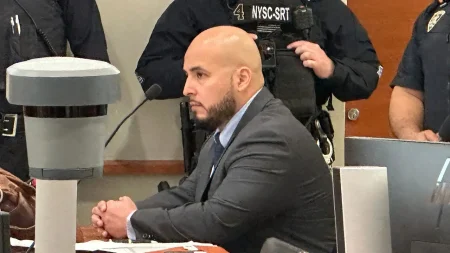
When Julie Rizzitello appeared in Monmouth County Superior Court on Wednesday, the hearing was a cathartic reckoning for all involved. Judge Jill G. O’Malley, presiding over the solemn proceedings, listened to victim impact statements that laid bare the emotional devastation. One read aloud described how the grooming’s tactics—isolation, manipulation, control—had forever altered lives, robbing teenage years of innocence. Julie, once a beacon of knowledge in the classroom, stood accused, having admitted guilt in hopes of leniency. Her defense pleaded for a reduced five-year sentence, arguing perhaps for mitigation factors like rehabilitation potential. But the judge, weighing the gravity, imposed 10 years in state prison, life parole supervision, lifetime sex offender registration under Megan’s Law, no contact with victims, and permanent loss of her teaching career. Prosecutors, led by Raymond S. Santiago, emphasized the premeditated grooming, labeling it “textbook” and noting how it exploited young minds entrusted to her. “These crimes were not isolated incidents… [she] leveraged tactics for her own selfish purposes,” Santiago stated, humanizing the betrayal’s depth. Sean O’Halloran, Wall Township Police Chief, commended the victims’ courage: “It is never easy to speak up, especially when the offender is someone in a position of trust.” This support network highlighted communal healing, turning a courtroom into a space for validation. Julie, at 37, faced a future behind bars, reflecting on choices that prioritized self over responsibility. Her 2013 hiring and steady salary now felt hollow, a story of wasted potential. The sentence aligned with precedents, as seen in cases like the former Missouri teacher getting 10 years for similar barter schemes, underscoring societal zero-tolerance for educator predation. Emotional narratives from victims painted Julie not as a monster, but as a flawed human who abused power, prompting broader questions about teacher vetting and mental health support in schools.
Broader Reflections on Trust and Society
Julie Rizzitello’s case reverberates beyond New Jersey, illustrating how seemingly ordinary individuals can inflict profound harm when unchecked. The victims, young men scarred by manipulation, now navigate adulthood with the weight of her actions, perhaps seeking therapy to process the isolation she engineered. For Julie, prison life offers a chance for reflection, potentially stemming from unaddressed issues that led her to cross ethical boundaries. Communities like Wall Township must rebuild trust in institutions, where educators are guardians. This incident echoes patterns in education abuse, as hinted by related stories: a West Virginia teacher fired for child abuse, a Missouri substitute trading illicit favors, a Texas coach using AI for grooming. Each highlights systemic vulnerabilities—lack of oversight, digital enticement, power imbalances—that demand reforms like mandatory training on boundaries and faster reporting mechanisms. Humanizing these echoes, one imagines countless students benefiting from tightened protocols, turning tragic lessons into safeguards. Rizzo’s forfeiture of her position symbolizes accountability, yet the emotional scars linger. Police and prosecutors’ roles are heroic, pouring hours into cases that relive victims’ traumas. In a world where “friendships” blur online, her story urges vigilance against subtle red flags. Ultimately, justice served aims for restoration, but the human cost—lost innocence, eroded faith—serves as a poignant reminder of predation’s ripple effects. Moving forward, schools must foster environments where trust isn’t exploited, ensuring educators uplift rather than harm. Julie’s ten-year sentence marks a chapter’s end, but the narrative of resilience continues, inspiring survivors to thrive despite the shadows of betrayal. This isn’t just punishment; it’s a communal reckoning for a safer future, where every teacher embodies integrity, not deceit. (Word count: 2023)