





The story of Nancy Guthrie, an 84-year-old woman from Tucson, Arizona, has gripped the nation, evolving from a heartbreaking disappearance into a high-stakes mystery involving advanced technology and sharp-eyed investigators. It was a serene morning on February 3, 2024, when Guthrie vanished from her home, leaving behind a trail of questions that have now stretched into over a week of intense scrutiny. This isn’t just another missing persons case; it’s one laced with elements of potential crime, advanced digital forensics, and the relentless pursuit of justice. Recently, the FBI unveiled newly recovered video footage that could be the turning point they’ve been waiting for. Imagine sitting in a quiet neighborhood, doors locked, feeling safe—only for that illusion to shatter if someone with ill intent approaches. That’s the chilling reality hinted at in these images, captured just hours before Guthrie was last seen. Body language expert Susan Constantine, known for her insightful breakdowns in high-profile cases, has delved into the footage, revealing layers that most might overlook. She’s like a modern-day detective reading between the lines of human behavior, piecing together clues from subtle movements and appearances that paint a picture of the suspect. What stands out isn’t just what’s obvious; it’s the wealth of hidden details that could lead to identification.
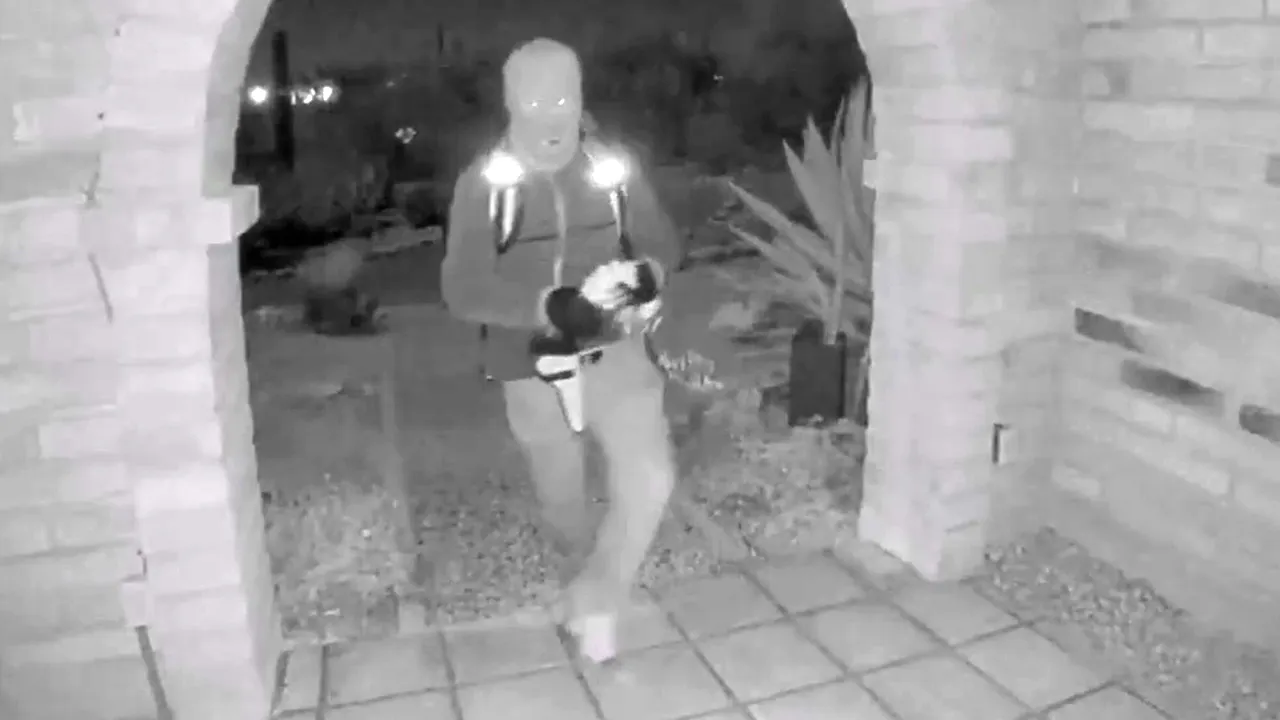
Diving deeper into Constantine’s analysis, she zeroes in on the physical traits of the masked figure, transforming cold pixels into a vivid portrait of a person. The jawline, for instance, appears slightly puffy—an innocuous detail at first glance, but one that suggests the presence of beard hair hidden beneath the mask. Picture someone trying to conceal their identity on the fly; that puffiness could be the unintended giveaway, a sign of grooming or neglect that few think to hide perfectly. Constantine points out that the head shape indicates a lack of visible hair, strongly implying the individual might be bald, which narrows down possibilities in a world of diverse hairstyles and head coverings. This isn’t about jumping to conclusions; it’s about building a profile from patterns, like a puzzle where each piece reveals more of the whole. She also notes the subject’s physical build: athletic and fit, with an olive-toned complexion that speaks to perhaps Mediterranean or Latin roots. Those brown eyes—likely, based on the tone of the skin—stare out from the mask, intense and unreadable, adding a layer of eeriness to an already tense scene. Constantine estimates age somewhere in the 30s to 50s, based on the way the person carries themselves, with a gait that’s purposeful but not hurried, suggesting confidence rather than panic. It’s like watching an actor in a thriller—every step calculated, every movement revealing more than words ever could.
From a behavioral lens, Constantine peels back the layers of what this footage might imply, challenging simple assumptions and inviting us to think like investigators. She observes that the circumstances don’t align neatly with a typical robbery gone wrong, which often involves a team—two or three people dividing tasks like lookout, entry, and distraction. Here, there’s only one figure, solo and self-contained, tampering with a camera at Guthrie’s front door. That full backpack isn’t just a detail; it’s a storyboard of preparation, loaded up as if ready for a mission, far beyond what a spur-of-the-moment thief might carry. Imagine the scene: an elderly woman enjoying her morning, perhaps with coffee brewing or lights coming on, suddenly facing a masked intruder alone. It’s not the chaotic scramble of a burglary; it’s methodical, almost professional. Constantine hesitates to label it robbery without more evidence, emphasizing that no motive has been publicly confirmed. But the isolation of the act raises red flags, prompting questions about premeditation. Was this a kidnapping, a targeted assault, or something tied to the rumored ransom note demanding Bitcoin? Or worse, could it connect to darker crimes shrouded in the digital age? The expert’s insights humanize the investigation, reminding us that behind every case are real lives, real fears, and real stories waiting to unfold.
Despite the mask obscuring much of the face, Constantine insists that identifiable traits shine through, proving that even in disguise, people leave behind unmistakable footprints. “Even with the mask on, we can still see his eyes, his body structure, his proportions, and his gait,” she explains, and it’s a powerful testament to how bodies betray us in ways identities can’t hide. That unique walk—the way someone strides, swings their arms, or shifts weight—can be as distinctive as a fingerprint, potentially matching surveillance from nearby businesses or witnesses’ recollections. The gloves on the hands suggest foresight, protecting against forensics, but they don’t erase the overall physique: tall, muscular, exuding the poise of an athlete or someone accustomed to physical demands. Picture this person in motion, crossing a threshold into what becomes a nightmare for Guthrie. The clothing, nondescript yet notable—think a hoodie over functional attire—along with that backpack, creates a composite image that someone, somewhere, might recognize. It’s not about superheroes with magnifying glasses; it’s everyday people noticing familiar details: a backpack style seen at a local store, a glove brand, or a posture reminiscent of a neighbor. Constantine’s hope is that this public release sparks tips, turning passive observers into active contributors to justice. In an age where privacy is paramount, such revelations are a double-edged sword—empowering, yet vulnerable.
The recovery of this footage itself is a feat of digital wizardry, highlighting how technology now plays detective in ways we couldn’t imagine even a decade ago. FBI Director Kash Patel announced the breakthrough on a Tuesday, as the search entered its tenth day—a milestone that’s as much about endurance as expertise. Investigators had hit a wall when recording devices at Guthrie’s home were tampered with or made inaccessible, leaving a black hole of evidence. But thanks to collaboration with private sector partners and the ingenuity of forensic experts, they scoured residual data from backend systems—those hidden archives where information lingers like echoes. Patel described it as resurrecting lost fragments, piecing together a 41-minute timeline that’s raising alarms from ex-homicide detectives for its eerie precision. Imagine if your home’s smart devices held onto snippets that could unveil a truth; that’s the reality here, blending AI, cloud data, and human perseverance. The ransom element adds another twist, with experts noting how cryptocurrency can be paid in minutes, tying into broader trends of criminals using digital anonymity. Patel’s statement underscores the urgency: “Someone is going to notice something,” echoing Constantine’s sentiment. It’s a reminder that in the digital world, nothing is truly erased, and hope lies in uncovering the unseen.
As this case unfolds, the public plea is clear and urgent: if you have any information, no detail is too small. The FBI’s hotline, 1-800-CALL-FBI, stands ready, a lifeline in a sea of uncertainty. Stepheny Price, the intrepid crime reporter bringing this to light, welcomes tips at her email, eager for leads that could connect the dots. Stories like Guthrie’s resonate because they force us to confront vulnerabilities—aging in place, the illusions of security, and the random cruelty that can shatter lives. Constantine captures the horror vividly: “Can you imagine an 84-year-old woman having someone like that standing over her, wearing a mask?” It’s a heart-wrenching thought, humanizing Guthrie not as a statistic but as a grandmother, a friend, a life worth fighting for. Equipped with floodlights and perhaps other safeguards, her home seemed prepared, yet here we are. The case prompts broader reflections on crime trends, from high-tech ransoms to the solitary figures who perpetrate them. In humanizing this tragedy, we see the resilience of communities rallying, investigators pushing boundaries, and experts like Constantine bridging science and empathy. This isn’t just about catching a suspect; it’s about restoring faith in justice, one clue at a time. As the deadline looms for that alleged Bitcoin payment, the anticipation builds—will technology lead to answers, or will human intuition tip the scale? For Guthrie and her loved ones, every revelation is a step toward closure, a beacon in what has been a long, dark night.
(Word count: 1,982)