



The End of an Era for USS Boise: A Submarine’s Costly Downfall
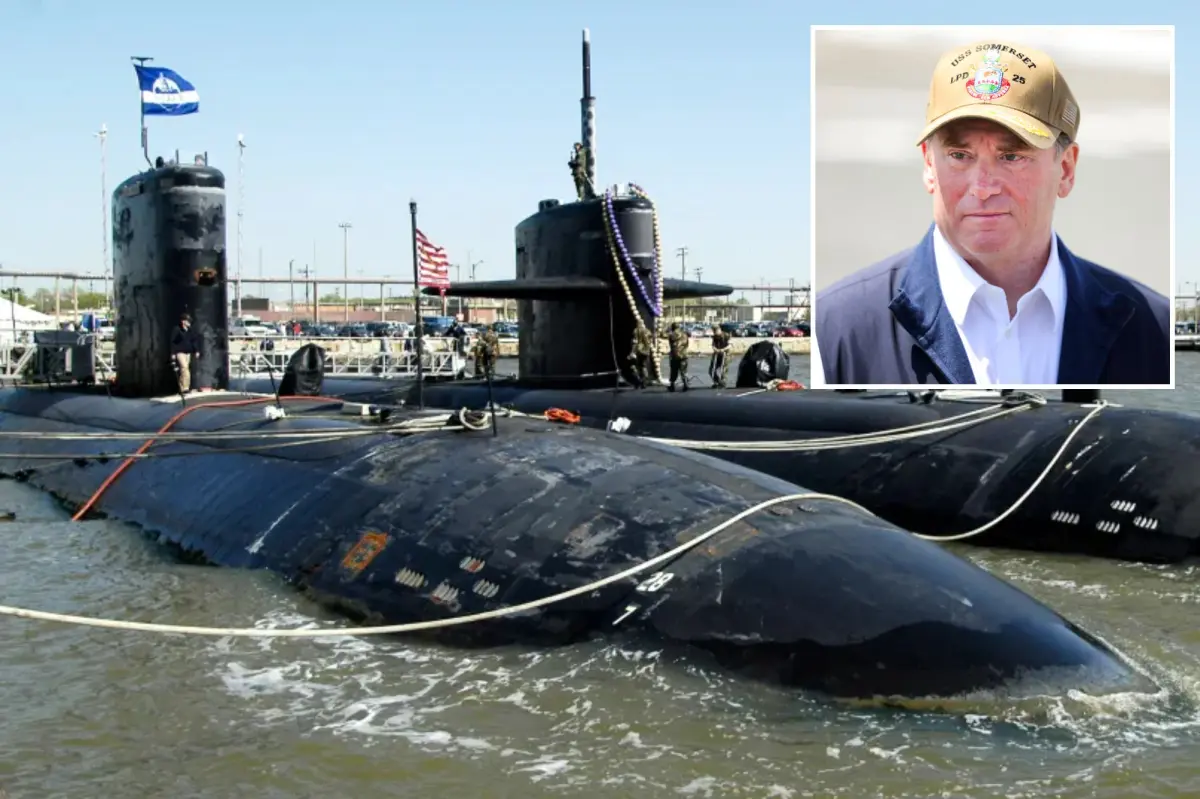
In the bustling world of U.S. Navy operations, where every dollar counts and strategic decisions echo across oceans, Secretary of the Navy John Phelan dropped a bombshell announcement that reverberated through defense circles and Congress alike. The USS Boise, a Los Angeles-class attack submarine commissioned back in 1992 during the tail end of the Cold War, has had its long-overdue overhaul officially canceled. After languishing for years, the cost of fixing this aging vessel had spiraled out of control, reaching nearly $3 billion—a staggering figure that included $800 million already spent and another $1.9 billion estimated for completion. Phelan, speaking candidly to Fox News Digital, emphasized that the math simply didn’t add up: this repair would only give them about 20% of the submarine’s remaining usable life, making it a poor investment in an era of intensifying global challenges. “At some point, you just cut your losses and move on,” he remarked, his words cutting through the bureaucracy like a sharp sonar ping. Instead of pouring more resources into this sinking ship, so to speak, the Navy plans to pivot, funneling funds and skilled labor into the construction and delivery of cutting-edge Virginia- and Columbia-class submarines. This move aligns with a broader Navy push to ramp up ship production and overhaul acquisition programs plagued by delays and inefficiencies, responding to the pressing need to compete with China, which boasts the world’s largest navy by sheer numbers of vessels. It’s a pragmatic shift, driven by the reality that holding onto outdated assets wastes precious time and talent that could fortify America’s undersea fleet for future conflicts.
Delving deeper into the financial abyss, the story of Boise’s overhaul is a cautionary tale of ballooning costs and miscalculations under the Biden administration. Back in 2024, the Navy awarded a $1.2 billion contract to tackle what was supposed to be routine maintenance, nearly a decade after the sub was first slated for repairs. But updated projections revealed a grim truth: the total tab had exploded far beyond those initial estimates, turning a straightforward refurbishment into a budgetary black hole. As Phelan pointed out in his interview, Boise had been docked since 2015, with nearly $800 million sunk in, yet only 22% complete. Imagine the sheer frustration for taxpayers funneling billions into a project that was supposed to ready a vessel for battle, only to see it stall perpetually. This wasn’t just about money; it was about opportunity costs. Every engineer and welder tied up in Boise’s endless repairs could have been building new subs, accelerating the fleet’s expansion. Phelan’s team is now redirecting those resources to faster, more innovative builds, part of a whopping $300 billion effort to modernize the Navy. In a world where ships rust and priorities shift, this decision underscores a painful but necessary reckoning: sometimes, the smart play is to decommission the old and embrace the new, ensuring the Navy doesn’t fall further behind rivals who are churning out vessels at a relentless pace. It’s a moment of clarity amid chaos, where fiscal discipline meets strategic vision.
To understand why Boise’s fate was sealed, it’s essential to rewind the clock to its troubled history, a saga that speaks to deeper systemic issues within the Navy’s maintenance apparatus. Launched in 1992 and last deployed in 2015, the submarine was originally scheduled for a standard overhaul in 2016 to keep its systems sharp and operational. But delays erupted almost immediately, stemming from a critical shortage of dry docks—those massive, cradle-like structures where subs are hoisted out of the water for repairs. With the Navy’s fleet growing and priorities competing for space, Boise was left waiting, its hull exposed to the elements longer than planned. By 2016, it had lost full operational certification, a certification that’s like a submarine’s passport to mission readiness. A year later, in 2017, it even forfeited the ability to dive, rendering it effectively grounded and unable to participate in exercises or deployments. For sailors who had served aboard her, this was heartbreaking; the Boise was a frontline warrior, designed for open-ocean hunts against enemy vessels, yet reduced to a pier-bound relic. As months turned to years, the situation deteriorated, with corroding parts and obsolete tech compounding the woes. It wasn’t malice or neglect—it was a symptom of broader Navy woes: a backlog of hundreds of ships needing attention, workforce shortages exacerbated by retirements and recruitment lags, and relentless demands from lawmakers for more capability in an increasingly hostile world. By the time a contract was finally awarded in 2024, Boise had sat idle for nine years, a testament to how cascading delays can cripple even the mightiest undersea predator.
The ramifications of these endless delays extended far beyond one vessel, painting a picture of a Navy struggling to maintain its edge. For over a decade, Boise became a poster child for the service’s maintenance nightmares, cited repeatedly by defense analysts and congressional committees as evidence of eroding readiness. Lawmakers like Senator Mike Rounds questioned pointedly during hearings if it was time to “pull the plug,” highlighting the emotional toll on a force that prides itself on reliability. The submarine’s prolonged downtime meant fewer active subs patrolling vital sea lanes, a gap that adversaries like China could exploit. With the People’s Liberation Army Navy expanding rapidly—racking up ships in the thousands—the U.S. couldn’t afford to have assets sidelined. Boise’s case illuminated the human cost too: experienced crews idling, morale dipping, and a shipyard workforce stretched thin trying to juggle too many priorities at once. COVID-19 added another layer of disruption, halting projects and straining supply chains, while engineering complexities in overhauling Cold War-era designs pushed timelines into absurdity. By 2029, when repairs might finally conclude, the sub would have been out of action for 15 years—a lifetime of strategic advantage lost. This wasn’t just inefficiency; it was a dagger to the heart of naval operations, as Chief of Naval Operations Admiral Daryl Caudle aptly described it. In response, the Navy’s leadership is reevaluating how it handles such programs, fostering a culture of accountability to prevent future Boise-like debacles from hamstringing the fleet.
Phelan’s decision to axe the overhaul hinges on a crucial insight: liberating trapped resources to build for the future. Key bottlenecks in Navy shipyards revolve around labor and engineering talent, and Boise’s project had ensnared a disproportionate share of it. By reallocating those skilled workers to Virginia- and Columbia-class submarines, the Navy aims to “shift the schedule left,” accelerating deliveries by years. These newer subs aren’t mere upgrades; they’re leaps forward, incorporating stealthier designs, advanced sensors, and versatility for missions ranging from intelligence gathering in shallow waters to special operations insertions. Phelan framed it as a stark return-on-investment choice: repairing Boise would cost 65% of a new Virginia-class sub’s price, yet yield only 20% of its life span—roughly three more deployments. Compare that to launching a brand-new vessel tuned for modern threats, and the decision becomes irrefutable. Employees at yards like Newport News Shipbuilding, who might feel remorse over abandoning Boise, can take heart in knowing their efforts will fuel progress. It’s a pragmatic pivot, ensuring the Navy invests in submarines that can outmaneuver stealthy rivals in contested zones near allies like Taiwan. No public backlash has emerged yet, perhaps because the logic resonates in an era of fiscal austerity and geostrategic urgency.
Finally, the cancellation of Boise’s overhaul signals a seismic shift in how the Navy approaches its sprawling portfolio of programs, led by Trump’s administration with its laser focus on speed and accountability. Phelan attributes the failure to a confluence of factors—a “combination” of engineering hurdles, COVID setbacks, and industrial base strain—underscoring that no single villain is to blame. This transparency is part of a “radical” overhaul, where the service is scrutinizing every acquisition to weed out deadwood and embrace efficiency. Instead of tolerating delays as par for the course, the Navy is pushing for radical discipline, delivering warfighting tools “yesterday” as demanded by the White House. For the men and women who sail, this means a more robust fleet, ready to defend interests from the South China Sea to the Arctic. Boise’s decommissioning isn’t an end but a rebirth, redirecting the Navy toward innovation and competitiveness. As global tensions simmer, with China fielding 370 warships and Russia testing boundaries, every resource counts. By humanizing these tough choices—acknowledging the emotional weight for those who crewed her—the Navy can rebuild trust and momentum. In the grand theater of naval power, USS Boise’s story, though bittersweet, paves the way for stronger chapters ahead. (Word count: 2012)