






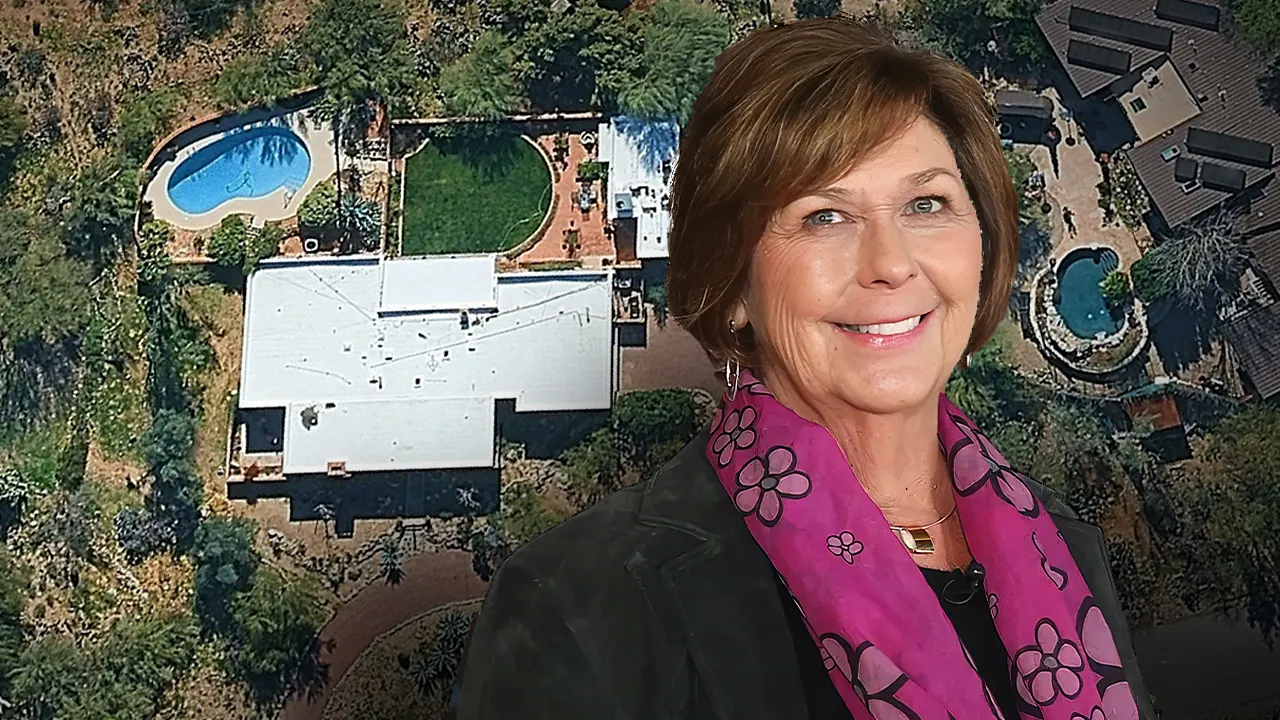
In the quiet, upscale neighborhood of Catalina Foothills in Tucson, Arizona, where manicured lawns and friendly waves among residents paint a picture of suburban serenity, an unsettling undercurrent stirred just weeks before a heartbreaking disappearance that has gripped the community. Aldine Meister, a longtime resident nearing three decades in the area, found herself reflecting on a peculiar sighting that now haunts her peaceful routines. It was about two weeks before February 1, when 84-year-old Nancy Guthrie—dear mother of Savannah Guthrie, the beloved “Today” show co-host—was believed to have been abducted from her home in the dead of night around 2:30 a.m. Meister, peering out from her own front door, spotted a young man walking through the streets who just didn’t fit the usual scene. He wasn’t dressed for a casual stroll in hiking gear; instead, his hat was pulled low, obscuring much of his face, like he was hiding in plain sight. “He was kind of younger, and he just didn’t look like he was going out for a walk,” she recalled, her voice tinged with regret in a conversation with Fox News Digital. Living in this affluent enclave, where crime is rare and neighbors watch over each other with a warm vigilance, Meister dismissed it at the time—maybe just a visitor or someone lost. She mentioned it offhand to her husband, but in the innocence of daily life, they didn’t think more of it. But after Guthrie’s world shattered, Meister knew she had to come forward. When authorities knocked, she shared what she saw, though she had no video to offer. “He just didn’t fit,” she emphasized, her words echoing a mother’s intuition that something was off. That suspicious figure, wandering near the intersection leading to Guthrie’s home, now looms large in her mind, a missed opportunity in a tapestry of community trust that feels frayed. As investigators comb through details, Meister embodies the human side of this tragedy—the ordinary person grappling with hindsight, wishing she could have done more in a place where neighbors are like family.
The abduction itself, a nightmare unfolding in the stillness of early morning, has left ripples of fear and solidarity throughout Catalina Foothills. Guthrie, a vibrant 84-year-old matriarch known not just through her daughter’s fame but for her own life of quiet grace, vanished without a trace, her home the scene of what officials describe as a targeted intrusion. The sheriff’s office, joined by the FBI in this desperate hunt, has pieced together fragments, including startling doorbell footage recovered through an unlikely partnership with Google, even though Guthrie’s Nest device was missing and lacked a cloud subscription. Released by FBI Director Kash Patel on February 10, the images reveal a masked man in gloves, prowling her front porch like a shadow in the night. One frame stands out—perhaps from a different date, showing the same intruder without his Ozark Trail backpack or holstered pistol, a glimpse that hints at premeditation chilling to the bone. Sheriff Chris Nanos cautioned that timelines are speculative, but the community whispers about patterns, leaders urging neighbors to scour their cameras for clips from January 1 to February 2, with January 11 flagged as a potential key date. This isn’t just data; it’s the story of a woman who likely woke to terror, her life reduced to stolen moments captured on mundane home tech. Neighbors, like Michele Young, a fellow resident who hosted investigators five times, feel the weight personally. “On that last visit, when I was talking to the FBI and the sheriff together, they did mention the 11th,” she shared, her anecdotes unfolding like chapters in a local saga, where law enforcement’s repeated visits underscore a shared human struggle to reclaim safety.
Focusing on January 11, as the investigation zeroes in, brings a sense of urgency that’s palpable in the air, where everyday residents become amateur detectives in their own backyards. From posts on the Ring Neighbors app pleading for footage between 9 p.m. and midnight on that day, to Young’s recollections of deputies returning for “additional footage” they tied to another date, the community buzzes with hypothesis and hope. Meister, too, was asked about it, piecing together her memory: after January 8, at least two weeks before the abduction, she spotted that odd walker. “It could’ve been the 11th,” she mused, uncertainty threading through her voice, an echo of how trauma blurs timelines for everyone touched by it. But Sheriff Nanos steers clear of fixation, urging a broad sweep of videos to avoid missing vital clues outside a narrow window—a pragmatic nod to the unpredictability of crime. In human terms, this emphasis on dates transforms neighbors into guardians, their homes now fortresses in waiting. People like Meister and Young share stories of sleepless nights, double-checking locks, feeling that familiar turf has turned treacherous. It’s a collective anxiety, where the theft of security mirrors the pain of Guthrie’s family, and every shared recollection builds a mosaic of empathy, turning strangers into allies in the quest for answers. Young voiced it best: “I think everyone’s anxious. We all watch out for one another here so it would be nice if something happened.” This human yearning for closure pulses through the neighborhood, a reminder that behind headlines, lives intertwine in shared vulnerability.
As investigations deepen without arrests, the human cost emerges in fuller relief—Guthrie’s abduction not merely a case number but a deeply personal loss. Officials detained at least two men briefly, releasing them without charges, and no suspects or vehicles have been publicly named, leaving a void filled by speculation and sorrow. Her adult children, driven by love and desperation, have upped the ante with a $1 million reward, a silent scream for leads that might bring her home. For Meister, the ordeal prompts a shift in her protective instincts; unsatisfied with her current setup that captured nothing, she’s committing to bolstering her home’s defenses with extra cameras, transforming her space into a vigilant watchtower. It’s a decision born from reflection, mirroring how tragedy catalyzes change—neighbors now eyeing one another with heightened awareness, stories swapping over coffee about upgrades and upgrades, forging a bond forged in fear. The “Today” show’s face may be known nationally, but here, Guthrie is the essence of community: a mother, a neighbor, a symbol of safe havens now shaken. Fear percolates, yet within it blooms resilience, as residents dial 1-800-CALL-FBI with tips, their empathy extending to a family they’ve never met but feel connected to through Savannah’s broadcasts. This is the heartbeat of the story—the ordinary heroism of everyday people, turning personal vigilance into collective action, humanizing a disappearance that might otherwise feel distant and cold.
Diving into the footage’s eerie details, one can’t help but imagine the stealth of that masked figure, gloves shielding his fingerprints, the porch his stage for malice. Experts have weighed in, calling cross-border abduction “low probability” due to security measures, yet the presence of a pistol adds layers of dread, painting a picture not of random brutality but calculated intrusion. Patel’s release of stills and video serves as breadcrumbs for the public, a digital lifeline in a modern mystery. Neighbors like Meister feel the chill personally, her after-the-fact accounts a testament to hindsight’s cruelty—wishing she’d snapped a photo or called it in immediately. In conversations circling neighborhoods, folks share their own close calls, fostering a tapestry of tales that comfort and alarm. Young’s five-visit saga with investigators feels like a plot twist in their own lives, each session peeling back layers, mentioning the 11th with the weight of unspoken implications. This digital age, where doorbell cams capture ghosts of intent, humanizes the horror: tech as witness to vulnerability, neighbors as caretakers in an increasingly uncertain world. The sheriff’s downplay of single dates, insisting on a month’s canvas, resonates as grounded wisdom, preventing tunnel vision, yet it fuels the community’s storytelling, where every detail becomes lore.
Ultimately, the Guthrie case lingers as a poignant echo of America’s undercurrents, where affluence meets fragility, and the unseen threats lurk just beyond well-lit streets. Meister’s resolve to fortify her defenses echoes broadly, a narrative of adaptation in the face of the unknown. With Fox News amplifying voices like hers—enabling listeners to engage through audio—public awareness builds, humanizing crime’s toll. Tips pour in, hopes cling to DNA, footprints, anything. Guthrie’s story, shared by experts and locals alike, transcends stats: it’s about a mother’s enduring legacy, the dartboard of danger in fine areas, and communities rallying. As Meister steps up her security, others follow, a ripple effect of caution and care. In these unresolved nights, when sirens might wail or peace reigns, the neighborhood holds onto faith, embodying the resilience that makes stories like this profoundly human. Through vigilance and empathy, they honor Nancy Guthrie, turning fear into fellowship, awaiting the day answers illuminate the shadows. For now, it’s a chapter of questions, bound by the threads of shared humanity, where every tip and every camera angle restores a sliver of control in turbulent times. The reward stands as a beacon, pulling hearts together, proving that in the wake of loss, community spirit endures, transforming tragedy into a call for justice that resonates far beyond Tucson.