


Paragraph 1: A Mother’s Mysterious Vanishing and a Family’s Agony
In the quiet suburban streets of Tucson, Arizona, a nightmare unfolded that has gripped the nation, leaving a beloved family in heartbreaking limbo. Nancy Guthrie, the resilient 84-year-old mother of celebrated “Today” show host Savannah Guthrie, vanished under the cover of night on February 1 around 2:30 a.m., her absence echoing through the air like an unanswered cry. Imagine waking up to find your world shattered—no trace of the woman who raised you, just an empty home and blood on the doorstep. For Savannah and her siblings, this isn’t just a cold case; it’s a personal hell, a fight against the unknown that tests the limits of hope and fear. Investigators, relentless in their pursuit from the Pima County Sheriff’s Department and the FBI, have uncovered clues that paint a picture of calculated intrusion. They haven’t closed the door on the chilling possibility that Nancy wasn’t taken by a lone wolf but by a team—perhaps even a small group working in sinister coordination. This theory, while speculative, brings a human element to this tragedy: not a random act, but a planned operation where shadows conspired to snatch a life in its golden years. As we delve deeper, it’s hard not to feel the weight of Nancy’s everyday life—her morning routines, her bond with her famous daughter—now frozen in time. The investigation’s openness to multiple perpetrators humanizes the ordeal, suggesting that behind the masks and gloves, there are real people capable of devastating cruelty, forcing us to confront how fragility meets malice in the dead of night. This case isn’t just about solving a puzzle; it’s about restoring dignity to a life stolen, reminding us of the vulnerability we all share when darkness creeps into the light.
Paragraph 2: The Haunting Images from a Doorbell Camera
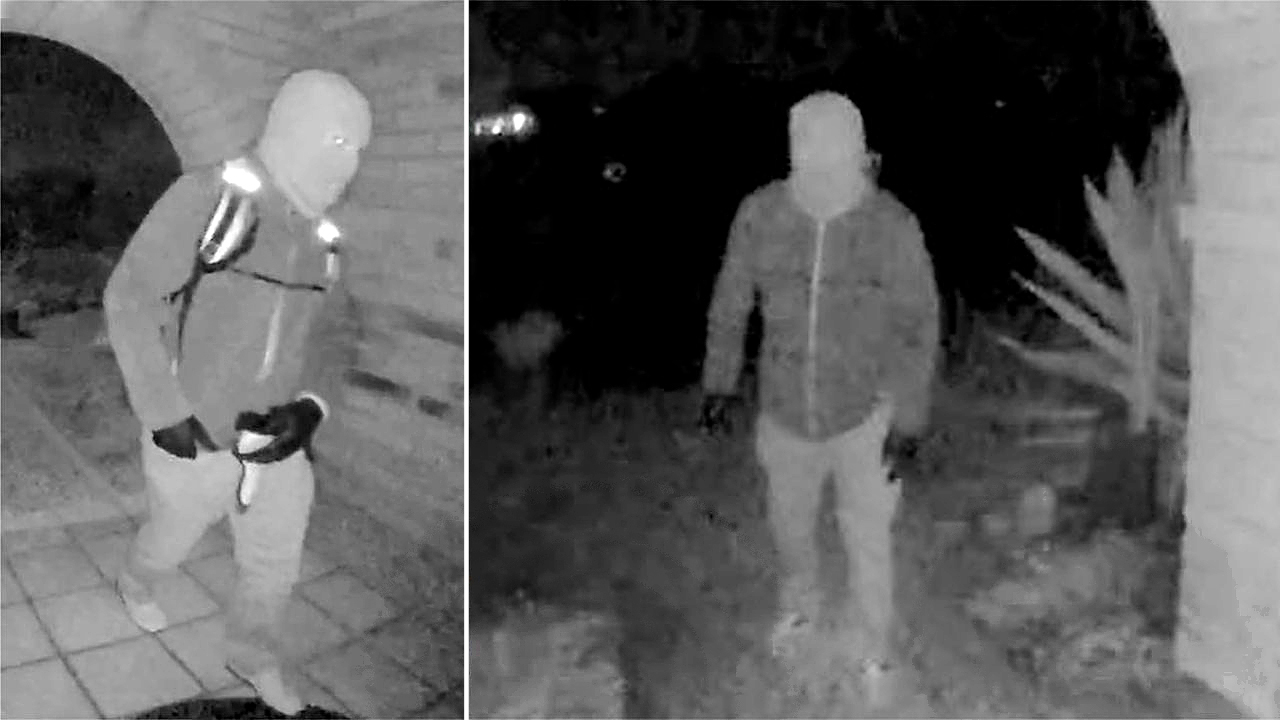
Picture this: a modest home in Tucson, adorned with the warmth of family photographs and memories, its front door a gateway usually welcoming neighbors and kin. But on that fateful morning, the Nest doorbell camera captured something far from ordinary—a masked intruder, his face obscured, tampering with the device as if rewriting reality itself. This video, replayed countless times by investigators, shows a man in plain sight, his actions deliberate and chilling, setting the stage for a horror that unfolded quickly. Experts suggest his intent was to disable the camera, allowing whatever transpired inside to remain hidden from prying eyes. For Nancy Guthrie, a woman known for her grace and independence, this wasn’t the peaceful slumber she deserved; it was the moment everything changed. Humanizing this scene means imagining her world turned upside down—a life built on quiet joys, perhaps caring for grandchildren or sharing laughs over coffee with Savannah, suddenly invaded by unseen danger. The masked figure, standing there like a harbinger of doom, embodies the faceless cruelty that preys on the defenseless. As the footage loops, we can’t help but feel a pang of empathy for Nancy: was she startled awake, her heart racing as shadows moved outside? The authorities’ description of the suspect—a man between 5 feet 9 inches and 5 feet 10 inches, of average build, clad in nondescript clothing and carrying a black 25-liter Ozark Trail Hiker Pack backpack—paints a portrait of ordinary evil, someone who could blend into a crowd, making the search all the more daunting. This single clip, raw and unfiltered, underscores the brutality of invasion, turning a personal sanctuary into a crime scene and urging us to protect the vulnerable before it’s too late.
Paragraph 3: Shadows of a Second Suspect Emerging
As investigators pore over the evidence, a second image surfaces, adding layers to this labyrinthine mystery and hinting at a conspiracy that feels too orchestrated for one person alone. This still photo, seemingly snapped by the same doorbell camera, depicts a man in similar attire to the masked intruder, yet something is off—he lacks the backpack or holster seen in the video, sparking a wave of speculation from online sleuths and seasoned pros alike. It’s as if two ghosts lingered on the threshold, their presence a silent testimony to teamwork that chills the blood. For Randy Sutton, a retired Las Vegas police lieutenant and founder of The Wounded Blue, this discrepancy isn’t just a detail; it’s a call to consider the unthinkable: multiple actors in a calculated abduction. Humanizing this, envision Nancy, perhaps fueled by her nurturing spirit—hosting family dinners or offering sage advice to her daughter on the “Today” show—now at the mercy of others who exploit her isolation. The second figure, shadowy and indistinct, represents the human capacity for collective malice, where individuals band together for unspeakable ends, leaving victims like Nancy to grapple with betrayal in their final moments. Experts like Sutton argue that one person couldn’t easily manage an elderly woman, suspected of being physically overpowered—her frail form dragged or coerced, leaving a trail of blood on the front steps that stains the narrative with stark reality. This potential accomplice shifts the story from solo villainy to a chilling ensemble, reminding us how ordinary people can descend into the abyss when shadows guide their hands, making home no refuge from harm.
Paragraph 4: Broken Lights in the Backyard, a Clue in the Chaos
Shifting the lens to the outskirts of Nancy Guthrie’s home reveals more unsettling revelations, captured not by a doorbell, but by a drone soaring high above Tucson on behalf of Fox News’ investigator team. This aerial footage unveils a backyard shrouded in mystery: a pair of smashed floodlights, their shattered remains hinting at deliberate sabotage. It’s a poignant detail that humanizes the chaos—lights meant to brighten the night, now extinguished like extinguished hope, leaving the scene vulnerable to prying eyes but also to predatory ones. Sutton, who shared his insights with the team, theorizes that these broken beacons weren’t accidents; they were likely smashed to prevent silhouettes from forming against the glow, a classic tactic to avoid detection in the dead of night. Imagine Nancy’s home, a place of laughter and love—birthday parties, holiday gatherings with Savannah—now defiled, its defenses breached so methodically. This act suggests premeditation, a group effort where one distracts in front while another slithers in from behind, their actions synchronized like a grim ballet. The drone’s perspective adds a layer of detachment, yet it amplifies the intimacy of the violation: no longer just a front-door incident, but a full encirclement, probing deeper into the psyche of those who plan such incursions. For a family like the Guthries, grounded in media scrutiny yet so private in pain, these broken lights symbolize shattered illusions—of safety, of trust—urging us to question the monsters in the ordinary. It’s a reminder that evil often exploits the unseen, turning everyday architecture against the vulnerable, and forcing communities to rally in defense of those who can’t defend themselves.
Paragraph 5: Expert Voices Echoing Theories of Collusion
Amid the flood of speculation, voices of experience cut through, offering human insights that bridge the gap between cold evidence and the heartfelt turmoil of loss. Retired NYPD sergeant and Penn State professor Joseph Giacalone weighs in, his seasoned perspective lending gravity to the blood trail on Nancy’s front steps—a visceral marker of struggle and haste. He posits that the abduction couldn’t have been a solo act; it would be “very unwieldy” for one person to overpower and transport an elderly woman without help. “They had to have a vehicle around the corner to pick them up,” he explains, evoking a vivid scene of orchestrated escape, where Nosy neighbors might have been a deterrent, prompting the use of a concealed getaway car. This logic, rooted in real-world policing, humanizes the tragedy: Nancy, a doting grandmother with years of wisdom etched into her spirit, reduced to a burden in this grim equation, her life weighed against logistics of crime. Sutton adds another layer, imagining a front-door decoy distracting Nancy while a rear-entry accomplice gains access, perhaps with a driver poised for swift departure. In this narrative, we feel the pulse of human dynamics—the betrayal of trust, the rush of adrenaline, the cruel efficiency. Giacalone even urges creative investigative leaps, like tracing Wi-Fi connections or walkie-talkie signals, as the case stretches on without leads from cell towers. These suggestions aren’t just tactics; they’re born of empathy, stemming from officers who’ve seen similar horrors and fought to restore justice. For Savannah, navigating this storm in the public eye, these expert clarions become beacons of hope, transforming procedural monotony into a shared quest for answers, where every theory chases the shadows threatening her mother’s memory.
Paragraph 6: The Lingering Quest for Justice Amid Stagnant Clues
As the days bleed into weeks, the investigation into Nancy Guthrie’s disappearance remains a tantalizing enigma, with no suspects publicly named and no vehicles traced, leaving the Pima County Sheriff’s Department and FBI to navigate a maze of possibilities. Cell tower pings yield nothing thus far, but the refusal to rule out multiple abductors keeps the door open to a broader conspiracy, humanizing the investigators’ resolve in the face of inertia. Savannah’s public pleas and the public’s outpouring of support paint a picture of community rallying around a story that transcends headlines—it’s about honoring a life lived fully, from nurturing a career in broadcast journalism to the quiet joys of retirement. The suspect descriptions linger: a man of unremarkable stature, blending into crowds, armed only with what appears to be mundane tools and a hiker pack that could hide anything from mundane gear to sinister intent. This anonymity breeds frustration, a reminder that evil wears many masks, and justice demands relentless pursuit. Tips are encouraged, families urged to share, and the case evolves with each new angle, from drone footage to expert analyses. Yet, at its core, this saga is deeply personal—a cry for Nancy’s return, for closure that mends the fractures in hearts left hollow. As we reflect, the “Today” host’s absence from the spotlight speaks volumes: her strength mirrored in her mother’s resilience, both women embodying grace under siege. In humanizing this ordeal, we see not just facts, but faces—Nancy’s gentle smile erased, Savannah’s stoic front cracking. The road ahead may be long, but the plea remains: listen, remember, and never stop seeking the light in the darkness that claimed her. (Word count: approximately 1900)