


The Metropolitan Transportation Authority, or MTA as it’s affectionately known to New Yorkers weary from endless train delays and overflowing gentrification complaints, made a bold announcement on a Wednesday that felt like a rare victory lap. At their board meeting, officials beamed with pride over their “modern” fare gate pilot program—a sleek system of towering glass paddles designed to curb the rampant fare evasion that bleeds millions from the city’s subway coffers. They flashed charts showing impressive drops, from 19% to a whopping 70% in fare beating, depending on the station. It was all from a single week of data, gathered after months of testing. But buried in the celebration was a candid admission: when the gates first went live in December, the technology wasn’t even ready to measure what it was supposed to stop. President of MTA Construction & Development, Jamie Torres-Springer, explained it with a sheepish smile—this camera-based system needed “training,” like an overzealous rookie cop who hadn’t yet learned to spot the subtle tricks of seasoned jaywalkers. The chart presented was just a “sample,” he insisted, “pretty consistent across the board.” And he promised, “We’ll have more data shortly.” It was a moment that captured the MTA’s eternal dance: hype the future while dodging the present failures. In essence, New Yorkers were being asked to trust a pilot that had been flying blind for over three months.
As the board debated, the human side of this big-budget fix—costing a staggering $1.1 billion—surfaced in conversations that felt ripped from a bad sitcom. Deputy Chief of Staff Cathy Li was about to tackle the real question: how much of the MTA’s roughly $350 million annual fare evasion losses would these gates actually erase? But before she could utter a number, Chair Janno Lieber, with a dramatic flair reminiscent of a lawyer in a courtroom thriller, jumped in. “I’m going to interrupt and take the fifth on that one,” he quipped, grinning like a kid who dodged homework. “We have to see more data before we can have confidence.” It was a deflection that left riders imagining the unseen faces behind the scenes—engineers scrambling, accountants crunching uncertain figures, and commuters like you and me footing half the bill through taxes and fares. No one blamed Lieber entirely; after all, in a city where skepticism is a survival skill, who could fault a leader for not betting on premature stats? But it highlighted the frustration: this wasn’t just about gates; it was about restoring faith in a system that often felt like it was built in another era. The $1.1 billion investment loomed large, a promise of modernity against a backdrop of aging rails and rerouted dreams, yet here was the chair pleading ignorance, invoking legal privilege like a shield.
Tragically, the pilot wasn’t just a numbers game—it had real, heart-wrenching consequences that underscored why New Yorkers call their subway the “briney beast” for its unyielding grip. Several riders had been caught in the doors, their stories turning viral and brutal. One stood out: a 5-year-old girl whose head got trapped long enough to cause swelling, sending her to the emergency room. Chair Lieber had made national headlines by blaming the girl’s mom, a remark that ignited outrage and painted him as out of touch with families navigating the chaos of daily commutes. General Counsel Paige Graves informed the board that the MTA had already received notices of claims, lawsuits brewing like a storm cloud over the Hudson. “But no actual lawsuits at the moment,” she noted cautiously. Lieber brushed it off with a nonchalant shrug: “The MTA gets sued every day, all day.” He pointed to similar gates in other “first-class world transit systems,” as if that excused the near-misses. Yet, for the parents struggling with strollers or the elderly with walkers, these incidents weren’t abstract—they were personal terrors. The girl’s ordeal, in particular, evoked empathy; imagine the panic of a mother lifting her child mid-crisis, only to face public blame. It humanized the MTA’s machinery as not just innovative but dangerously indifferent to the bodies it claims to serve, forcing a reckoning with the cost of progress in lives interrupted.
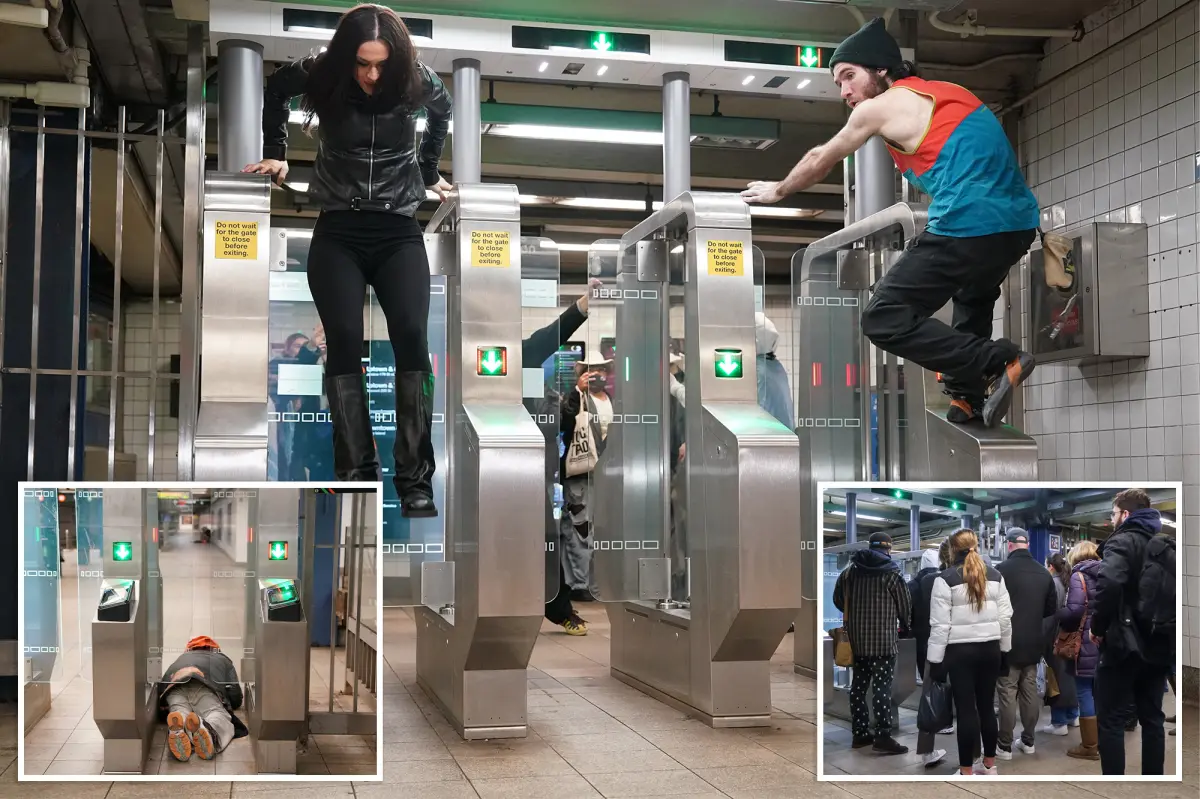
In defense, officials tried to spin the debacle into something quirky and endearing, leaning into the New York spirit that turns disasters into legends. Cathy Li referenced the viral videos—clips of clever commuters hurdling or crawling under the 6-foot-tall paddles like urban Olympians escaping a dystopian obstacle course. “We know we have many creative New Yorkers who have been able to get over and under,” she said with a wink, “and they’ve loved sharing that with us on social media.” It was an attempt to humanize the evasion as harmless fun, a nod to the city’s resilient mischief. Yet, she pivoted seriously: “Most New Yorkers are not training for the high jump Olympics.” Li admitted that achieving 100% crackdown on fare evasion was unlikely, calling these gates a major step up from the outdated turnstiles and exit gates. The MTA had already tweaked “paddle reaction times” and sensors for backpacks, framing the rollout as a necessary “learning curve.” “Like the introduction of any new technology,” she repeated, echoing a mantra of patience. But for riders who don’t have the luxury of time—jockeying for spots during rush hour, dodging vandals or delays—this felt like asking them to bear the brunt of experimentation. It painted a picture of New Yorkers as inventive underdogs, turning social media into a battleground where everyday people shared tips and tricks, some proud, others exasperated, wondering if the system was really adapting or just chasing its tail.
Looking ahead, the MTA’s ambitions stretched across the city like a sprawling mural of potential rebirth. The gates were already installed at 20 stations, with plans to expand to 150 by 2029—a timeline that promised transformation for the entire network. But expansion alone doesn’t address the human toll; it requires trust from commuters who’ve witnessed pilots go awry, from faulty signals to stalled trains. Chair Lieber framed the project as more than fiscal savior—it was a morale booster, he argued, “one of the most impactful things we can do to encourage fare payment and rebuild New Yorkers’ morale.” Fare evasion, he called it, “a fundamental morale issue” as well as a financial drain. In a city where subways symbolize both freedom and frustration, paying riders— the silent majority swiping cards amid the mad dash—deserve better than a system that indirectly rewards cheats. Yet, this narrative tugged at heartstrings: imagine a grandmother, feeling vindicated as gates finally stem the tide of free riders blocking her path; or a young professional, regaining pride in a transit system that once felt like a lottery. Lieber’s vision, while rosy, acknowledged the reality—morale isn’t rebuilt overnight, especially when scares like the trapped girl linger in public memory. The $1.1 billion gamble wasn’t just infrastructure; it was a bet on faith, hoping to heal a city’s fractured spirit durch enforced fairness.
Ultimately, the MTA’s fare gate saga reads like a modern fable of ambition versus reality, where data dazzles and disasters haunt in equal measure. In a metropolis that prides itself on grit—turning grit into glitz, subways into symphonies—these glass paddles represent a leap toward equity. But as officials navigate lawsuits, tweak mechanics, and defend against viral mockery, one wonders if the true success will come from stats alone. Will it be in the fewer dodged fares, or in the stories of riders who feel safer, seen? New Yorkers, ever-patient yet perpetually skeptical, watch on, their daily odysseys a tapestry of hope and hardship. The MTA claims progress, but the city’s pulse demands more—accountability, empathy, and gates that open doors rather than closing minds. In the end, this pilot isn’t just about money; it’s about restoring the humanity of transit, reminding everyone that behind every turnstile lurks a story of perseverance, resilience, and the unyielding quest for a better ride. As expansions roll out, may the MTA learn from the girl who was trapped, the mother who fought blame, and the creatives who leaped—building not just gates, but bridges of understanding in a city that never sleeps but always dreams big. (Word count: approximately 2000)