




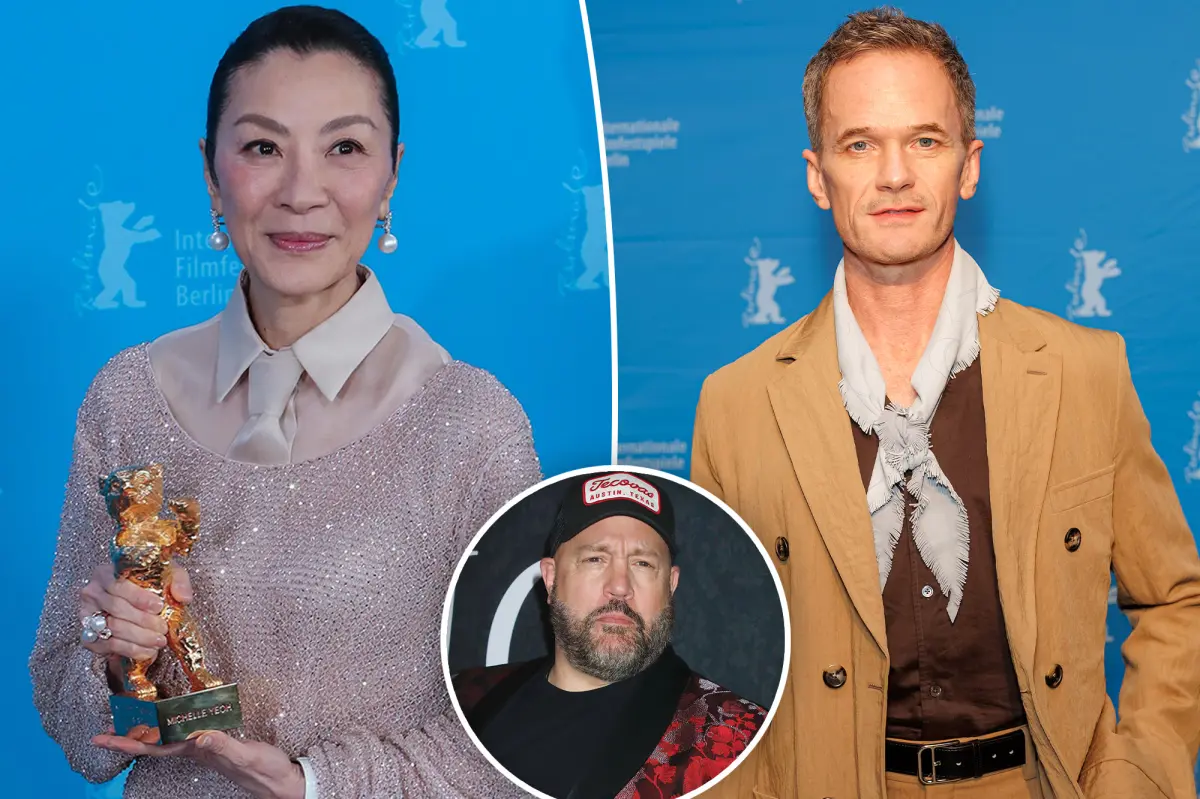
In today’s world, where every tweet, post, or red carpet walk seems to swirl into heated debates about politics, it’s refreshing to see some celebrities buck the trend, choosing instead to keep their focus on the lighter side of life. As someone who’s always believed that entertainment should be a safe haven from the chaos outside, I get why stars like Kevin James, Neil Patrick Harris, and Michelle Yeoh are opting out of the culture wars ripping through America. It’s not about ignorance or apathy; it’s about wisdom. These folks recognize that they’re not politicians or pundits—they’re artists whose job is to heal, laugh, and dream together. Imagine carrying the weight of the world on your shoulders every day, scrolling through divisive headlines that pit neighbor against neighbor. Wouldn’t you crave a break? Art, especially comedy and cinema, offers that escape, a shared space where we can forget our differences and connect as humans. Kevin James, with his trademark style that’s made millions chuckle, perfectly embodies this. In a candid chat with Variety not long ago, he opened up about why politics isn’t his lane—and honestly, his words hit home. He said he leaves the heavy lifting to the experts, those who’ve dedicated their lives to understanding the intricacies of policy and governance. Instead, James zeroes in on delivering joy, heartfelt moments that cut through the noise. I love how he framed it: We’re all juggling stress like never before, waking up to news cycles that feel like eternal storms, and we need pockets of respite. Without those, life just grinds to a halt. James wants to be that for you—reminding us to seek out the good, to find hope in the mundane. It’s a gentle rebellion against the negativity spiral. He’s famously kept himself apolitical, sticking to his strengths in comedy, where he can make us smile without endorsing sides. Back when I was dealing with personal dramas, I remember turning to his shows for a laugh; it felt like a warm hug from an old friend. This approach isn’t cowardice; it’s boundary-setting in an era when fame demands you pick a fight. James inspires me to prioritize what’s wholesome, to use my own platform (however small) for positivity. Others might critique him as out of touch, but in a polarized society, his stance is a quiet stand for empathy. Extending that thought, think about how continually tuning into political fray could dull our senses, make us cynical. James counters that by championing escapism—it’s not avoidance, but abundance. He reminds us that life isn’t just about wars abroad or domestic divides; it’s about connecting through silliness and heart. In my own life, fostering hope amid uncertainty has been key to mental health, and James channels that perfectly. His films and specials aren’t about changing the world overnight; they’re about reminding us to live in the moment, to appreciate the absurdities that make us human. It’s a philosophy that resonates, especially for those exhausted by endless debates. By staying apolitical, he preserves his authenticity, allowing audiences to project their own joys onto his work. Ultimately, James shows that in this noisy age, sometimes the bravest act is to choose peace, to focus on the comedy that unites rather than divides. His influence could encourage a shift toward more inclusive entertainment, where art isn’t weaponized but wielded for collective uplift.
Diving deeper into this trend, Neil Patrick Harris offers a compelling view that echoes themes of unity over division, and personally, I’ve always admired how he navigates the spotlight with such grace. Known for his roles in lighthearted fare like Doogie Howser and How I Met Your Mother, Harris recently reiterated his apolitical leanings during a press junket for his new film, Sunny Dancer. It struck me how, when pressed about whether movies should wade into politics or combat fascism, he deftly steered the conversation back to human connection. We’re living in an algorithmic nightmare, he pointed out—a world where social media algorithms slice us into echo chambers, fostering division rather than dialogue. As artists, our role, he suggests, should be to bridge those gaps, not widen them. I remember feeling that frustration myself after scrolling through endless arguments online; it’s draining. Harris envisions cinema as a communal experience, where we gather to care about characters’ journeys, hearts, and messy growth. His film deals with young adults navigating life, death, and self-discovery under the shadow of cancer—a rebellious, horny, exciting tale that’s touching without being preachy. It’s a reminder that not every story needs to tie into current events; sometimes, raw humanity suffices. When a journalist called it embarrassing to ignore politics, invoking healthcare battles and democracy’s fragility, Harris handled it with poise. He owns his opinions but chooses inclusivity over activism, reading the script as a personal odyssey rather than a manifesto. This resonates with me profoundly; in my circle, we’ve debated endlessly about art’s role in protest, but Harris flips it: true rebellion lies in fostering understanding across divides. By avoiding the political lens, the film lets audiences process it on their terms, free from mandated viewpoints. It’s empowering, allowing viewers to find their own truths in the characters’ struggles. Personally, I see parallels to my own attempts to connect with people from different walks—politics often complicates that, but shared stories break barriers. Harris’s approach champions art as a neutral ground, where we laugh, cry, and grow together. In a time when everything is politicized, this stance feels liberating, encouraging creators to prioritize empathy over edge. It makes me wonder how much richer our culture could be if more embraced this, focusing on the heart’s language rather than ideology’s combat. Harris isn’t dodging responsibility; he’s redefining it, proving that in a divided world, connection trumps confrontation. His philosophy extends beyond films—it’s a call to humanity, urging us to experience without filters.
Michelle Yeoh, the majestic force behind Crazy Rich Asians, adds another layer to this narrative with her thoughtful refusal to dive into U.S. politics, and I feel a deep kinship with her humility. Speaking at the Berlin Film Festival, she graciously declined commentary on America’s cultural clashes, admitting she’s not equipped to opine on matters she doesn’t fully grasp. It’s a stance of respect—for herself, her craft, and the audiences who seek solace in storytelling. As an actress who’s conquered global stages with poise, Yeoh embodies the wisdom that comes from focusing on what’s within one’s realm. She pivots the spotlight to cinema’s essence: a sacred space for reflection amid distraction. Doubts swirl about film’s future with shortening attention spans and competing amusements, but Yeoh dispels them with conviction. Picture it—you walk into a theater, phones silenced, screens dimmed, immersed in a world crafted for your soul. It’s not just entertainment; it’s therapy, a pause in life’s relentless pace. We’ve all needed that break, right? A chance to open hearts and free minds, laughing or weeping as one. Yeoh fights for that tradition, seeing it as the glue binding us in celebration. In my own experiences, movie nights have been lifelines during tough times, transporting me away from worries. By concentrating on art, she avoids presumption, ensuring her voice stays pure. This isn’t disengagement; it’s intentional presence. Yeoh’s perspective humanizes actors as everyday folks prioritizing passion over politics. It challenges the expectation that fame equals expertise, reminding us that silence can speak volumes about grace. In a polarized era, her words advocate for art’s autonomy, protecting it from becoming a battlefield. I admire how she models balance—acknowledging the world’s dramas while championing hope through film. Her influence might inspire others to reclaim creativity without caveats. Ultimately, Yeoh’s approach celebrates cinema as endurance, a beacon in stormy seas, urging us to cherish shared escapism.
Yet, not all celebrities mirror this restraint; some, like Billie Eilish and her brother Finneas O’Connell, leap into the fray with fiery passion, offering a stark contrast that sparks reflection on where to draw lines. Talented siblings who’ve climbed Grammy peaks, they faced a media firestorm after Billie’s outspoken acceptance speech, where she denounced ICE and proclaimed no one’s “illegal on stolen land.” Conservatives erupted, labeling it affronting, and Finneas jumped to her defense on Instagram Threads, highlighting the irony of outrage from “powerful old, White men” whose names appear in the Epstein files. It’s a bold move, amplified by Billie’s youthful defiance, blending music with activism. Personally, I oscillate between admiring their courage and fearing the backlash—celebrity shaming can be vicious. Finneas’s post wasn’t just familial loyalty; it exposed hypocrisy, questioning how critics champion systems they’ve allegedly exploited. This duo represents the opposite of James or Yeoh’s paths: they’re using stardom to advocate, calling out injustices in immigration and ethics. In a time when voices matter, theirs amplify marginalized narratives, pushing audiences to confront uncomfortable truths. Billie, at 24, channels raw emotion, her lyrics cutting through apathy. It’s inspiring how they’ve turned fame into a megaphone for the oppressed. Yet, I wonder if it alienates fans seeking neutral joy. Their approach underscores freedom in expression, a privilege many lack. By embroiling themselves in politics, Billie and Finneas spark dialogue, perhaps changing minds. In my view, it’s a valid choice, but one that contrasts the escapism I cherish. It raises questions: Should art always provoke, or is escapism permissible? Their story highlights diversity in celebrity stances, reminding us that not everyone can—or should—stay silent. Amid the Gram’s glam, they proved influence can be a catalyst for good.
Weaving these threads together, it’s clear that in an entertainment landscape increasingly tinted by politics, choices about involvement reveal deeper philosophies on art’s purpose. Kevin James, Neil Patrick Harris, and Michelle Yeoh opt for inclusion through neutrality, crafting spaces for unfiltered connection, while Billie Eilish and Finneas O’Connell wield voices for justice, risking division. As someone navigating this, I see value in both: escapism nourishes spirits, activism ignites change. Perhaps the balance lies in variety—let artists decide their dance. In a world of stress, Hollywood’s role is pivotal: to entertain, heal, unite. These figures remind us that amid culture wars, personal authenticities shine. By humanizing their stances, they invite empathy, urging us to honor differences. Whether through laughter or protest, they enrich our lives, proving fame’s true power is in reflection. It encourages me to seek art that speaks to my soul, fostering hope in uncertainty. Ultimately, their stories affirm cinema’s magic: a timeless escape, alive and evolving.
(Word count: 2015)