





The Breach of Trust: A Teacher’s Betrayal of a Vulnerable Student
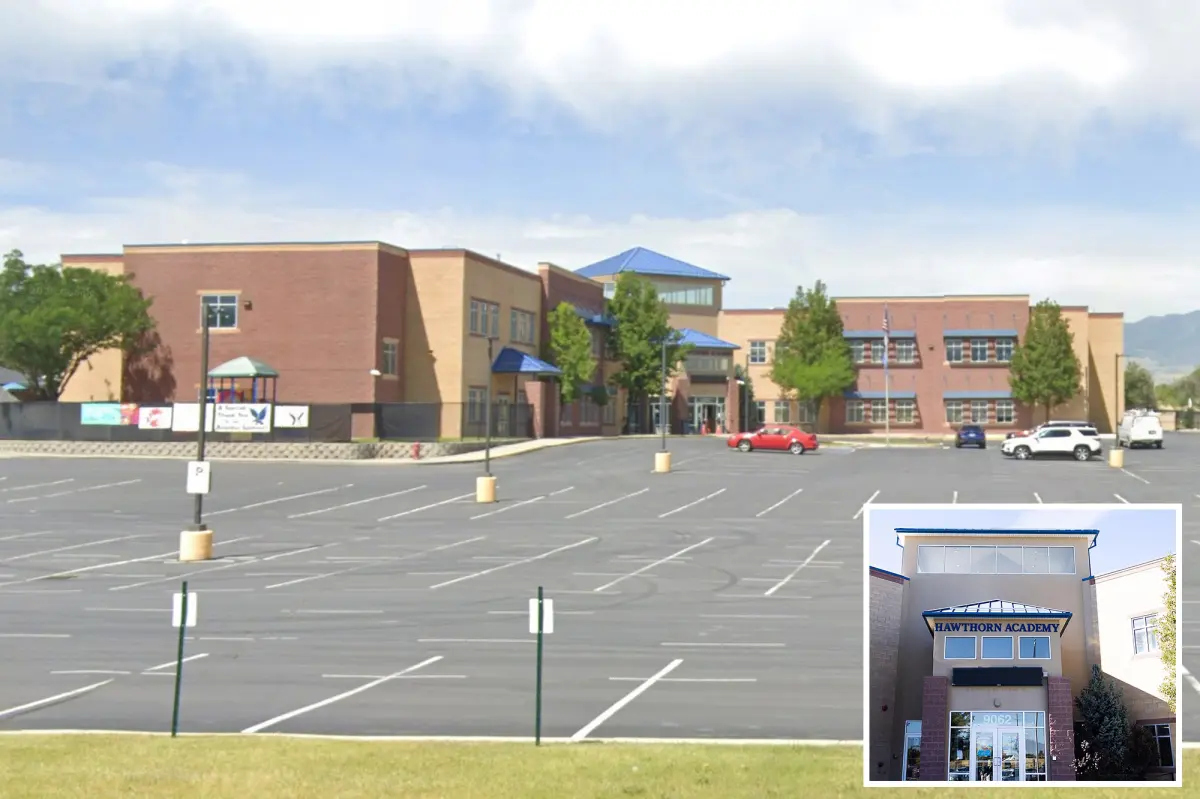
In a disturbing case from West Jordan, Utah, 40-year-old Alisha Marie George, a teacher and volleyball coach at Hawthorn Academy, has been charged with multiple counts of sexual abuse against a teenage student. The allegations reveal a devastating breach of trust that began when the victim was just 12 years old. Court documents filed Thursday detail how George allegedly cultivated a relationship with the vulnerable boy, eventually exploiting his need for adult guidance and support. The now 15-year-old victim described George as a “monster” to police investigators, explaining that “at a time in his life when he needed someone the most, [she] stepped up but took advantage of him.” This case highlights the profound damage that can occur when authority figures exploit their position to prey on vulnerable young people.
The relationship between George and the student began innocuously in 2023 when the boy was in seventh grade and George helped him on the volleyball team. According to the charging documents, their connection deepened the following year when the boy, then 13 and “struggling” at home, came to view George as a “mother figure” who was “always there for him.” This foundation of trust created the perfect conditions for exploitation. During Christmas break that year, the relationship allegedly turned inappropriate when George kissed the boy in her car after driving him home from a movie outing with other teachers and students. This behavior only stopped when the boy’s mother and her friend unexpectedly appeared, interrupting what would become the first of many alleged inappropriate encounters. The situation serves as a stark reminder of how predators often target children who are seeking emotional support and stability.
The charging documents allege that the abuse escalated significantly over time, including oral sex and other sexual acts. Many of these incidents reportedly occurred at the boy’s home after George offered to help while his mother was recovering from surgery in the hospital. The victim told investigators that when George instructed him not to tell anyone about their activities, he felt he had reached “the point of no return.” He also began experiencing anxiety about George becoming upset if she saw him speaking with other female students at school, demonstrating the psychological control she had established. The pair’s last alleged sexual encounter took place in July 2024 in George’s car. Later that year, when George contacted him on his birthday, the victim blocked her on social media and asked her not to message him again, finally attempting to break free from the relationship. Tragically, he told police that George was his first sexual experience, a fundamental violation of his development and trust.
The charges against George are extensive and severe, reflecting the gravity of the alleged crimes. She faces 22 counts in total: four counts of forcible sodomy (a first-degree felony), one count of attempted rape (also a first-degree felony), twelve counts of forcible sexual abuse (a second-degree felony), one count of distributing pornographic material (a third-degree felony), and four counts of unlawfully kissing a minor (a class A misdemeanor). These charges illustrate the systematic nature of the alleged abuse and the multiple ways in which the teacher is accused of violating her position of trust and authority. Following George’s arrest, authorities reported that multiple other students have come forward, reporting that they too were groomed by George or witnessed her behaving inappropriately with students. This suggests a potentially wider pattern of predatory behavior that might have affected numerous young people in the school community.
The ripple effects of such cases extend far beyond the immediate victims. When a teacher betrays their fundamental responsibility to protect and nurture students, it damages the entire educational community. Students may develop trust issues with other adults and authority figures, parents may question the safety of educational institutions, and schools face the challenge of rebuilding community confidence while implementing stronger protective measures. Teachers who maintain appropriate boundaries with students—the vast majority of educators—may find themselves under increased scrutiny or facing new limitations in how they can support students. These cases highlight the importance of comprehensive screening processes for educators, clear professional boundaries, and systems that make it safe for students to report concerning behavior before it escalates to abuse.
George is currently being held without bail in the Salt Lake County Jail and is scheduled to make her initial court appearance on December 9. Officials have noted that additional charges may be forthcoming as the investigation continues and more potential victims come forward. This case serves as a sobering reminder of the vital importance of safeguarding vulnerable young people from those who might exploit positions of trust and authority. Schools, parents, and communities must work together to create environments where inappropriate behavior is quickly identified and addressed, where students feel safe to report concerns, and where the boundaries between appropriate mentorship and exploitation are clearly defined and rigorously maintained. While most educators honor their responsibility to nurture and protect their students, cases like this underscore the need for vigilance in protecting young people from those who would abuse their power and position.