





The Tragic Search for Camila Mendoza Olmos: A Community in Mourning
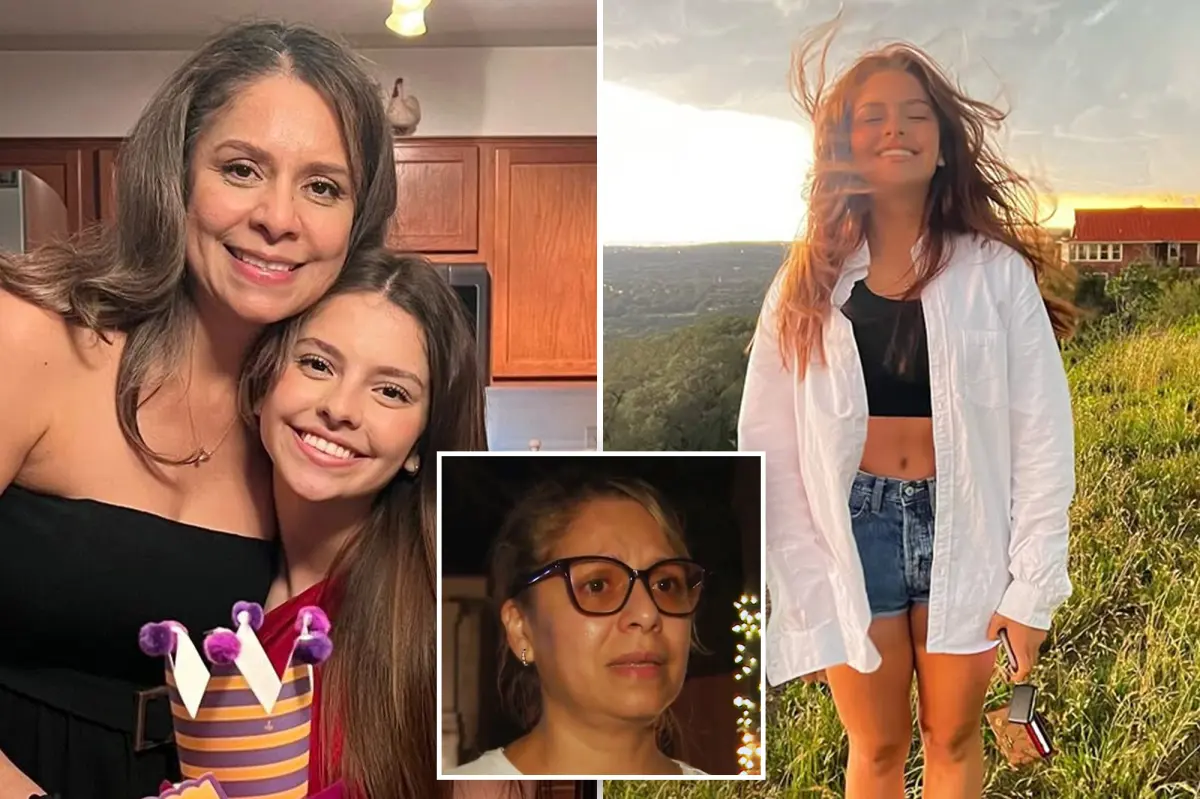
In a heart-wrenching turn of events that has gripped San Antonio, the search for 19-year-old Camila Mendoza Olmos appears to have come to a devastating conclusion. On Tuesday, nearly a week after the aspiring orthodontist disappeared during what was believed to be her routine Christmas Eve morning walk, sheriff’s deputies and FBI agents recovered human remains in a field merely 250 yards from the family’s home. The discovery left Camila’s mother, Rosario Olmos, in profound shock, reportedly repeating the haunting words, “So close to home,” as the reality of the situation began to sink in. Frank Trevino, who had been assisting with the search efforts, described Rosario’s state to the Daily Mail saying, “Her eyes were not there,” painting a vivid picture of a mother’s unimaginable grief. The proximity of the discovery has added another layer of anguish to an already tragic situation, raising questions about how thoroughly the area had been searched initially. Officials acknowledged that the high brush in the field had impeded their earlier search efforts, forcing them to return to areas they had previously missed.
The circumstances surrounding Camila’s disappearance have gradually come to light since she was last seen by her mother getting out of bed on Christmas Eve. Security footage from outside the family home captured the teen, dressed in pajama shorts and a black hoodie, rummaging through her car before the video abruptly ended. Authorities noted that Camila had left her phone at home, an unusual detail that immediately raised concerns. Another troubling element emerged when a firearm belonging to a relative was reported missing from the home after Camila’s disappearance. Near the recovered body, investigators found a 9mm Luger pistol, reportedly the same make as the weapon that had gone missing from the family residence. While official identification of the remains is still pending through the Bexar County Medical Examiner’s Office, a source indicated to the Daily Mail that the remains matched Camila’s description, and Bexar County Sheriff Javier Salazar stated that the body appeared to have been in the field for approximately five or six days, aligning with the timeline of Camila’s disappearance.
Sheriff Salazar’s comments during a press conference have sparked controversy within Camila’s family. The sheriff revealed that authorities had uncovered information suggesting Camila had been experiencing suicidal ideations and exhibited signs of depression. “It was a young person going through a very tough time in her life,” Salazar stated, referencing struggles with school, work, and a recently ended relationship. The sheriff indicated that the evidence points to “self-harm” rather than foul play, though he emphasized that official identification and determination of the cause and manner of death would come from the medical examiner’s office “in the next day or two.” These statements stand in stark contrast to the perspective offered by Camila’s father, Alfonso Mendoza, who firmly rejected the suggestion that his daughter would take her own life, telling reporters, “She would never do something like that to herself, to us. She just wouldn’t. Not ever.”
The divergence between the sheriff’s assessment and the family’s understanding of Camila’s mental state highlights the complex nature of this case. Alfonso Mendoza pushed back against characterizations of his daughter as depressed, particularly regarding her recent breakup, which he described as mutual and respectful. “It ended on good terms, in a lovely way,” he explained, insisting it “wasn’t something she was depressed about.” This contradiction between official statements and family testimony underscores the challenges in understanding the full picture of a young person’s inner struggles, especially in the aftermath of such a tragedy. The community has witnessed this painful disconnect unfold publicly as authorities attempt to piece together what happened to Camila while her family grapples with both grief and their own understanding of who their daughter was.
The search for Camila had mobilized significant resources and community support since her Christmas Eve disappearance. The timing of her vanishing – during the holiday season when families typically come together – added a particularly poignant dimension to the case that resonated throughout San Antonio and beyond. As days passed without contact, the hope of finding Camila alive had begun to fade, yet the discovery so close to her home has prompted questions about the thoroughness of initial search efforts. Sheriff Salazar acknowledged that parts of the field had been missed during earlier searches due to the density of the vegetation, a painful admission for a family that has spent nearly a week hoping for their daughter’s safe return. The recovery of the body and a firearm in such proximity to the family home represents not just the likely end of the search but also the beginning of a different kind of painful journey for the Mendoza-Olmos family.
As the community awaits official identification and determination of cause of death from the medical examiner, Camila’s story serves as a sobering reminder of the fragility of life and the often hidden struggles that young people face. Whether her death is ultimately ruled to be the result of self-harm or other circumstances, the loss of a 19-year-old with dreams of becoming an orthodontist represents potential unfulfilled and a future unrealized. The contradictory narratives between authorities and family members about Camila’s mental state highlight how differently people can perceive the same individual, and how signs of internal struggle might be interpreted or missed by even those closest to us. For now, a community holds its breath for final confirmation, while a family processes the devastating likelihood that their search has ended in the worst possible way, with a discovery hauntingly, heartbreakingly “close to home.”