




Minneapolis at a Crossroads: A City Divided by Immigration Enforcement and Public Safety
Minneapolis finds itself in the grip of a mounting crisis as federal immigration operations, community protests, and a depleted police force create a volatile situation that veteran law enforcement experts warn could spiral into even greater violence. What began as routine immigration enforcement has evolved into street confrontations, leaving officers, immigrants, and community members caught in an increasingly dangerous standoff. As former law enforcement leaders sound the alarm, the city’s path forward appears uncertain, with both political leadership and policing strategies under intense scrutiny.
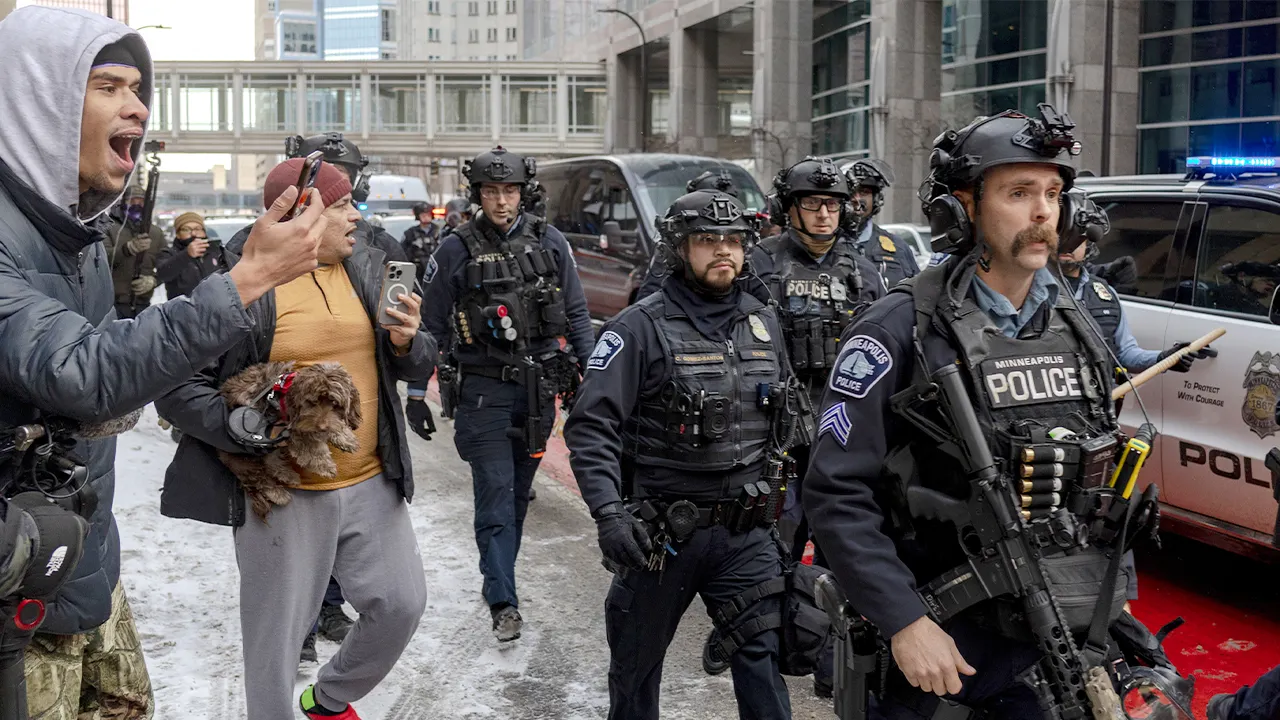
The current turmoil stems from recent deadly encounters involving federal Immigration and Customs Enforcement (ICE) agents during operations in Minneapolis neighborhoods. These incidents have triggered large-scale protests, with community members surrounding federal agents and accusing them of excessive force. Former LAPD detective Moses Castillo, who experienced the Los Angeles riots firsthand, observes that current ICE operations are creating “more mayhem than results,” placing agents in public confrontations they’re ill-equipped to handle. He points to a fundamental mismatch between ICE’s training and the volatile street situations they now face, warning that “someone is going to get hurt or killed by friendly fire” without better coordination. Castillo emphasizes that even legally justified actions under Supreme Court precedent can inflame tensions when tactics appear indiscriminate or heavy-handed, noting that legality alone no longer calms public outrage.
The crisis is compounded by what retired police lieutenant Randy Sutton describes as a “mob mentality on a scale that is absolutely unprecedented.” After spending several days in Minneapolis supporting officers through his organization Wounded Blue, Sutton witnessed firsthand the deteriorating situation where “hundreds and even thousands of people” surround officers attempting to perform their duties. One particularly disturbing incident involved an ICE officer having his finger bitten off during an attack, which Sutton cites as evidence that violence against law enforcement has become normalized in parts of the city. “If you can rationalize biting the finger off a federal officer, there is something radically wrong,” he says, placing blame squarely on political leadership that has “abdicated their responsibility for public safety,” thereby empowering further mob action.
Minneapolis’ policing infrastructure appears to be at a breaking point, with approximately 550 officers currently serving a city authorized for about 900. Even more concerning, only around 265 patrol officers are available to police the entire city—a number that Sutton claims cannot even handle basic calls for service. “Effective policing has ended in the city of Minneapolis,” Sutton concludes, describing officers with a “thousand-yard stare” who suffer from what law enforcement terms “moral injury”—knowing what they should do professionally but being prevented from acting. This vacuum in local policing has forced federal agents to step into volatile crowd-control situations without proper training or coordination, as local police reportedly have been ordered to stand down. The result is a dangerous patchwork of enforcement without unified command structure or consistent tactics.
The political dimension of the crisis has intensified with President Donald Trump’s announcement that he is deploying Border Czar Tom Homan to Minnesota, signaling increased federal involvement in what Trump characterized as “violent chaos.” Meanwhile, state and local leaders stand accused of inflaming tensions by prematurely labeling officer-involved shootings as murders before investigations are completed. “To accuse officers of murder before the facts are known is irresponsible,” Sutton argues. “It foments violence, hatred and distrust.” Both Sutton and Castillo observe that the protests appear highly organized, pointing to coordinated behavior, intelligence gathering, and outside funding that suggest more than spontaneous community reaction.
Finding a path forward requires fundamental changes in both tactics and leadership, according to these law enforcement veterans. Castillo advocates for a return to focused enforcement that prioritizes violent criminal offenders over broad street operations that escalate confrontations. Without such changes, Sutton warns, “This is a highly flammable situation. Everyone that wears a badge is in danger.” The absence of unified leadership and clear command has created an environment where officers feel exposed and the public remains at risk, with no clear strategy for de-escalation. As Minneapolis continues to navigate this crisis, the stakes couldn’t be higher: restoring public safety while addressing legitimate community concerns about immigration enforcement methods. Unless both political leaders and law enforcement agencies find common ground soon, the experts fear Minneapolis may face even greater unrest in the days and weeks ahead.