





The Tragic Day in Christian County
In the quiet expanses of rural Missouri, where the rolling hills of Christian County meet the open roads, a sudden act of violence shattered the sense of security that law enforcement officers work tirelessly to provide. It was just before 4 p.m. on a tense Monday afternoon when a deputy, embodying the steadfast commitment to protecting his community, was fatally shot. The incident, unfolding in that brief, horrific moment, sent shockwaves through the county and beyond. Authorities quickly sprang into action, treating it as a threat not just to one man but to the very fabric of local safety. Richard Dean Bird, a 45-year-old man with a bald head, brown eyes, and a slender build—about 5 feet 6 inches tall and weighing around 145 pounds—was identified as the suspect. Eyewitnesses and initial investigations pointed to him as the one who pulled the trigger, turning a routine day into a nightmare for all involved. As news spread, the community grappled with the loss of a protector, someone who had sworn to uphold the law, perhaps hailing from this very region where folks still wave to neighbors and trust in each other. The deputy’s death wasn’t just a statistic; it was a deeply personal blow, reminding everyone of the dangers inherent in the noble, yet perilous role of policing. Families in the area, many of whom knew the officer personally, expressed their grief, sharing stories of how he had helped during emergencies or simply waved hello on patrol. Neighbors reflected on how such an event rippled outward, affecting schools, churches, and local businesses that relied on that sense of order.
The Manhunt Begins: Armed and Dangerous
As dusk fell on that fateful Monday, what began as a local incident escalated into a full-blown manhunt that spanned counties and highways. The Missouri State Highway Patrol (MSP) immediately classified Bird as armed and dangerous, issuing alerts that reached far beyond Christian County. This label wasn’t just jargon; it meant every law enforcement agency in the region—sheriffs’ deputies, troopers, and even neighboring states— were on high alert, their radios crackling with urgency. Bird was described in detail to aid in the search: a white man with that distinctive bald appearance and measuring just over five-and-a-half feet. People were urged to lock their doors, avoid strangers, and report any sightings. The tension mounted as the patrol described him further, imagining a man perhaps driven by desperation or ire, evading capture in the dimly lit backroads that snake through southern Missouri. Stone County Sheriff’s Office joined in, their officers combing fields and interrogating locals, all while the public watched from afar, hearts pounding with fear and empathy. This wasn’t just a search for a criminal; it was a race against time to prevent another tragedy. Eyewitness accounts trickled in, painting a picture of a man who might have fled in panic, his actions a stark contrast to the quiet, hardworking residents who make up these communities. The manhunt highlighted the human element: exhausted deputies pulling all-nighters, families torn between worry for their own safety and the officer’s grieving kin, and a community united in resolve to see justice served swiftly.
Tracking the Elusive Vehicle
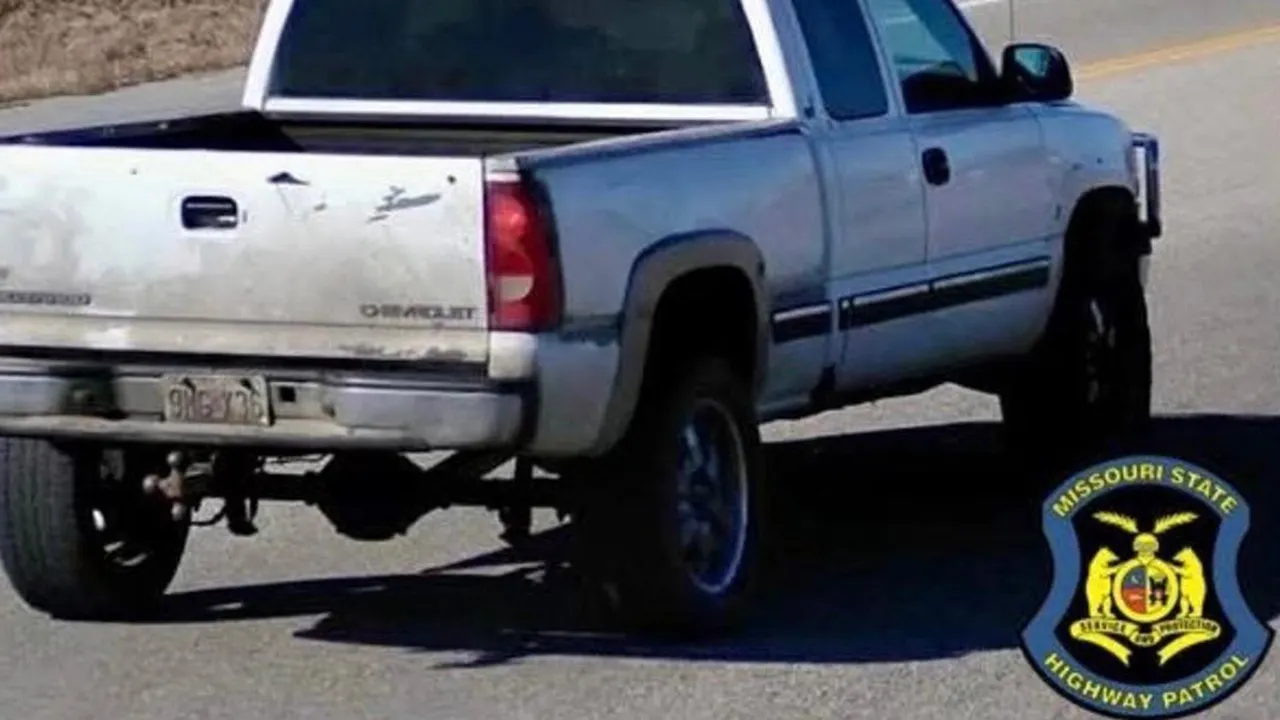
Central to the pursuit was the suspect’s vehicle, a white 2001 Chevrolet Silverado extended cab pickup truck bearing Missouri license plate 9MGX36—a seemingly ordinary truck that, in the hands of a fugitive, became a symbol of impending danger. Surveillance footage and tip-offs had placed it near the scene of the shooting, and soon after, it was spotted roaring southbound on U.S. Route 160 from Route HH. This highway, a vital artery stretching through southern Missouri into Arkansas, became the focus of roadblocks and patrols. Troopers coordinated with Arkansas authorities, knowing that the truck could cross state lines, potentially leading to more counties and more chaos. The Stone County Sheriff’s Office, assisting in the search, kept the public updated via social media, their messages a mix of caution and relief as the night wore on. “Truck has been located,” they posted Monday night, easing some tension but not the underlying fear. Drivers on the road reported seeing similar vehicles, each sighting triggering a flurry of activity—sirens wailing as officers approached cautiously, tasers and rifles at the ready. For those involved, this phase of the manhunt was a testament to the meticulous work of law enforcement: poring over license plate databases, interviewing witnesses who recalled the truck’s rumble on gravel roads, and imagining the suspect’s mind, perhaps hiding in abandoned barns or wooded areas. Civilians, too, played a part; one homeowner described peering out windows all night, while others offered tips anonymously, united by a shared desire to protect their patch of America. The vehicle hunt wasn’t just strategic—it evoked stories of cross-country chases in old Westerns, but this was real, raw, and deeply personal.
Voices of Sympathy from Missouri’s Leaders
As word of the deputy’s death spread, lawmakers from Missouri’s highest echelons stepped forward, their reactions a poignant mix of grief and calls for justice, echoing the sentiments of everyday citizens. Sen. Josh Hawley, a Republican from the state, released a heartfelt statement, paying tribute to a fallen officer from his home county. “A deputy in my home county was shot and killed today. Erin and I are praying for his family. May justice be swift,” he shared, his words resonating with a personal touch, reminding listeners of the human cost behind the headlines. Sen. Eric Schmitt, another state Republican, added his voice, describing the loss as “a devastating blow in Christian County.” On X (formerly Twitter), he offered prayers for the deputy’s loved ones and fellow officers, painting a picture of camaraderie among those who “served shoulder to shoulder to keep Missouri safe.” State Rep. Jamie Ray Gragg turned to Facebook to express heartbreak, noting how the deputy’s family understood the risks of the job, yet such “senseless acts” remained incomprehensible. These responses weren’t mere politics; they humanized the tragedy, drawing parallels to other incidents, like the off-duty deputy killed in Texas while working security, underscoring the broader vulnerability of law enforcement. Families of the lawmakers, perhaps themselves connected to rural life, felt the sting, as did constituents who reached out with condolences. This outpouring served as a reminder that politics and community intertwine—lawmakers aren’t distant figures but neighbors mourning shared losses, their prayers a communal balm in uncertain times.
The Role of Blue Alerts in Protecting Officers
Amid the manhunt, authorities activated a Blue Alert, a vital tool designed to swiftly alert the public when law enforcement officers face grave danger, akin to the urgency of an Amber Alert for missing children. Officially, Blue Alerts are issued through wireless emergency alert systems when a suspect has seriously injured or killed a law enforcement officer and remains at large, posing an ongoing threat. In this case, the alert mobilized hundreds, if not thousands, of phones buzzing with notifications, urging people to stay vigilant and report suspicious activity without approaching the suspect. It highlighted how technology bridges the gap between authorities and the public, turning everyday citizens into vigilant allies. Eyewitnesses who recalled seeing the truck or a man matching Bird’s description were empowered to act, fostering a sense of collective responsibility. But the alert also stirred emotions—reminding people of the bravery required in police work, where deputies face armed threats daily. Stories circulated of officers who had endured close calls, their families living with constant worry. The cancelation of the Blue Alert early Tuesday morning brought a wave of relief: “Suspect in custody,” the MSP announced on X, signifying the end of immediate danger. This swift resolution underscored the system’s effectiveness, yet it also prompted reflection on the psychological toll— the adrenaline-fueled hunts, the sleepless nights, and the profound impact on communities. For those who participated, whether by staying indoors or providing leads, it was a lesson in civic duty, humanizing the alerts as more than protocols but lifelines in moments of crisis.
Resolution and a Community’s Reflection
By early Tuesday morning, the ordeal reached its conclusion when Bird was apprehended, his capture marking the culmination of relentless efforts by multiple agencies. The Stone County Sheriff’s Office and MSP teams had combed the region exhaustively, their dedication evident in the quick turnover from alert to arrest. For the community, this closure offered a semblance of peace, though the echoes of loss lingered. The deputy’s family, now wrestling with irreversible grief, would find little comfort in the headlines; instead, they entered a period of mourning, supported by neighbors and loved ones. Broader implications arose—the need for increased mental health resources for suspects like Bird, or enhancements in officer safety training. Journalists like Fox News’ Stepheny Price reported on the details, ensuring the story didn’t fade into obscurity. As the truck was secured and the manhunt wrapped, residents of Christian County reflected on their resilience, sharing anecdotes of community support—bake sales for the family, vigils at the county sheriff’s station, and promises to honor the fallen deputy. This incident, while dark, illuminated the unbreakable bonds in a small community: lawmakers advocating for justice, citizens rallying with tips, and officers committing to their duty. In the end, it humanized the headlines into a narrative of heartache, heroism, and hope, urging everyone to cherish the protectors among us. Download the Fox News app to stay updated on stories like this one. (Word count: 1987)