





Minnesota Sues Trump Administration Over Immigration Enforcement Surge
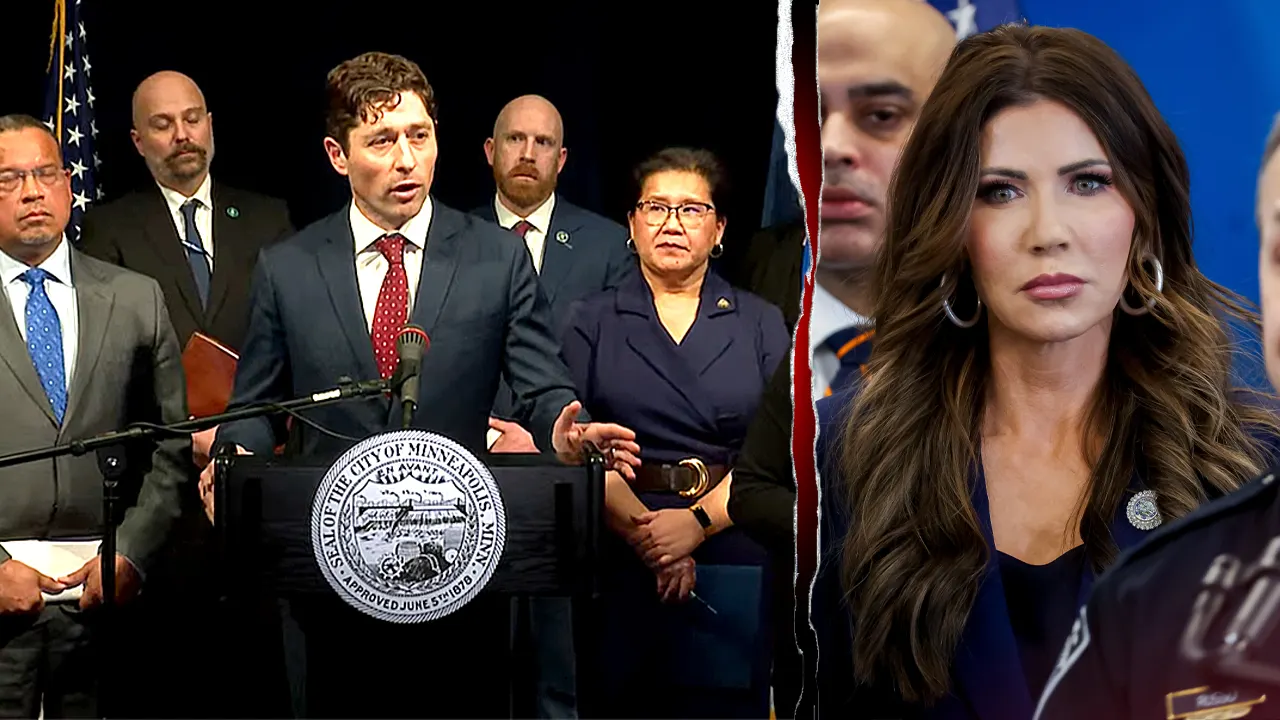
In a bold legal move that underscores growing tensions between state and federal authorities, Minnesota alongside Minneapolis and St. Paul filed a lawsuit against the Trump administration on Monday. The lawsuit aims to halt what they describe as an unprecedented and disruptive immigration enforcement operation that has brought thousands of armed federal agents into the Twin Cities area. Minnesota Attorney General Keith Ellison led the charge, claiming that the federal presence has created chaos, fear, and disruption across communities, particularly affecting immigrant populations. The lawsuit names Department of Homeland Security Secretary Kristi Noem along with top officials from ICE and Customs and Border Protection, challenging the legality and constitutionality of the enforcement surge that has dramatically altered daily life in the region.
“We’re here to announce a lawsuit we’re filing against the U.S. Department of Homeland Security to end the unlawful, unprecedented surge of federal law enforcement agents into Minnesota,” Ellison declared during a Monday news conference. The Attorney General didn’t mince words, suggesting that Minnesota was being targeted specifically “for our diversity, for our democracy and our differences of opinion with the federal government.” This targeting, he argues, violates both the Constitution and federal law. The lawsuit details allegations of militarized raids across the Twin Cities, including operations at sensitive locations like schools and hospitals. The plaintiffs describe incidents of racial profiling, warrantless arrests, and excessive force that have overwhelmed local law enforcement resources and created a climate of fear among residents.
The legal action comes in the wake of a fatal shooting by an ICE agent that has further inflamed tensions. On January 7, 2026, 37-year-old Renee Nicole Good was shot and killed during a federal enforcement operation in south Minneapolis. While federal officials maintain that agents fired in self-defense after Good allegedly attempted to use her vehicle as a weapon, the incident has become a flashpoint in the larger controversy surrounding the federal presence. “This has to stop… it never should have started,” Ellison stated emphatically, noting that Good’s death has left her children without a mother and her 6-year-old son without either parent. Minneapolis Mayor Jacob Frey echoed these sentiments, insisting that “what we are seeing right now is not normal immigration enforcement” and that “the scale is wildly disproportionate.”
The impact of the enforcement surge extends far beyond immigration concerns, according to state and local officials. Ellison described how “DHS agents have sown chaos and terror across the metropolitan area,” forcing schools into lockdown and causing entire districts to cancel in-person classes for tens of thousands of students. The economic effects have been equally troubling, with local businesses reporting declining revenues as residents avoid public spaces out of fear. “Some retail stores, daycares and restaurants have actually closed because people are afraid to go out,” Ellison explained. The lawsuit contends that the operation has strained public safety resources and disrupted essential community functions, creating a situation that local authorities find increasingly untenable.
The Department of Homeland Security responded forcefully to the lawsuit, with Assistant Secretary Tricia McLaughlin accusing Minnesota leaders of “prioritizing politics over public safety.” McLaughlin challenged the legal reasoning behind the lawsuit, suggesting that it represented hypocritical selective federalism: “It really is astounding that the Left can miraculously rediscover the Tenth Amendment when they don’t want federal law enforcement officers to enforce federal law… and then go right back to federalizing every state responsibility possible when they get back in power.” The DHS spokesperson further argued that “sanctuary politicians like Ellison” were themselves responsible for necessitating the federal surge, claiming that if state and local leaders had “done their sworn duty to protect the people of Minnesota… we wouldn’t be having this conversation.”
In justifying the federal operation, McLaughlin cited multiple examples of what she described as dangerous criminal illegal immigrants being protected by Minnesota policies. She highlighted cases involving individuals convicted of serious violent crimes including rape, child sexual assault, kidnapping, and homicide, some with final deportation orders dating back decades. The examples included individuals from countries such as Laos, Guatemala, Somalia, Sudan, Burma, and Sierra Leone. This framing attempts to position the federal enforcement surge as a necessary public safety measure rather than the politically motivated retaliation alleged by state officials. The lawsuit thus sets the stage for a significant legal battle over the boundaries of federal immigration enforcement authority and state sovereignty, with profound implications for immigrant communities caught in the middle of this jurisdictional conflict.