







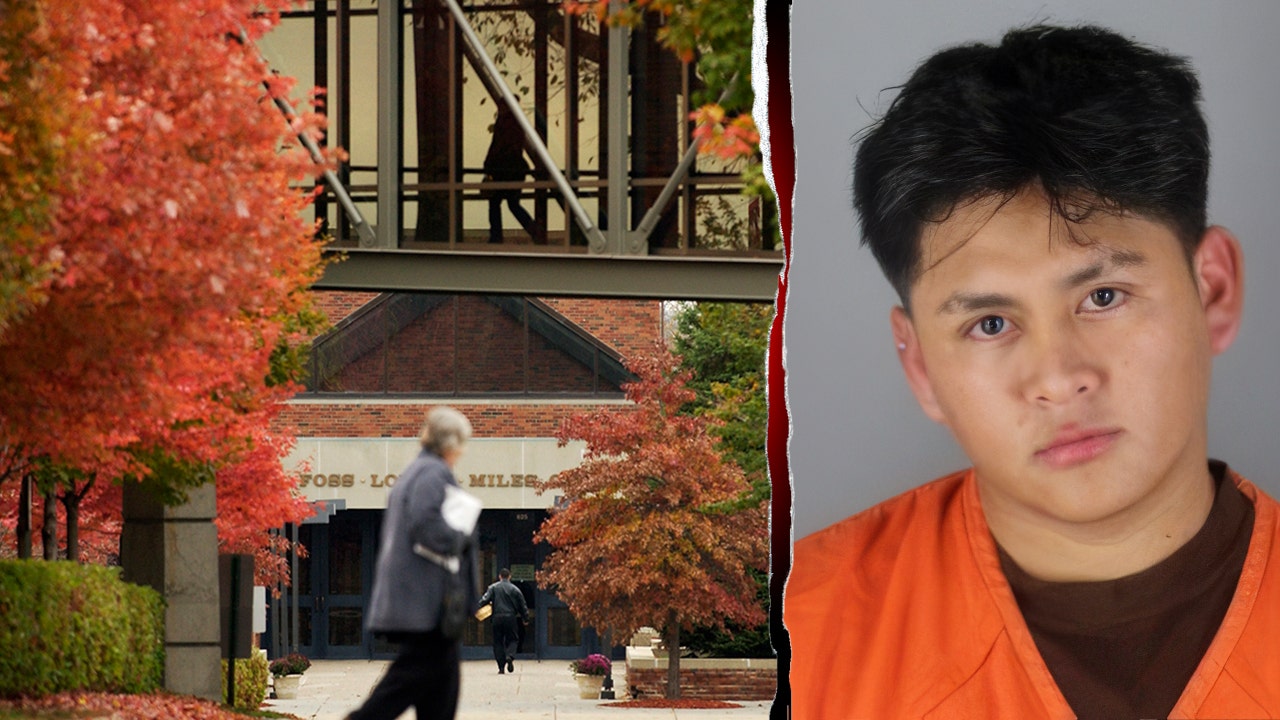
DHS Accuses Minneapolis College of Obstructing ICE Arrest of Student
A tense standoff between Immigration and Customs Enforcement (ICE) agents and Augsburg University staff has ignited a heated debate about jurisdiction, safety, and immigration enforcement on college campuses. The Department of Homeland Security (DHS) claims that administrators at the small private Minneapolis college actively interfered with federal agents attempting to arrest Jesus Saucedo-Portillo, an undergraduate student they identify as an undocumented immigrant with a criminal record including a sex offense conviction and a prior DWI. The incident has highlighted the growing tensions between federal immigration enforcement and educational institutions that aim to protect their student populations.
According to DHS, the confrontation escalated when Augsburg University administrators and campus security physically blocked ICE vehicles from leaving the campus with the detained student. In a statement posted on social media platform X, DHS officials described how they informed university staff that federal law supersedes university policies and warned that continuing to obstruct their operations would constitute obstruction of justice. Despite these warnings, DHS alleges that university personnel persisted in their interference, forcing agents to “use the minimum amount of force necessary” to complete the arrest. This characterization portrays the university staff as deliberately impeding legitimate law enforcement activity, raising questions about the legal boundaries of campus autonomy when confronted with federal operations.
The university offers a markedly different perspective on the events. Augsburg President Paul Pribbenow, in an interview with Minnesota Public Radio, described the arrest as “illegal” and claimed ICE agents operated without a proper warrant. He further alleged that federal agents drew their weapons on gathered students and staff who had called campus security after noticing ICE presence, triggering what he described as a campus “protocol for when ICE is on campus.” Pribbenow’s account presents the university’s actions as a proper response to protect their campus community from what they viewed as an unauthorized intrusion, and he explicitly praised students who participated in resisting the ICE operation. The president maintained that no staff or students violated the university’s code of conduct during the incident, suggesting the institution stands behind their actions.
The confrontation at Augsburg University represents a microcosm of broader national tensions around immigration enforcement. Universities across the country increasingly find themselves navigating complex territory between their commitment to protect all students regardless of immigration status and federal expectations of compliance with immigration laws. Augsburg, affiliated with the Evangelical Lutheran church, appears to have established specific procedures for responding to immigration enforcement on campus, reflecting a deliberate institutional position on this politically charged issue. This approach aligns with other educational institutions that have declared themselves “sanctuary campuses” or established policies limiting cooperation with immigration authorities, moves that have drawn both praise and criticism depending on political perspective.
The case has particular resonance given the specific allegations against Saucedo-Portillo. DHS characterizes him not simply as an undocumented immigrant but as a “criminal illegal alien and registered sex offender” with additional legal violations. This framing places the university’s protective actions in a more controversial light, raising questions about whether institutional policies designed to shield undocumented students should apply equally to those with serious criminal convictions. Critics of sanctuary policies often cite public safety concerns in cases involving individuals with criminal records, while defenders argue that allowing any exceptions to protective policies undermines trust and creates a slippery slope toward broader enforcement cooperation.
The lack of clarity around certain key facts compounds the controversy. President Pribbenow’s assertion that ICE lacked a proper warrant directly contradicts DHS statements that agents informed university staff they had a warrant for Saucedo-Portillo’s arrest. Similarly, accounts differ regarding the level of force displayed, with the university president claiming weapons were drawn while DHS maintains agents used minimal necessary force. Without independent verification of these competing claims, the public is left to evaluate the incident through their existing perspectives on immigration enforcement and institutional autonomy. The university had not responded to multiple requests for comment at the time of reporting, leaving several important questions unanswered about their policies and the specific circumstances of this confrontation.
The Augsburg University incident highlights the increasingly challenging position of educational institutions caught between their educational mission and federal law enforcement expectations. As immigration remains one of America’s most divisive political issues, college campuses have become unexpected battlegrounds where abstract policy debates materialize into tense confrontations between federal agents and academic communities. Regardless of where one stands on the broader immigration debate, this case demonstrates how the lack of clarity in jurisdictional boundaries and competing values of campus safety, educational access, and law enforcement can create volatile situations that satisfy neither immigration hardliners nor advocates for immigrant protections. As similar incidents continue to emerge across the country, educational institutions will face mounting pressure to articulate clear policies that balance their commitment to student wellbeing with their legal obligations under federal law.