


A Christmas Tragedy in Milwaukee
In the quiet, festive glow of Milwaukee on Christmas Day, a heartbreaking accident shattered the holiday cheer for one family forever. Montrell Pharm, a 53-year-old bus driver with the Milwaukee County Transit System, dozed off behind the wheel of his bus around 11 p.m., leading to a horrific crash that claimed the life of 79-year-old Robert Clemons. The incident unfolded on a seemingly ordinary night, but the world turned upside down for those involved. Imagine the twinkling lights on houses, the smell of pine trees and fresh-baked cookies, and families gathering for warmth and joy—yet, in the midst of this, a tired driver and an unsuspecting pedestrian crossed paths in a way that no one could have foreseen. Clemons, an elderly man with a lifetime of stories etched into his weathered face, was simply trying to fix his truck on the side of the road with his grandson by his side. Little did they know, a momentary lapse would rob them of precious time together. This wasn’t just an accident; it was a collision of fatigue, misfortune, and tragedy, leaving a grandson to witness the unimaginable on a day meant for family and miracles. The community, still decked in holiday decorations, buzzed with shock as details emerged, painting a picture of a man whose exhaustion on the job led to irreversible consequences. Pharm, a father and longtime worker, likely started his day hoping for a peaceful shift—perhaps dreaming of his own family celebrations later—but instead, his unchecked drowsiness turned a routine drive into a nightmare. In humanizing this event, we see not merely statistics, but individuals grappling with the fragility of life: a grandfather’s final moments, a driver’s regret, and the grandson’s lifelong scars from seeing his loved one suffer such a cruel fate. Christmas, a season of reflection and renewal, became synonymous with loss and sorrow for the Clemons family, reminding us all how delicate our daily routines can be.
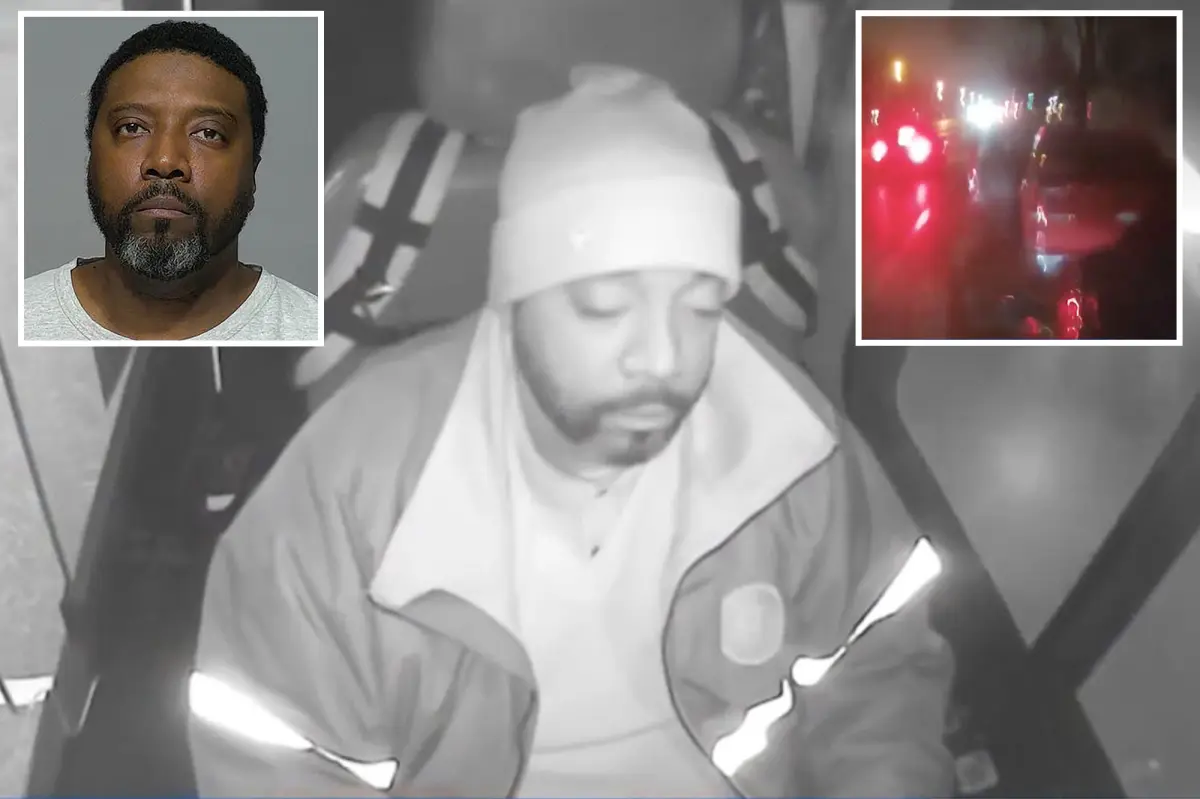
The courtroom on Thursday bore witness to the grim footage that captured the chaos in vivid detail, humanizing the cold facts into a deeply personal story of error and its aftermath. Prosecutors played a video clip that showed Pharm, slumped in his driver’s seat, eyes closed as the bus lurched forward erratically. At first, it might have seemed like a harmless rest, but the camera lens revealed the horror as the vehicle slammed into a line of parked cars, the impact jolting the frame. Suddenly, the bus veered onto the sidewalk, crushing time and space itself to strike Robert Clemons and his grandson, who were kneeling by their truck in the road, tools in hand and holiday plans in their hearts. The grandson, perhaps sharing laughs about old times or discussing family traditions, felt the force lift them both. Clemons, whose body was dragged underneath the bus for an agonizing block, embodied the silent strength of an elderly man who had lived through wars, depressions, and personal triumphs—only to end in this undignified manner. His grandson, desperate and broken, chased after the bus with sheer willpower, his limbs shattered from the initial impact but fueled by love to try to save his grandfather. It’s easy to picture the scene through their eyes: the screech of metal, the crunch of tires, the heart-wrenching realization that the driver wasn’t responding. Another kind Samaritan, a pedestrian who happened upon the unfolding disaster, yelled warnings and ultimately flagged down the bus to bring it to a halt. Blood painted a trail along the street, a stark reminder of the human toll, as police noted the bus’s battered front end and shattered windshield—a vehicle that had morphed from public servant to agent of devastation. This video, far from a detached replay, invited onlookers to feel the panic, the helplessness, and the raw fear that gripped those involved. Inside the bus, onboard footage showcased Pharm’s repeated nods off, his head jerking awake only when it was too late, underscoring how exhaustion can erode judgment like water on stone. For the family in court, reliving this clip must have reopened wounds, transforming a legal proceeding into a visceral retelling of their pain—a boy watching his grandfather’s final, futile struggle beneath the wheels, a man arguing with fate.
Robert Clemons’s story, though cut short, deserves to be woven into the tapestry of this tragedy with warmth and respect, highlighting the humanity he brought to everyday existence. At 79, he was a pillar in his community, the kind of grandfather who probably regaled stories of youthful adventures over coffee, fixed cars to keep the family vehicle running, and offered wisdom gained from decades of hard-won experience. On that fateful Christmas evening, he and his grandson—young enough to still gaze at him with admiration—were simply addressing a minor inconvenience with their truck, unaware that their casual roadside repair would become immortalized in sorrow. The impact was instantaneous and merciless; Clemons was hurled and trapped under the bus, his body enduring the torturous drag down the block. Each yard traveled must have been an eternity of pain, his grandson’s screams echoing like prayers unanswered. Three fractured injuries marked the boy’s body— a broken arm and leg—yet his courage drove him to pursue the vehicle, feet pounding against the pavement, pleading for mercy that never came. It’s heartbreaking to imagine Clemons’s thoughts in those last moments: memories of Christmases past, faces of loved ones, the hope for more shared moments. The grandson, now left with haunting visuals and physical scars, carries forward the burden of what happened—therapist sessions haunted by the sight of his grandfather’s form vanishing beneath the chassis. First responders arrived to extract Clemons’s lifeless body, but the scene’s gravity lingered, a bloodied path symbolizing a life journey abruptly ended. For the family, Christmas morphed from joy to a day of mourning, with evergreen wreaths at the door now symbols of evergreen grief. Robert wasn’t just a victim; he was a man of depth—perhaps a veteran, a storyteller, a jokester—whose absence creates voids in reunions and holiday gatherings. This personalizes the loss, making us ponder the ripple effects: a widow or children waiting at home, unaware of the horror unfolding, and a grandson forever changed, holding onto fragments of a bond severed too soon.
On the driver’s side, Montrell Pharm’s narrative reveals a human side fraught with exhaustion and regret, adding layers of empathy to the events. As a dedicated employee, Pharm had been grinding through 14-hour shifts since Monday, surviving on scant sleep that blurred the lines between wakefulness and dreams. Starting just before Christmas, he juggled the demands of public transportation, perhaps smiling through fatigue to accommodate commuters, all while yearning for rest amidst the seasonal bustle. His account to police—looking ahead, believing the road was clear—paints a picture of disillusioned confidence, a man so worn down that he dismissed subconscious signals of danger. This wasn’t recklessness born of malice but the creeping shadows of overwork, where eyelids grow heavy and split-second decisions falter. Plunging into a Christmas drive, Pharm might have envisioned joining his own family, exchanging gifts and laughs, unaware that his drowsiness would cost another man his life. The onboard footage, a silent witness, showed his eyes fluttering shut repeatedly, the bus’s gentle hum lulling him into oblivion before the violent jolt awoke him to reality. In court, his plea of no contest acknowledged the unintended horror, a father’s remorse echoing in the chamber. Pharm, with a life of routine and responsibility, now faced the mirror of his actions, realizing how one night’s slip could shatter worlds. To humanize him is to recognize the systemic fatigue in jobs like driving, where holidays amplify pressures, and to see a man transformed from tireless worker to penitent figure, grappling with the weight of consequences that no apology can fully undo. His story serves as a cautionary tale, urging compassion even amid justified anger, and reminding us that everyone—drivers, grandparents, boys—deserves rest to prevent tragedies.
The legal reckoning in court brought closure tinged with sorrow, as prosecutors and judges navigated the delicate balance between justice and mercy. On January 20, Pharm appeared before the bench, pleading no contest to homicide by negligent operation of a vehicle and reckless driving causing great bodily harm—charges that starkly captured the evening’s devastation. The video, replayed in the hushed courtroom, turned heads and heavy hearts, illustrating how technology preserved a moment of pure calamity. Judge after consideration, weighed the facts: a driver’s fatigue, a pedestrian’s vulnerability, and the indelible impact on an innocent family. Pharm received a sentence of two years in prison, followed by three years of extended supervision, a measure designed to ensure accountability and reform. This wasn’t about vengeance but about safeguarding the community from future lapses, honoring Clemons’s memory by prioritizing safety. The Clemons family, seated in support, likely felt a mix of vindication and aching loss, their grief compounded by public proceedings that dredged up the visuals once more. For Pharm, the verdict marked a crossroads, a chance for introspection in confinement, away from steering wheels and split-second choices. Lawyers argued passionately, humanizing the ordeal by delving into work schedules and mental states, but ultimately, the scales tipped toward responsibility. The courtroom, with its stern decorum, couldn’t hide the emotional undercurrents—a grandson’s quiet sobs, a defendant’s lowered head—binding justice to the humanity of those affected. This phase symbolized society’s attempt to heal a wound, acknowledging that while punishment seeks to deter, true reckoning lies in empathy and change.
As the gavel fell and words of sentence filled the air, Pharm’s heartfelt apology to the Clemons family echoed with genuine remorse, bridging the divide between tragedy and tentative reconciliation. “There aren’t enough words to say to begin to heal your pain,” he stated, his voice perhaps trembling, a man confronting the unintended ripples of his sleep-deprived decision. Sincerely asking for forgiveness, he labeled it an accident, underscoring how a lapse in alertness morphed into lifelong sorrow. For the family, whose holiday season had turned to ash, this plea offered a sliver of humanity amidst their anguish—a reminder that Pharm, too, was a person, not a monster. Imagine the weight of those words on the grandson, who bore physical and emotional wounds, now hearing remorse from the driver whose bus claimed his grandfather. Forgiveness, if extended, might come slowly, through therapy sessions where memories of Christmas Day unravel like tangled lights. Pharm’s apology wasn’t just formality; it was a step toward redemption, inviting reflections on empathy in a world of fatigue-driven failures. The incident prompts broader conversations: about bus driver rest breaks, holiday workloads, and the invisible threads connecting us all. In human terms, this tragedy urges us to extend compassion— to tired workers and grieving families alike—while cherishing life’s unpredictability. The Clemons spirit lives on in their grandson’s resilience, and Pharm’s plea for mercy flickers as hope for healing. Ultimately, this story transcends headlines, becoming a poignant reminder to pause, rest, and cherish those we hold dear, lest a moment’s distraction claim more than just sleep. As communities mark the new year, may healing begin, with forgiveness as fragile as a candle’s flame in the darkness of loss.