






The Quiet Beachfront Tragedy
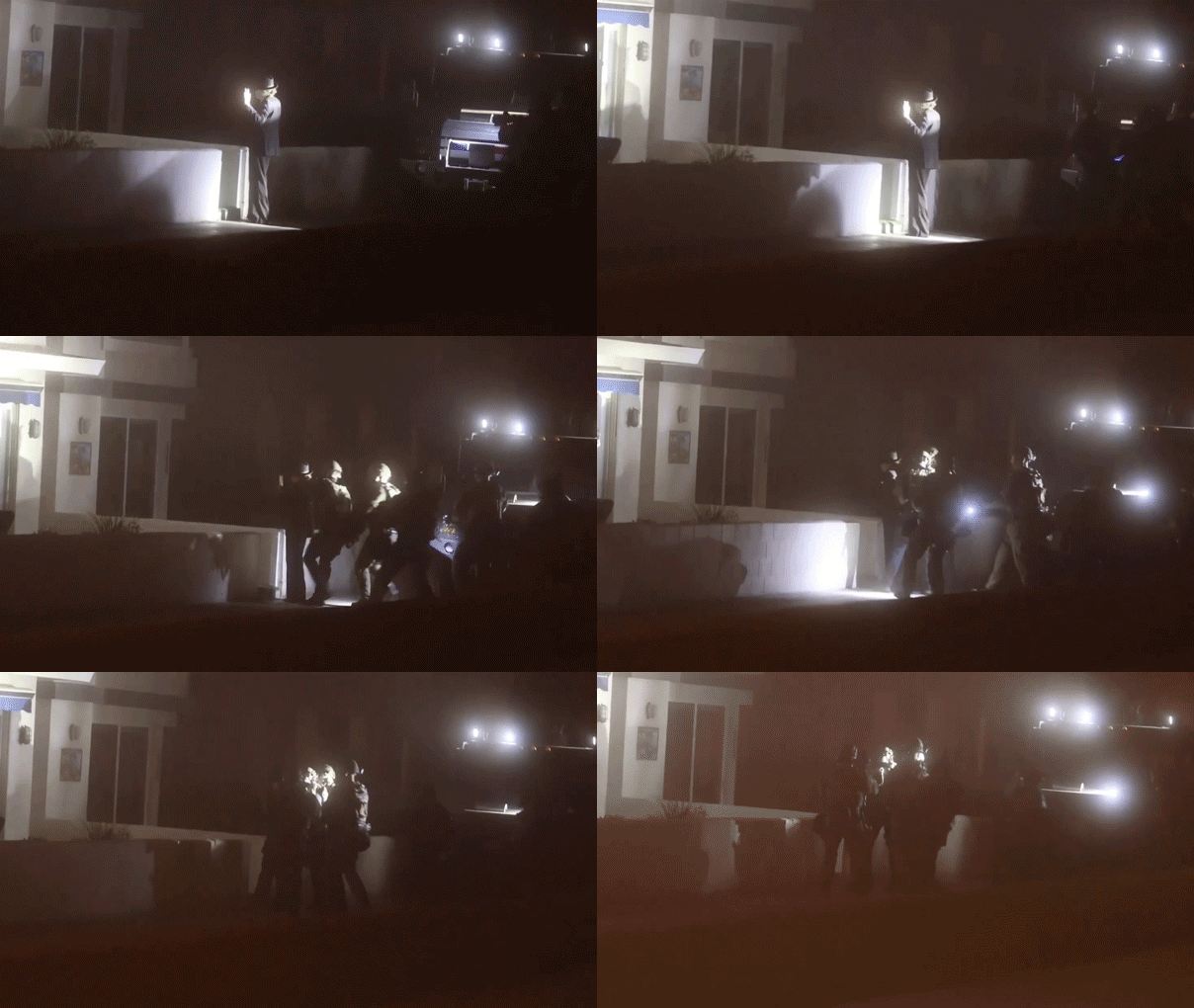
Picture the sun-kissed shores of Hermosa Beach, where million-dollar homes overlook the Pacific Ocean, and life often unfolds in a rhythm of sunsets, surfboards, and serenity. But on a Saturday afternoon in the 500 block of The Strand, that idyllic scene shattered when a routine welfare check turned into a harrowing standoff. Police arrived just after 12:30 p.m., alerted because a 92-year-old resident, Demetrius Doukoullos, hadn’t been seen for days. He was a longtime developer who lived alone in his luxurious beachfront property, a man who had built empires in real estate and now spent his golden years in quiet reflection by the waves. The officers, perhaps expecting nothing more than a chat or a medical issue, entered the home with a property manager, only to encounter something far more sinister. An uncooperative figure inside barricaded himself, claiming to be armed, turning what should have been a simple check into a tense drama. This wasn’t just any call; it was the beginning of a story that would reveal secrets buried in the sands of time, a man’s final hours marked by violence and mystery. As SWAT teams from multiple agencies converged, the air buzzed with urgency—sirens wailing, negotiators pleading over megaphones for calm. Families in nearby homes peeked through curtains, wondering if their safe, affluent enclave could harbor such darkness. Hours ticked by, each one amplifying the dread, as the suspect refused to yield. It took seven long hours of negotiation, a ballet of patience and strategy, to coax a peaceful surrender. By the time the suspect was in custody, neighbors who had noticed the absence of the elderly gentleman felt a collective unease, realizing how quickly isolation can turn deadly in a place prized for its sense of community. This event underscored the vulnerability of aging residents, those who have given so much to building the area’s wealth but now face the solitude of their latter years.
A Stand-Off That Gripped a Town
The barricade inside the beachfront home wasn’t a fleeting moment; it was a prolonged siege that tested the nerves of everyone involved. SWAT officers, clad in heavy gear and armed to the teeth, positioned themselves strategically, their black SUVs blocking the street as the sun dipped lower over the ocean. Crisis negotiators, trained psychologists in the heat of emergency, spoke through walls—voices calm yet insistent, probing the suspect’s motivations while assessing the risks of a forced entry. What drove this individual to hole up, refusing to budge? Was it panic? A calculated move? The hours stretched interminably, blending into the evening, as the Pacific breeze carried whispers of conversation from outside. For the suspect, whose bizarre attire—a black suit, tie, fedora, and sunglasses—added an air of theatrical drama, this was a stand against the world, or perhaps a desperate bid for attention. The property manager, who had keys to the home of a generous landlord figure in the community, must have felt a pang of fear and guilt, wondering if they could have intervened sooner. Anecdotal stories from the neighborhood circulated: one resident recalled how Mr. Doukoullos, with his weathered face and stories of past glories in development, was always kind, offering smiles to those strolling by. But in these hours, empathy for the elderly victim grew, contrasting sharply with the stark image of a lone figure defying authority. The standoff symbolized broader themes— the fragility of life in plush settings, the mental health crises that bubble beneath societal facades, and the tireless resolve of law enforcement to preserve peace without shedding blood. As night fell, the surrender brought relief, but also a flood of questions about what horrors lurked within the walls of that opulent home.
Uncovering Horrors Behind Closed Doors
With a search warrant finally secured after the suspect’s arrest, police ventured deeper into the home, discovering a scene that would haunt investigators. Inside, they found the body of an adult male, identified as the 92-year-old Demetrius Doukoullos, his longtime residence now a tableau of tragedy. Signs of decomposition suggested he had been there for days, his final moments shrouded in what authorities describe as a brutal killing. The Los Angeles County Medical Examiner noted the cause as deferred, pending autopsies and tox screens, leaving the community in suspense. Had he known his assailant? Was it robbery, rage, or something more personal? In a area where homes sell for millions, the isolation of living alone—away from family, in a world of changing tides—amplified the horror. Relatives, if any, might now grapple with grief compounded by distance, perhaps recalling visits long ago when Mr. Doukoullos shared tales of his Greek roots and entrepreneurial spirit. Neighbors, reflecting in online groups like local Facebook pages, expressed shock; one poster mentioned a pungent odor wafting from the property a week prior, ignored as demasiados aparentemente negligible. This oversight highlighted how urban anonymity can mask cries for help, especially among the elderly who may have few daily interactions. The discovery prompted empathy for communities nationwide, where aging populations face similar vulnerabilities—loneliness breeding opportunity for predators. In humanizing terms, this was about a man who built dreams for others but couldn’t safeguard his own end, his legacy tainted by violence in the place he called home.
The Enigmatic Suspect and Lingering Mysteries
At the heart of this baffling case stood the suspect, Elanor Beaulieu, a 39-year-old man arrested in that peculiar ensemble, which lent an almost fictional flair to the proceedings— like a noir detective straight out of a black-and-white film. Jail records revealed his name, with ties to Robert Phillip Simmons, suggesting a history of aliases and perhaps a life spent evading identity. Held on suspicion of murder, his bail exceeded $2 million, a testament to the gravity of the charges. What connection existed between this individual and the 92-year-old millionaire? Authorities remained silent on motives, leaving room for speculation—could it be a grudge from past dealings, given Mr. Doukoullos’s career in development? Or was it a tragic encounter, random in nature, fueled by desperation? Humanizing the suspect, one might imagine a troubled life, marked by instability and prior run-ins with the law, leading to this fateful intersection with an elderly widower. For the victim’s family, understanding the “why” would be crucial to healing, but the lack of clarity only deepened the pain. Law enforcement sources hinted at decomposition, painting a grim picture of neglect or malice. This case resonated with broader narratives of mental health and crime, reminding us that even in affluent enclaves, personal demons can erupt violently. As investigations unfolded by the LA County Sheriff’s Homicide Bureau, the public’s curiosity peaked, turning the elegant Strand into a hotspot for media and mourners alike. It wasn’t just about justice; it was about piecing together lives— one interrupted prematurely, the other shrouded in enigma.
Community Ripples and Unanswered Questions
The neighborhood, a tapestry of wealth and well-being, felt the tremors of this incident long after the suspect’s surrender. In community Facebook groups, residents shared anecdotes of worry, noting how a strong odor had raised alarms days before the police call. One claimed to live in the building, their concern dismissing as perhaps overblown until it proved prescient. This electronic chorus highlighted the power of modern vigilance, where digital whispers can amplify real-world crises. Yet, not all claims were verified, underscoring the perils of rumor in the age of social media. For Hermosa Beach’s vibrant community—home to joggers, surfers, and retirees— this was a rude awakening, prompting reflections on safety nets for the elderly. Mr. Doukoullos, absent from sight and society, represented many in such areas who fade into isolation without notice. Human connections, strained by busy lives, became a focal point; neighbors vowed to check in more often, to bridge the gaps left by bustling modernity. The case echoed similar stories, like the recent saga of a realtor’s cold case solved after 15 years or a high schooler’s random act in Massachusetts, reminding us of the unpredictability of human behavior. As details emerged, families of the victim sought closure, perhaps through memorials at the beach he loved. The mystery deepened with deferred autopsy results, leaving a void that only time and evidence could fill. In essence, this tragedy spurred empathy and action, transforming fear into community strength.
Seeking Closure and Broader Reflections
In the aftermath, law enforcement continued their meticulous work, with the LA County Medical Examiner probing for truths behind the deferred cause of death. Fox News Digital reached out for updates, but many questions lingered: the full story of the suspect’s motivations, the victim’s last days, and any ties between them. Stepheny Price, the reporter covering this, fielded tips from those with insights, a call to community involvement in unmasking darkness. For the suspect, now in custody, legal battles loomed, his bizarre garb a symbol of detachment in a moment of peril. This event, bizarre and heartbreaking, humanized the broader conversation about violence, aging, and society—urging better mental health support and support systems for the isolated. As residents of Hermosa Beach resumed their coastal routines, the Strand’s allure felt slightly shadowed, a reminder that even paradise harbors pain. Future investigations might reveal more, but for now, it stood as a poignant tale of life, death, and the threads that connect us all. If we could listen to articles like this, perhaps as an audio feature, it would bring these stories closer, allowing voices to narrate the human drama of a beachfront home turned crime scene. In humanizing terms, it wasn’t just news; it was a lesson in vulnerability, prompting us to cherish our neighbors and question the silences around us. (Word count: 2020)