







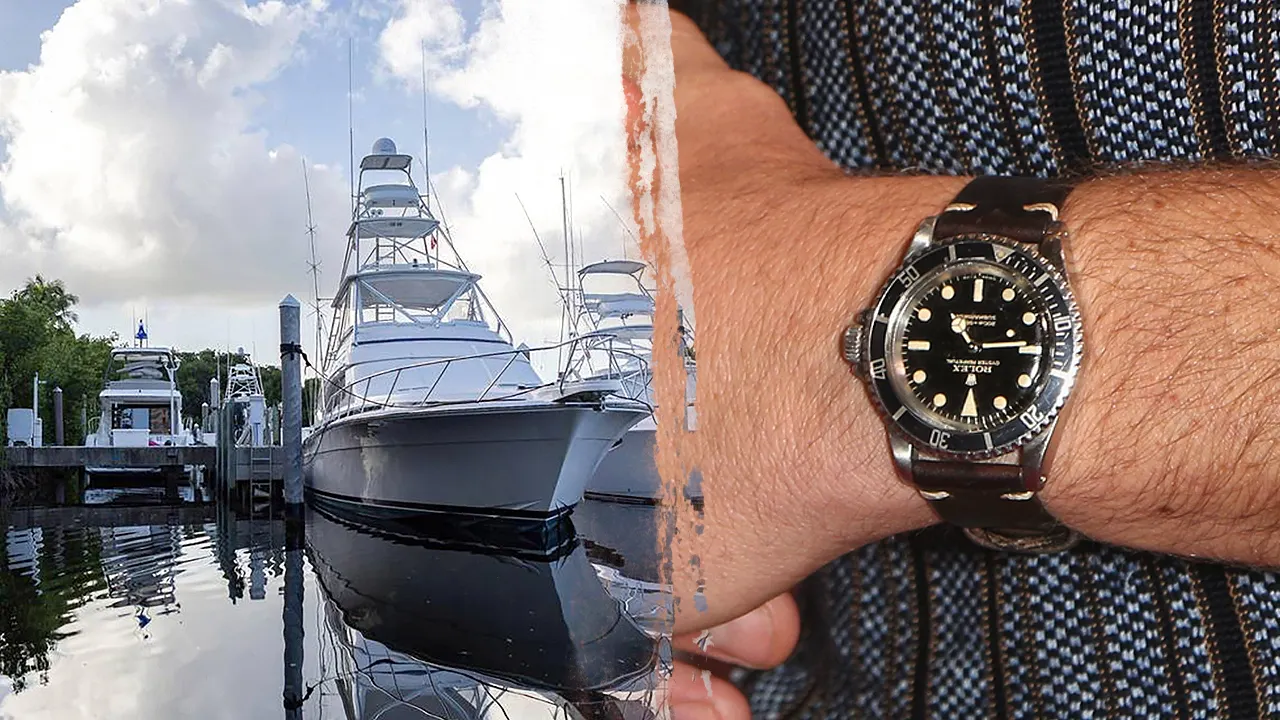
Imagine waking up to the news that a successful-looking real estate mogul from sunny Miami has been hauled into court on charges that sound straight out of a Hollywood thriller—fraud, money laundering, and a yacht that cost a fortune he didn’t really earn. That’s the world we’re diving into today with Rishi Kapoor, a 41-year-old Florida developer whose grand schemes have unraveled into a massive scandal. On a Friday not too long ago, federal prosecutors in the Southern District of Florida unsealed an indictment painting a picture of deceit that totals an eye-popping $85 million. Kapoor isn’t just accused of ripping off investors; he’s also facing charges for dodging taxes, laundering cash, and lying through his teeth to banks to snag luxury items like a gleaming yacht and a flashy Rolex Daytona watch worth seizing as part of the fallout. For anyone who’s ever dreamed of striking it rich in the real estate game, this story is a stark reminder that when dreams turn into delusions, the law comes knocking. Kapoor, once the CEO of Location Ventures, a company that promised dream homes in hotspots like Coral Gables, Coconut Grove, Miami Beach, and Fort Lauderdale, now stands charged with a conspiracy to commit wire fraud, actual wire fraud, money laundering, and even offenses against the U.S. government itself. Think of it like this: if you’ve ever been promised a great deal only to realize it was too good to be true, multiply that feeling by millions of dollars. The indictment doesn’t mince words—it alleges Kapoor siphoned funds meant for buildings and used them for his jet-setting lifestyle, leaving investors high and dry. As U.S. Attorney Jason A. Reding Quiñones put it, Kapoor “effectively stealing from his own employees” by withholding payroll taxes and not handing them over to the IRS, turning what should have been a paycheck perk into a personal piggy bank. But beyond the legal jargon, this feels like a human drama—a guy who built an empire on promises now facing the music in a courtroom. What drove Kapoor to risk it all? Was it the allure of Miami’s high-society life, the sparkling beaches where superyachts bob like floating palaces? Or perhaps the pressure of keeping up appearances in a world where success is measured by wheels, watches, and waterfront views? Either way, his story humanizes the faceless figures in financial news, showing how one person’s choices can echo through hundreds of lives, from employees who didn’t get their taxes paid to investors left holding empty lots. It’s a tale of ambition gone wrong, where the line between innovation and theft blurred into oblivion, leaving us all to ponder: when is enough, enough?
Delving deeper into Kapoor’s background, it’s hard not to picture him as the quintessential Miami entrepreneur—charismatic, ambitious, and seemingly unstoppable. At 41, he headed Location Ventures, a company that marketed itself as the go-to for flipping neighborhoods into luxury enclaves. They touted developments in some of Miami’s prime spots: Coral Gables with its elegant, historic charm; Coconut Grove’s vibrant, bohemian vibe; Miami Beach’s neon-lit glamour; and Fort Lauderdale’s laid-back waterfront appeal. To outsiders, it sounded like a dream team turning dreams into reality. Investors poured in roughly $85 million, lured by pitches of condos, homes, and communities that promised profit and prestige. But court documents reveal a darker side: most of these projects were never even broken ground on. Instead of construction cranes piercing the skyline, there were empty promises and diverted funds. Kapoor, with his supposed business partner and family, claimed to have invested $13 million personally—a number that made him look fully committed. In reality, he chipped in about half of that, misrepresenting his stake to paint himself as a hands-on man of the people, not a behind-the-scenes operator. This isn’t just corporate chicanery; it’s a betrayal of trust on a personal level. Imagine being an investor, maybe a middle-class family saving up to afford a piece of the American dream, only to find out your hard-earned money vanished into thin air. Kapoor’s deceit extended to escrow agents, whom he deceived into releasing pre-construction deposits— moneys meant to guarantee the builds—only to reroute them to his pockets for expenses far removed from blueprints and bulldozers. Two projects in Coconut Grove and Miami Beach, in particular, stand as ghost towns of what could have been: undeveloped lots where families might have built new lives, now symbols of broken promises. As someone who’s lived through the ebb and flow of real estate hype, I can imagine Kapoor networking at swanky events, shaking hands and flashing smiles, all while the foundation of his empire crumbled invisibly. Humanizing this, Kapoor wasn’t just a faceless fraudster; he was someone who built his persona on the back of Miami’s relentless hustle culture, where optimism often masks opportunism. And yet, in the end, that very culture—where everyone wants a yacht or a mansion—might have been his undoing, as it tempted him to live beyond his paycheck. It makes you reflect on how easily ambition can morph into self-sabotage, leaving not just financial ruins but emotional ones too, like the disappointment of those who believed in him.
At the heart of this indictment lies the meaty details of Kapoor’s alleged fraud scheme, which reads like a plot from a detective novel, filled with secret transfers and shady maneuvers. According to the court papers, Kapoor didn’t just misallocate funds; he orchestrated a full-blown conspiracy to defraud investors and the system at large. Wire fraud accusations highlight how he used electronic means—emails, wires, maybe even apps—to funnel money away from legitimate projects. Picture the scene: investors wiring millions expecting condos to rise, but instead, those funds were laundered through various channels, cleaned up and rerouted for personal luxuries. It’s a classic bait-and-switch, where development money became a private cash flow, supporting luxuries that screamed excess. For instance, despite his capped salary of $400,000 plus fees—reasonable for a CEO—he diverted way more, treating the company’s coffers like his personal ATM. One glaring example is a 68-foot yacht, that floating symbol of wealth, purchased with redirected funds. The court documents describe how he misrepresented his investments, inflating his commitment to make the company seem more stable and appealing. This wasn’t careless bookkeeping; it was calculated deception, aimed at securing more investments by faking a level of personal skin in the game. Deceiving escrow agents to unlock deposits only to pocket them for non-related expenses? That’s not just business; it’s betrayal on an intimate scale, like letting down the folks who entrusted you with their savings. If we humanize this a bit, think of Kapoor as a modern-day Gatsby—chasing the American dream with flair and flash, but without the foundation to sustain it. He might have started with good intentions, idealistic about transforming Miami’s landscape, but greed crept in. The lure of that yacht, slicing through turquoise waters, perhaps became an obsession, a tangible trophy of success in a city where appearances reign supreme. But for every investor duped, this scheme feels like a slap in the face—a reminder that in the world of high-stakes finance, the devil’s in the details, and those wires buzzing with promises can just as easily carry lies. It’s a story that underscores how one person’s unchecked impulses can create ripples, affecting livelihoods and eroding trust in an entire industry.
Personal diversions of funds stand out as the most visceral part of Kapoor’s alleged transgressions, turning a story of ambition into one of avarice that hits close to home. Court documents detail how he’s accused of funneling over $2 million from Location Ventures straight into his own life— not for reinvestment or growth, but for pure personal indulgence. We’re talking a house in Cocoplum, that exclusive Miami enclave known for its celebrity residents and swaying palms, bought with money that should have funded developments for others. That yacht again, a gleaming 68-foot vessel that evokes images of luxury cruises and sun-drenched escapades, financed through fraud. And let’s not forget the baubles: a Rolex Daytona watch and a 2.5-carat platinum ring, items seized as potential forfeiture in the indictment. These aren’t just assets; they’re symbols of excess in a world where many scrape by. Kapoor’s capped salary could’ve afforded a comfortable life, but it wasn’t enough—he had to cheat the system. Misappropriating pre-construction deposits for unrelated personal expenses feels especially egregious; imagine funds set aside to hire builders, buy materials, or even pay workers, going instead to private whims. It humanizes the betrayal: employees at Location Ventures withheld payroll taxes that never made it to the IRS, effectively having their deductions stolen, as Quiñones described it, “stealing from his own employees.” From 2019 to 2023, Kapoor allegedly neglected his own taxes, raking in over $2.8 million in 2022 and 2023 alone without filing returns or paying up. This paints a picture of a man living large—parties on the yacht, lounging in his Cocoplum mansion, wrist adorned with a coveted watch— while the businesses he promised to grow languished. If we step back, it’s reminiscent of that old adage: the higher you climb, the harder you fall. Kapoor’s diversions weren’t just financial; they were lifestyle choices that prioritized ego over ethics. For those of us who’ve ever justified a splurge, this story serves as a cautionary tale. What if a moment of weakness snowballs? In Miami’s hotspot culture, where social media flaunts yachts and mansions, it’s easy to see how the pressure to keep up could lead astray. Yet, it also fosters empathy—could Kapoor have been overwhelmed by the facade he created? Or was it pure self-interest?
The tax and banking allegations add layers to this web of deceit, revealing a pattern of lies that extended beyond investors to institutions meant to keep things fair. Kapoor is charged with failure to pay payroll taxes, tax evasion, and not filing returns—actions that deprived the IRS of needed funds while enriching him personally. It’s not just about the money; it’s about undermining the social contract. By falsifying bank statements to boast inflated balances and hiding a hefty mortgage on his Cocoplum home, he secured over $9 million in financing. One bank handed Location Ventures a $5 million line of credit, while another lent Kapoor $4.2 million specifically for that yacht purchase. These weren’t innocent omissions; they were deliberate misrepresentations, like telling a landlord you’re stable tenant material when you’re already drowning in debt. Bank fraud counts carry heavy penalties, reflecting how Kapoor gamed the system for luxuries he didn’t earn legitimately. Humanizing this, think of the banks as unwitting accomplices in a scheme—trust plays a huge role in finance, and once breached, it destroys relationships. For Kapoor, this meant pretending his taxes were filed when they weren’t, a lie that snowballs into major credibility issues. As someone who’s juggled finances, I envision the stress of maintaining these facades: late nights forging documents, constant fear of auditors. Yet, it’s hard not to feel a twinge of irony— the very real estate world that’s built on trust became his playground for deceit. Related cases, like a supreme court litigator convicted of tax evasion, echo this, showing it’s not isolated. Quiñones’ statement underscores the gravity, but also reminds us terms like “presumed innocent”—a cornerstone of justice. This aspect of the story highlights how tax obligations, often seen as tedious, are crucial pillars of society, and skirting them tears at the fabric of fairness. For everyday folks, it begs the question: how do we spot these red flags in our own dealings? Kapoor’s tale, wrapped in fancy watch faces and waterfront homes, ultimately humanizes the fraudster as fallible, a man whose hunger outpaced his honesty.
Finally, the legal consequences looming over Rishi Kapoor bring this saga to a gripping close, with charges that could imprison him for decades if proven guilty. He’s looking at up to 20 years per count of conspiracy to commit wire fraud and wire fraud, 10 years for money laundering, five for conspiracies against the U.S., payroll tax failures, tax evasion, and filing misses—and a whopping 30 years for each bank fraud count. That’s not just alphabet soup of offenses; it’s a lifetime in potential lockup, with forfeiture demands for his Rolex, ring, and who knows what else. The U.S. Securities and Exchange Commission has chimed in with a civil action, seeking to claw back ill-gotten gains. As Quiñones noted, these are “serious allegations” that will play out in federal court, where Kapoor is presumed innocent until proven guilty beyond a reasonable doubt. Yet, stepping into the courtroom with these charges feels like a stark wake-up call, a buzzkill from the high life of yachts and mansions. Humanizing the aftermath, imagine Kapoor, once the king of Miami real estate schmoozing, now facing judges and juries—his freedom hanging in the balance based on evidence from wires, bank docs, and testimonies. For his victims, there’s no easy resolution: investors left out millions, employees shorted on taxes, projects abandoned. But there’s a broader lesson here, one that makes us all reflect on morality in a capitalist paradise like Florida, where opportunities often blur with temptations. As we wrap this up, remember Kapoor’s story isn’t just news; it’s a narrative of hubris, where the pursuit of wealth turned perilous. In the end, whether he’s convicted or not, the indictment serves as a cautionary fable, reminding us that in the game of ambition, integrity is the ultimate currency—even if it means forgoing the yacht. With fresh developments popping up like this, it’s clear the real estate world watches closely, and so should we. (Word count: 2000)