





Marjorie Taylor Greene’s Candid Conversation with “60 Minutes”
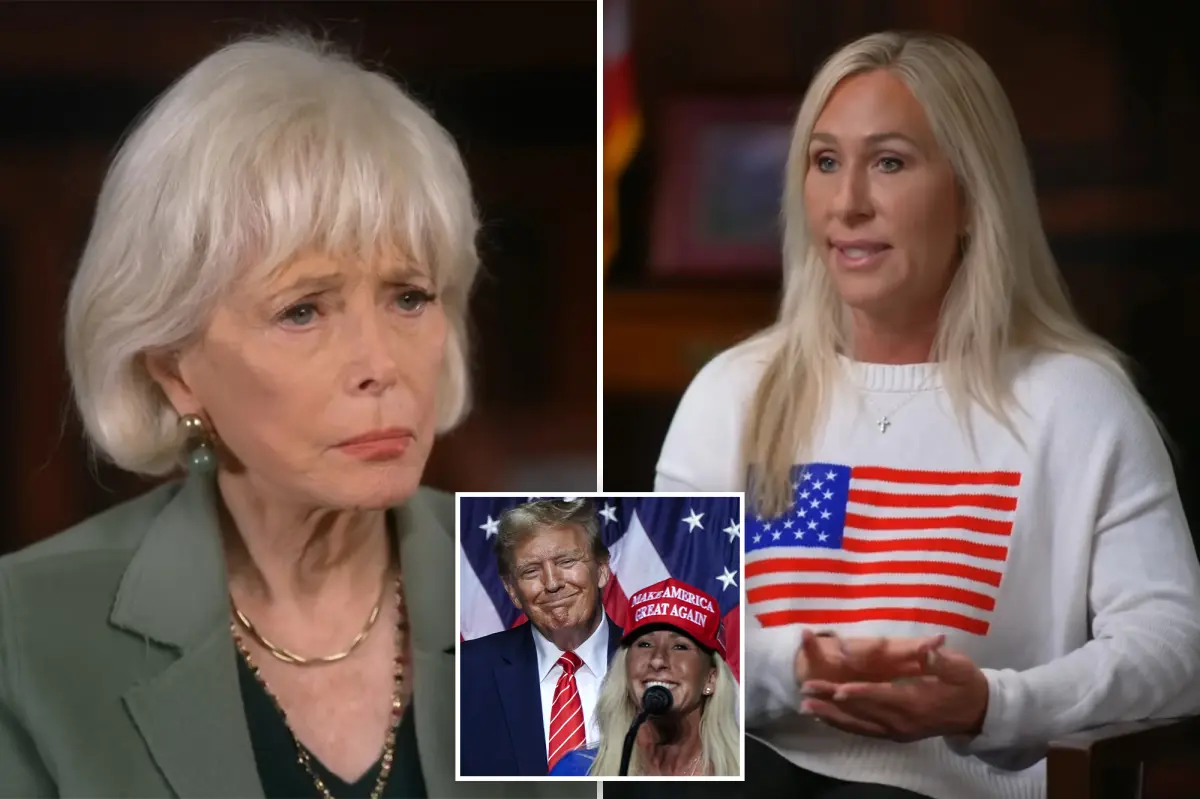
In a revealing interview with “60 Minutes” host Lesley Stahl, Representative Marjorie Taylor Greene of Georgia engaged in a noteworthy exchange that highlighted the complexities of political discourse in America today. This marked Greene’s first sit-down interview with Stahl since her surprising announcement that she would be resigning from Congress effective January 5th. The conversation centered largely around Greene’s recent public apology for her participation in what she herself described as “toxic politics,” a reflection that came in the wake of concerning political violence. The exchange between the two women quickly became pointed when Stahl pressed Greene on her past rhetoric, creating a moment that encapsulated the very tensions about communication style and accountability that pervade today’s political landscape.
During her November appearance on CNN, Greene had expressed contrition, stating, “I would like to say humbly, I’m sorry for taking part in the toxic politics. It’s very bad for our country, and it’s been something I’ve thought about a lot.” She had added that she was “committed” to “putting down the knives in politics,” signaling a personal evolution in her approach to political discourse. However, when Stahl directly challenged Greene during the “60 Minutes” interview with the observation that “you contributed to that… you were out there pounding, insulting people,” the conversation took a different turn. Rather than simply accepting the characterization, Greene pushed back, suggesting that Stahl herself was contributing to political toxicity through her interviewing approach. “You’re accusatory, just like you did just then,” Greene countered, to which Stahl responded with the curious disclaimer, “I know you’re accusing me, but I’m smiling.” This exchange revealed the delicate balance between journalistic accountability and the perception of bias that often characterizes interviews with polarizing political figures.
The conversation continued with a revealing back-and-forth that highlighted different perceptions of what constitutes respectful discourse. When Stahl defended herself by stating, “I don’t insult people,” Greene countered that the journalist’s accusatory questioning style itself constituted a form of disrespect. This moment spoke volumes about how differently political figures and journalists can interpret the same interaction, with Greene suggesting that Stahl’s approach embodied the very problem she was attempting to address. This wasn’t the first tense exchange between the two women; their April 2023 interview had featured a particularly heated moment when Greene characterized Democrats as “the party of pedophiles,” prompting Stahl to exclaim, “They are not pedophiles. Why would you say that?” Greene had responded with claims about Democratic policies regarding transgender youth, to which Stahl simply reacted with a stunned “Wow.” These moments from both interviews highlight the challenge of conducting productive political conversations when fundamental worldviews differ so dramatically.
Greene’s upcoming departure from Congress on January 5th came as a surprise to many political observers. While the exact reasons remain subject to speculation, many analysts believe her decision stems from a deteriorated relationship with former President Donald Trump, with whom she was previously closely aligned. This context adds additional layers to her recent reflections on political toxicity, suggesting that her change in perspective might be connected to shifts in her political alliances and future aspirations. The timing of her resignation announcement and her public comments about the need for more civil discourse paint the picture of a politician potentially at a crossroads, reassessing both her public persona and political future in an increasingly divided American landscape.
The exchange between Greene and Stahl represents more than just an interview moment; it illuminates broader tensions in American political communication. When a controversial political figure expresses a desire to move away from “toxic politics” while simultaneously perceiving standard journalistic questioning as an attack, it reveals the profound challenge of establishing shared norms for political discourse. Both women, in their own ways, were attempting to hold the other accountable—Greene suggesting that Stahl’s questioning style embodied the very problem she was addressing, and Stahl attempting to confront Greene with her past rhetoric. This dynamic mirrors the larger national struggle to establish boundaries between accountability, criticism, and respect in political conversations, where even discussions about improving discourse can themselves become contentious.
As Representative Greene prepares to leave Congress, this interview offers a window into the personal and professional reckonings taking place within American politics. Her acknowledgment that toxic rhetoric damages the country, combined with her defensive response to being questioned about her own contributions to that toxicity, encapsulates a central contradiction in contemporary political culture. Many political figures recognize the problems with extreme rhetoric while struggling to accept personal responsibility or change their communication styles. Similarly, media figures attempt to hold politicians accountable while sometimes employing approaches that can be perceived as contributing to the very divisiveness they critique. As Greene moves on from her congressional role, and as American politics continues to wrestle with questions of civility and accountability, conversations like this one with Stahl highlight both the recognition of the problem and the ongoing challenge of addressing it constructively in a polarized environment where even discussions about improving discourse can quickly become examples of the problem they seek to solve.