


Powerful 6.4 Magnitude Earthquake Strikes the Philippine Sea: Impact, Aftermath, and Regional Seismic Activity
Significant Seismic Event Rattles Eastern Philippines Near Santiago
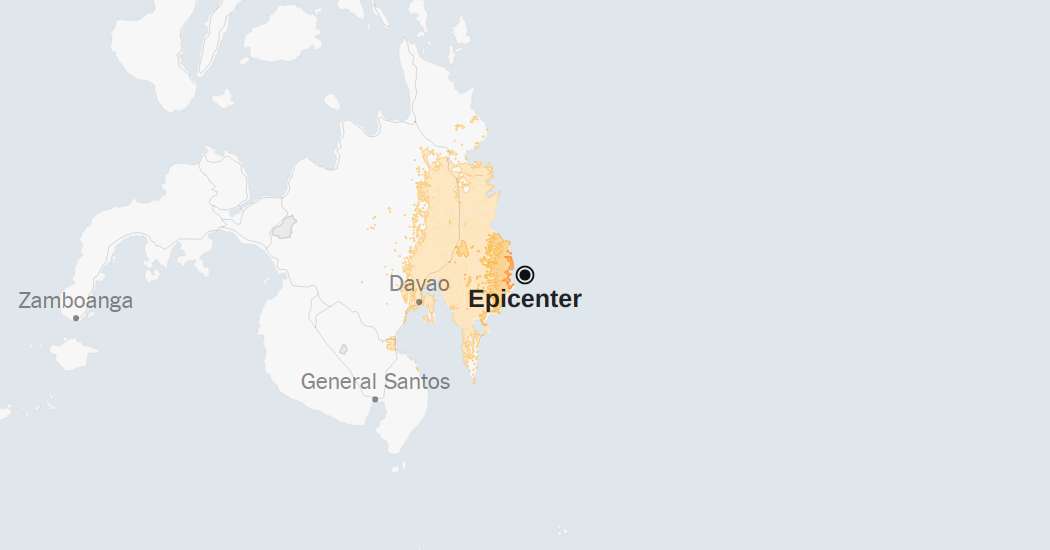
A powerful earthquake measuring 6.4 on the Richter scale struck the Philippine Sea on Wednesday, sending tremors through coastal communities and triggering immediate monitoring protocols across the region. According to data from the United States Geological Survey (USGS), the seismic event occurred at 11:02 a.m. local Philippine time, with its epicenter located approximately 17 miles east of Santiago in the Philippines. The earthquake’s substantial magnitude and shallow depth raised immediate concerns among local authorities and international monitoring agencies, prompting rapid assessments of potential damage and tsunami risks in the earthquake-prone archipelago.
Initial USGS reports had classified the earthquake at a more severe 6.7 magnitude before downgrading it to 6.4 following further analysis of seismic data. This recalibration reflects the complex nature of earthquake measurement and the challenges seismologists face when providing real-time assessments of significant geological events. The Philippine Institute of Volcanology and Seismology (PHIVOLCS) immediately activated its emergency response protocols, deploying teams to conduct damage assessments in communities experiencing moderate to strong shaking intensity. Residents in Santiago and surrounding coastal areas reported feeling the earthquake as a sustained rolling motion lasting several seconds, causing concern but fortunately resulting in limited structural damage based on preliminary reports.
Understanding Earthquake Intensity and Regional Impact
The earthquake generated varying levels of ground motion across the affected region, with the USGS shake intensity map indicating areas experiencing “light” shaking of intensity level 4 or greater on the Modified Mercalli Intensity scale. This classification describes tremors strong enough to be felt by most people indoors, capable of causing hanging objects to swing noticeably and producing rattling sounds from windows and doors. While the earthquake was centered in the Philippine Sea, its effects extended to multiple provinces in the eastern Philippines, with decreasing intensity as distance increased from the epicenter. Local officials in coastal communities initiated precautionary evacuations in low-lying areas while awaiting tsunami advisories from national authorities.
The Philippine archipelago’s location within the seismically active Pacific “Ring of Fire” makes it particularly vulnerable to earthquakes and volcanic activity. This positioning along the boundaries of major tectonic plates—including the Philippine Sea Plate and the Eurasian Plate—creates conditions for frequent seismic events of varying magnitudes. Wednesday’s earthquake serves as a stark reminder of the region’s geological volatility and underscores the critical importance of earthquake preparedness, building code enforcement, and public education campaigns about appropriate emergency responses. The Philippine government has invested significantly in recent years to improve earthquake resilience through enhanced monitoring networks, early warning systems, and community disaster response training programs.
Aftershocks and Ongoing Seismic Activity Analysis
Following the main earthquake, seismologists have been closely monitoring the region for aftershocks, which typically manifest as smaller earthquakes occurring in the same general vicinity as the primary seismic event. These aftershocks represent minor adjustments along the portion of the fault that slipped during the initial earthquake, often continuing for days or weeks afterward with gradually diminishing frequency and intensity. The USGS has documented several aftershocks within a 100-mile radius of the original epicenter, with magnitudes ranging from 2.5 to 4.8 on the Richter scale. Each aftershock provides valuable data to scientists studying the underlying fault mechanics and helps refine their understanding of the regional seismic risk landscape.
Earthquake aftershock patterns can reveal crucial information about fault behavior and stress redistribution within the Earth’s crust. Seismologists analyze these patterns to assess the likelihood of additional significant seismic activity in the affected region. The concentration and frequency of aftershocks following Wednesday’s event have been consistent with typical patterns for earthquakes of this magnitude, providing some reassurance to local authorities. However, scientists caution that the unpredictable nature of seismic activity means residents should remain vigilant and prepared for additional tremors in the coming days. Philippine emergency management agencies have maintained elevated alert levels while continuing to monitor seismic data streams for any concerning developments.
Scientific Monitoring and Data Refinement Processes
The scientific response to Wednesday’s earthquake highlights the sophisticated methodologies employed by modern seismology to accurately characterize and understand seismic events. As additional data becomes available from seismic monitoring stations across the Philippines and international networks, USGS scientists continue to refine their analysis of the earthquake’s precise magnitude, depth, and fault mechanism. These ongoing assessments may lead to further revisions of the reported magnitude and updates to shake-severity maps as more comprehensive ground motion data is integrated into their models. The collaborative nature of international earthquake monitoring ensures that multiple scientific perspectives contribute to a more accurate understanding of significant seismic events.
The technological infrastructure supporting earthquake monitoring has evolved dramatically in recent decades, enabling increasingly precise measurements and faster public notifications. Real-time data from hundreds of seismographs, accelerometers, and GPS stations feeds into sophisticated computer models that can rapidly characterize earthquake parameters and predict ground motion intensities. This information proves invaluable for emergency response agencies making critical decisions in the immediate aftermath of significant seismic events. The Philippine government, working in partnership with international organizations like the USGS and the Pacific Tsunami Warning Center, has developed robust systems for earthquake data collection and analysis, significantly improving the nation’s capacity to respond effectively to seismic threats.
Regional Preparedness and Future Risk Mitigation Strategies
Wednesday’s earthquake serves as an important reminder of the ongoing seismic risks facing the Philippines and other nations situated along the Pacific Ring of Fire. The event has prompted renewed discussions about earthquake preparedness measures, building code enforcement, and infrastructure resilience throughout the region. Philippine authorities have used this opportunity to emphasize the importance of household emergency plans, including evacuation routes, communication protocols, and basic emergency supplies. Engineering experts have also highlighted the critical role of seismic-resistant construction techniques in minimizing casualties and structural damage during future earthquakes of similar or greater magnitude.
Looking forward, comprehensive disaster risk reduction strategies remain essential for mitigating the potential impacts of future seismic events in the Philippines. These strategies encompass scientific research, technological monitoring solutions, infrastructure improvements, and community education programs. The experience gained from Wednesday’s earthquake and its aftermath will contribute valuable lessons to ongoing efforts to build earthquake resilience across the archipelago. As climate change potentially introduces additional stressors to geological systems, the integration of seismic risk assessment with broader disaster management frameworks becomes increasingly important. The Philippines continues to demonstrate leadership in this domain, balancing immediate response needs with long-term investments in the safety and security of communities throughout this seismically dynamic region.