



Powerful 6.6-Magnitude Earthquake Strikes Near Taiwan’s Eastern Coast
Late-Night Seismic Event in Philippine Sea Prompts Safety Concerns and Monitoring
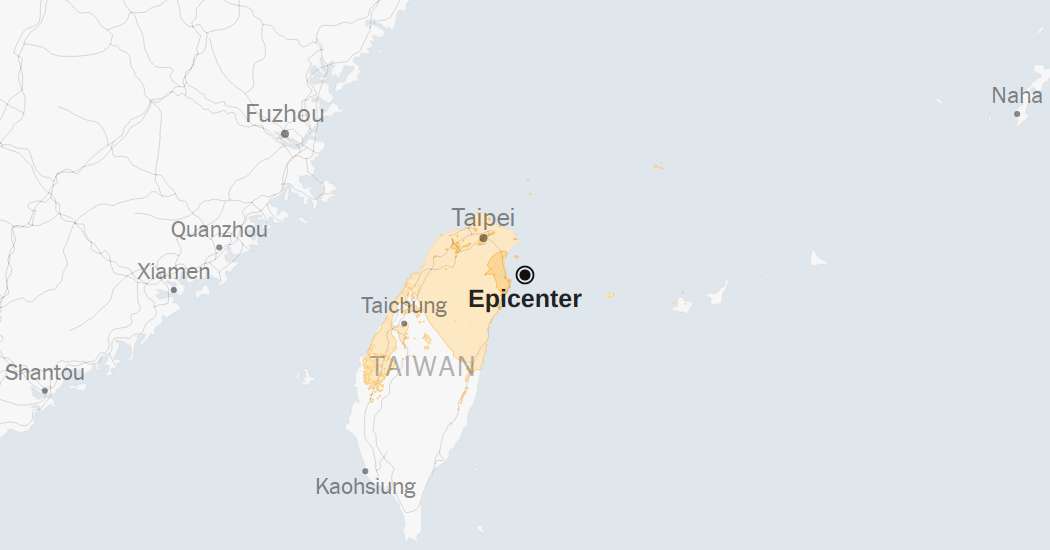
A significant earthquake measuring 6.6 on the Richter scale struck the waters of the Philippine Sea late Saturday evening, sending tremors through Taiwan’s eastern regions and raising immediate concerns about potential damage and safety risks. The United States Geological Survey (USGS) confirmed the seismic event occurred at approximately 11:05 p.m. local time, with its epicenter located just 19 miles southeast of Yilan, Taiwan—a coastal county known for its hot springs, scenic landscapes, and vulnerability to oceanic seismic activity.
Initial USGS reports classified the earthquake at a slightly higher magnitude of 6.7, but subsequent data analysis led scientists to revise this figure downward to 6.6—still categorizing it as a “strong” earthquake capable of causing moderate damage to structures. The tremor’s relatively shallow depth and proximity to populated areas amplified concerns among local emergency management officials, who immediately launched assessment protocols to evaluate infrastructure integrity and potential casualties. “When we’re dealing with seismic events of this magnitude in coastal regions, our first priorities are determining tsunami risk and assessing critical infrastructure,” explained Dr. Eleanor Chen, a seismologist with the Pacific Earthquake Monitoring Network. “The location in the Philippine Sea puts this quake in a tectonically active zone where we’ve historically seen significant events.”
Understanding Earthquake Intensity and Regional Impact
The earthquake’s effects extended well beyond its epicenter, with the USGS shake-intensity map indicating that regions experiencing a shake intensity of 4 or greater covered substantial portions of northeastern Taiwan. According to USGS classification standards, an intensity of 4 is considered “light” shaking—strong enough to wake sleepers, rattle dishes, and be felt by most people indoors, particularly on upper floors of buildings. However, the areas closest to the epicenter likely experienced “moderate” to “strong” shaking, which can cause minor structural damage and displace unsecured objects. “The difference between a magnitude 6.6 and 6.7 might seem minimal, but in seismology, each 0.1 increase represents approximately 26% more energy release,” noted Dr. Hiroshi Takahashi, geophysicist at the International Seismic Research Institute. “For residents in affected areas, the experience can vary dramatically based on building structure, soil composition, and distance from the epicenter.”
Taiwan’s Central Weather Administration (CWA) activated its earthquake response protocols immediately following the tremor, deploying assessment teams throughout potentially affected regions and coordinating with local governments to identify areas of concern. Preliminary reports indicated swaying buildings in Taipei, the island’s capital located approximately 60 miles from the epicenter, while residents in Yilan County reported more pronounced effects, including power fluctuations and minor disruptions to utility services. Social media platforms quickly filled with accounts from witnesses describing the duration and intensity of the shaking, with many noting that the earthquake lasted long enough to prompt evacuation from buildings. “It started gradually but built to a point where the floor seemed to roll beneath my feet,” recounted Lin Mei-hua, a Yilan resident interviewed by local media. “Many of us immediately moved outdoors as we’ve been trained to do since childhood.”
Seismic Monitoring and Scientific Assessment
As with all significant earthquakes, seismologists will continue analyzing data in the hours and days following the main shock, potentially revising magnitude estimates and updating shake-severity maps as more comprehensive information becomes available. The USGS maintains a global network of monitoring stations that provide real-time data for rapid assessment, but the most accurate picture emerges only after scientists can incorporate readings from local instruments and analyze the complete seismic signature. This ongoing assessment is particularly important for understanding the full scope of the earthquake’s impact and preparing for potential aftershocks, which commonly follow major seismic events. “The initial magnitude report is based on preliminary data and almost always undergoes revision,” explained Dr. Marcus Rodriguez, seismic program director at the Pacific Rim Geological Institute. “What’s crucial now is monitoring for aftershock sequences, which can sometimes pose additional risks, especially if structures were weakened during the main event.”
Taiwan’s geological positioning at the junction of the Philippine Sea Plate and Eurasian Plate makes it particularly susceptible to earthquakes, with the island experiencing numerous significant seismic events throughout its history. Most notably, a devastating 7.6-magnitude earthquake struck central Taiwan in 1999, resulting in over 2,400 fatalities and extensive structural damage. That historical context has shaped both Taiwan’s building codes—which now rank among the most stringent in the world for earthquake resistance—and its emergency preparedness culture, with regular drills and public education campaigns. Saturday’s earthquake serves as a stark reminder of the region’s persistent seismic risks and the importance of maintaining vigilance and readiness. “Taiwan has made remarkable progress in earthquake-resistant construction and emergency protocols since the 1999 disaster,” observed Dr. Chen-Wei Lin, civil engineering professor at National Taiwan University. “But nature remains unpredictable, and continued investment in early warning systems and public preparedness remains essential.”
Regional Implications and Future Monitoring
In the wake of the earthquake, authorities have initiated a comprehensive aftershock monitoring program, tracking seismic activities within a 100-mile radius of the initial epicenter. Such aftershocks, which can continue for days or even weeks following a major earthquake, provide valuable scientific data while also posing ongoing safety concerns. The USGS data indicates that aftershock monitoring will continue at least through January 3rd, with particular attention to any events that might suggest increased stress on nearby fault lines. Taiwan’s geographic location within the seismically active “Ring of Fire”—the horseshoe-shaped belt of tectonic activity encircling the Pacific Ocean—means that earthquake preparedness remains a constant priority for government agencies, businesses, and residents alike.
As the immediate response transitions from emergency assessment to recovery operations, scientists and emergency management professionals will continue analyzing this event within the broader context of regional seismic patterns. The data collected will contribute to ongoing research aimed at improving earthquake prediction capabilities and enhancing building standards throughout earthquake-prone regions globally. While this particular event appears to have caused relatively limited damage based on preliminary reports, it serves as a powerful reminder of nature’s unpredictable force and the critical importance of preparedness, robust infrastructure, and coordinated emergency response protocols. “Each significant seismic event provides valuable lessons,” concluded Dr. Takahashi. “Our challenge is to continually incorporate those lessons into better prediction models, stronger building practices, and more effective emergency responses—not just for Taiwan, but for vulnerable communities throughout the Pacific Rim.”