






Colombia Rattled by 5.5-Magnitude Earthquake in Early Morning Hours
Seismic Event Strikes Near Jordán as Residents Sleep, Geological Survey Reports
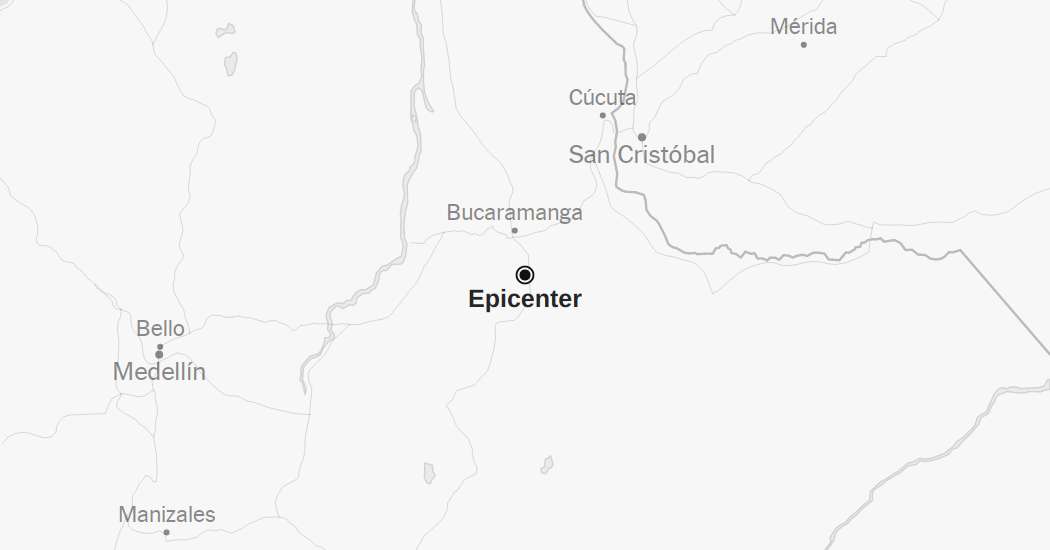
A moderately strong earthquake measuring 5.5 on the Richter scale struck northeastern Colombia in the early morning hours of Wednesday, according to data released by the United States Geological Survey (USGS). The seismic event occurred at 3:27 a.m. local time, approximately 7 miles northeast of the municipality of Jordán in Colombia’s Santander department, jolting residents awake and raising concerns about potential structural damage in the region.
The earthquake’s epicenter was located in a moderately populated area of Colombia’s Andean region, where seismic activity is not uncommon due to the country’s position along the boundary of several tectonic plates. According to USGS intensity maps, the tremor generated shaking that registered at intensity level 4 or greater—classified as “light” on the Modified Mercalli Intensity scale—though reports indicate the quake may have been felt beyond the areas shown on official mapping. While this level of shaking is typically sufficient to wake sleepers and rattle dishes and windows, it rarely causes significant structural damage to well-constructed buildings. Nevertheless, authorities have begun assessing older structures and infrastructure in the affected region, particularly in rural communities where building codes may be less stringent.
Geological Experts Monitoring Aftershock Sequence and Revising Data
Seismologists from both the USGS and Colombia’s Geological Service (Servicio Geológico Colombiano) are actively monitoring the situation, collecting additional data to refine their understanding of the event. “As with any significant seismic event, the initially reported magnitude and location are preliminary assessments based on the earliest available data,” explained Dr. Maria Fernandez, a seismologist at Universidad Nacional de Colombia who specializes in Andean geology. “It’s standard practice for these figures to be revised as more seismic stations report their readings and more sophisticated analysis can be performed.” The USGS has indicated that both the reported magnitude and the shake-severity map may be updated as scientists review the expanding dataset from monitoring stations throughout the region.
Particular attention is being paid to potential aftershocks, which commonly follow earthquakes of this magnitude. Geological experts note that aftershocks—smaller earthquakes that occur in the same general area following a larger seismic event—typically decrease in both frequency and magnitude over time but can continue for days or even weeks. According to preliminary data from monitoring stations, several smaller aftershocks have been recorded within 100 miles of the initial epicenter in the hours following the main tremor, though none have approached the intensity of the primary quake. Residents in affected areas have been advised to remain vigilant and prepared for additional seismic activity, even as the immediate threat appears to have passed.
Regional Impact and Historical Context of Seismic Activity in Colombia
The Santander department, where the earthquake was centered, has a history of seismic activity due to its location within Colombia’s eastern cordillera of the Andes mountains. The region sits near the complex intersection of the South American, Nazca, and Caribbean tectonic plates, creating conditions conducive to regular seismic events. While Wednesday’s earthquake was moderate in strength, Colombia has experienced significantly more destructive events in its history. Perhaps most notably, the 1999 Armenia earthquake—a 6.2-magnitude event that struck Colombia’s coffee-growing region—claimed more than 1,000 lives and caused widespread destruction, highlighting the country’s vulnerability to seismic disasters.
Local authorities in Santander and neighboring departments have activated emergency protocols in response to the earthquake, though initial reports suggest minimal damage and no immediate casualties. “We’ve implemented our standard post-earthquake assessment procedures,” stated Carlos Ramírez, director of Colombia’s National Unit for Disaster Risk Management, in a statement released to national media. “Teams are conducting infrastructure evaluations, particularly focusing on critical facilities like hospitals, schools, and major transportation routes.” The relatively deep focal point of the earthquake—approximately 13 miles below the surface according to preliminary USGS data—may have helped mitigate surface damage, as deeper earthquakes typically spread their energy over a wider area but with less intensity at any single point.
Technological Advancements in Earthquake Monitoring and Response
Wednesday’s earthquake highlights the significant advancements in earthquake monitoring technology and emergency response systems that have been implemented in Colombia and globally in recent decades. The USGS’s rapid assessment and mapping capabilities now allow for near-real-time visualization of seismic events, providing crucial information to emergency responders and affected communities. These sophisticated monitoring networks combine data from hundreds of seismic stations to create detailed shake maps that show the varying intensities of ground motion across geographic regions, helping to prioritize emergency response efforts.
Colombia has made substantial investments in its own earthquake monitoring capabilities following devastating historical events, with the Servicio Geológico Colombiano now operating an extensive network of seismic stations throughout the country. These technological improvements, coupled with enhanced building codes and public awareness campaigns, represent part of Colombia’s broader strategy for reducing earthquake vulnerability. “The key to minimizing earthquake impacts lies in preparation rather than prediction,” noted Dr. Fernandez. “While we cannot yet predict exactly when earthquakes will occur, we can build resilient communities through engineering standards, public education, and rapid response systems.” As Colombia continues to develop its earthquake resilience infrastructure, events like Wednesday’s tremor serve as important reminders of the ongoing need for vigilance in seismically active regions.
Moving Forward: Community Preparedness and Regional Cooperation
As daylight emerged over the affected region, local officials began more comprehensive damage assessments while simultaneously reviewing emergency preparedness measures. Colombia’s experience with previous earthquakes has fostered a culture of seismic awareness, particularly in vulnerable regions like Santander and other Andean departments. Community-based preparedness programs, including regular earthquake drills and public education campaigns, have become standard practice throughout much of the country. These initiatives, combined with increasingly stringent building codes, have demonstrably improved Colombia’s earthquake resilience over recent decades.
The regional nature of seismic events has also prompted increased cooperation among Andean nations, with Colombia collaborating closely with neighbors Ecuador, Peru, and Venezuela to share seismic data and emergency response strategies. This multinational approach recognizes that major earthquakes rarely respect national boundaries and that coordinated monitoring and response systems provide benefits across the region. As the immediate response to Wednesday’s earthquake transitions into longer-term assessment and recovery efforts, both Colombian authorities and international observers will continue monitoring the situation closely, extracting valuable data that can help inform future preparedness efforts. While this particular seismic event appears to have caused relatively limited disruption, it serves as a timely reminder of Colombia’s place within one of the world’s most geologically active regions and the ongoing importance of earthquake preparedness at individual, community, and national levels.