





Ohio Man Charged After Threatening Federal Immigration Agents Online
In a concerning escalation of anti-government rhetoric, a 21-year-old Columbus, Ohio resident now faces serious federal charges following threats he allegedly posted online against immigration officials. Justin Mesael Novoa was charged with making threatening interstate communications and threatening to assault or murder federal law enforcement officers, according to a recent Department of Justice announcement. The case highlights the increasingly volatile intersection between inflammatory online speech and real-world security concerns, particularly for those working in immigration enforcement roles during a time of heightened political tensions.
The investigation began when Homeland Security Investigations received alarming information about threatening posts directed at Immigration and Customs Enforcement (ICE) employees on social media platform X. According to court documents, Novoa, using the handle @Father2High, posted a message in June 2025 stating that “they should blast every ice agent they find.” This was followed by an even more explicit threat in November of the same year, where he allegedly wrote, “can’t wait to shoot these p—y ice agents and r——d maga maggots.” These statements crossed the critical threshold from political expression to specific violent threats against federal employees, prompting authorities to take immediate action to assess the credibility of these threats.
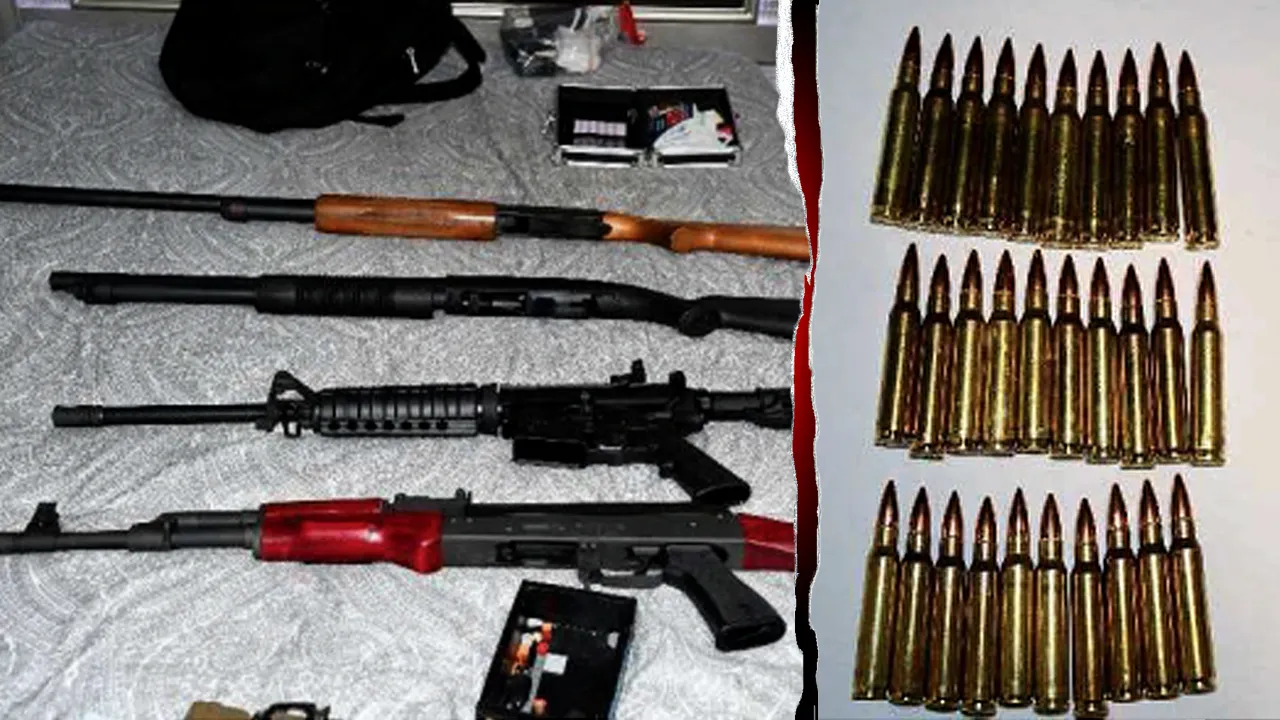
When federal agents executed a search warrant at Novoa’s residence in December 2025, what they discovered transformed the case from concerning online rhetoric to a potentially imminent threat. Inside the home, authorities uncovered an arsenal including two rifles, two shotguns, a handgun, and ammunition—weapons that could have been used to carry out the very violence threatened in the social media posts. More alarmingly, agents also discovered tactical equipment including body armor and helmets, suggesting a level of preparation beyond mere online posturing. A pro-Palestinian flag was also noted hanging near the weapons cache, potentially offering insight into the ideological motivations behind Novoa’s alleged threats against immigration enforcement officials.
The legal consequences Novoa now faces are substantial, reflecting the seriousness with which threats against federal officers are treated in the American justice system. Threatening to kill a federal officer carries a potential sentence of up to ten years in federal prison, while the charge of making threatening interstate communications could result in an additional five years of incarceration. The case is being handled by Assistant U.S. Attorney Timothy D. Prichard in the Southern District of Ohio, with U.S. Attorney Dominick S. Gerace II and ICE Homeland Security Investigations Detroit Acting Special Agent in Charge Jared Murphey overseeing the prosecution. As with all criminal cases in the United States, Novoa is presumed innocent until proven guilty in court.
This case emerges amid a broader pattern of increasing threats against government officials and law enforcement, particularly those working in immigration enforcement. ICE agents have become lightning rods for political discontent in recent years, with immigration policies remaining deeply divisive in American politics. The targeting of both “ice agents” and “maga maggots” in Novoa’s alleged posts suggests a politically motivated animus that crosses into potentially dangerous territory. Law enforcement officials have repeatedly warned that heated rhetoric around political issues can inspire individuals to move beyond words to preparatory actions for violence, making early intervention in cases like this a priority for federal investigators.
While no injuries were reported in connection with this case and authorities have not indicated whether additional charges are forthcoming, the incident serves as a sobering reminder of the thin line between inflammatory online speech and genuine security threats. The discovery of weapons and tactical gear transformed what might have been dismissed as hyperbolic internet comments into a case deserving serious attention from federal prosecutors. As social media continues to serve as both a platform for legitimate political discourse and a channel for extremist rhetoric, law enforcement agencies face the ongoing challenge of distinguishing between constitutionally protected speech and genuine threats to public safety. This case may well become another important reference point in the continuing national conversation about the limits of free expression when it crosses into territory that threatens violence against public servants.