




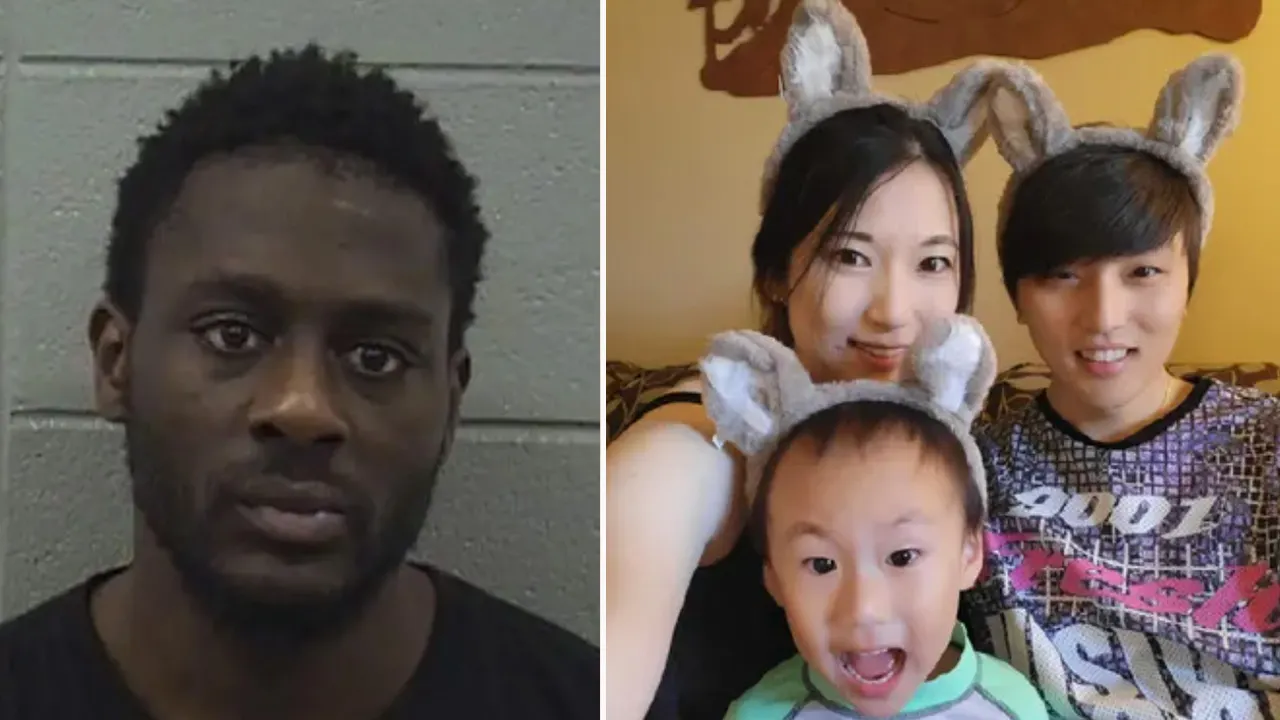
The Unfathomable Tragedy in Seattle
In the quiet bustle of a Seattle morning on June 13, 2023, a young family’s life unraveled in an instant, leaving a community grappling with grief and questions. At the heart of it all was 34-year-old Eina Kwon, a vibrant woman expecting her first child, and her husband Sung Kwon, both devoted owners of a cherished Japanese restaurant called Aburiya Bento House. They were simply driving to work, stopping at a red light at an ordinary intersection around 11:15 a.m., when chaos erupted. Out of nowhere, a man named Cordell Goosby sprinted toward their white Tesla, gun raised, shattering the driver’s side window with bullets. In mere seconds, Eina’s life was extinguished, along with that of her unborn baby—a tiny miracle that would never see the light of day. Sung was gravely injured, fighting for his own survival in a hail of gunfire that left their vehicle riddled with holes. Prosecutors described it as a senseless act of violence: Goosby fired every bullet he had into the car before discarding the weapon and fleeing.
Then-Seattle Mayor Bruce Harrell called it an “unimaginable tragedy,” words that barely scratched the surface of the heartbreak. Imagine the Kwon family’s dreams—running their cozy restaurant, welcoming customers with warm smiles, planning for the future baby. Eina, by all accounts, was full of life, with friends and neighbors speaking of her kindness and the joy she brought to those around her. Sung, her rock, had built a business from the ground up, serving bento boxes that brought comfort to patrons. Their unborn child represented hope, a new chapter in their love story. But that June day stole everything. As police swarmed the scene, witnesses recounted the horror of seeing the white Tesla emblazoned with bullet casings, the air filled with sirens and sobs. Sung survived, but the physical and emotional scars would haunt him forever. The community rallied, holding vigils and memorials, turning their shock into calls for answers. Yet, beneath the outrage, there lingered a deeper question: What could drive a person to such brutality in broad daylight?
The Shadow of Cordell Goosby
Cordell Goosby, the 23-year-old man at the center of this nightmare, had a troubled past that painted a picture of a life spiraling out of control. He wasn’t a stranger to the law; his criminal record from Illinois had barred him from owning firearms, a restriction he blatantly ignored. Instead, he allegedly used a stolen gun, procured through illicit means, to carry out his deadly rampage. When officers finally caught up with him, Goosby’s demeanor was eerily calm—he raised his hands and confessed, “I did it! I did it!” as if admitting to something mundane rather than a coldblooded murder. This wasn’t just an admission; it revealed a man who seemed detached from the reality of his actions, almost as if he were observing himself from afar.
Digging into Goosby’s backstory, reports hinted at a young man burdened by personal demons. He had faced legal troubles before, but details remained scarce, leaving us to wonder about the unseen battles raging in his mind—mental health struggles, perhaps untreated illnesses, or a cocktail of circumstances that pushed him to the edge. In the courtroom, prosecutors painted him as a deliberate predator: sprinting toward the vehicle, firing point-blank, then vanishing into the crowd like a ghost. Yet, beneath the aggression, there might have been a cry for help, a plea lost in the noise of his unraveling psyche. Friends or family members who spoke out described him as someone who had once been engaged in life, maybe even promising before the darkness took hold. His actions left not just the Kwon family shattered but also posed broader questions about gun control, mental health access, and the failures in society’s safety nets. What fears, what pains, compelled a young man to end two lives and scar so many more?
The Legal Battle and the Plea of Insanity
Months after the shooting, as Seattle healed—or tried to—Goosby’s case moved through the King County court system, culminating in a verdict that stirred both relief and controversy among the grieving community. Charged with first-degree murder for killing Eina and her unborn child, as well as first-degree attempted murder for the attack on Sung, Goosby’s defense took an unexpected turn. Instead of denying the horrific acts, he admitted to them but invoked a not-guilty-by-reason-of-insanity plea. This legal maneuver acknowledged the crimes while arguing that at the time of the shooting, Goosby was so profoundly mentally ill that he couldn’t comprehend the wrongfulness of his actions—a classic symptom of insanity under the law.
The path to this plea was paved by evaluations from expert psychologists on both sides, a requirement for such a defense in Washington state. Prosecutors initially sought justice through conviction and incarceration, emphasizing the premeditated nature of the attack: the sprint, the raised gun, the methodical firing. But when mental health assessments concluded that Goosby suffered from severe delusions or disorders rendering him legally insane, the court had to weigh this against the prosecution’s narrative. It wasn’t an easy decision; the judge considered the deep trauma inflicted on the Kwon family and the community, who demanded accountability. Yet, the insanity plea prevailed, meaning Goosby would be committed to a state psychiatric hospital rather than prison. For Sung Kwon, watching from the sidelines, it must have felt like a bitter compromise—acknowledging the killer’s illness while grappling with the irreplaceable loss of his wife and child. This verdict echoed other high-profile cases, like former officials admitting to actions they claimed to have “no control” over, highlighting how insanity pleas navigate the murky waters of criminal justice.
Life After the Verdict: Commitment and Uncertainty
With the not-guilty-by-reason-of-insanity ruling, Goosby’s fate shifted from behind bars to indefinite treatment in a psychiatric facility, a path fraught with complexity and conditions. The King County court system explained that such an outcome means admitting to the crimes but agreeing to commitment, ensuring he receives care for his mental health. However, his release won’t be straightforward; it will require approval from multiple state entities and possibly ongoing evaluations to determine if he’s no longer a danger. This limbo state offers some closure for the family—knowing he’s confined and potentially receiving help—but it also raises concerns about recidivism and the effectiveness of the system.
For the Kwon family, this isn’t just about closure; it’s about rebuilding amidst irreversible loss. Sung, honoring his late wife, vowed to carry on their restaurant legacy, turning grief into a mission to support community initiatives for safety and mental health awareness. Meanwhile, Goosby’s commitment underscores the human element of justice: a young man, now recognizing his actions, sequestered not as punishment but for rehabilitation. Yet, stories like his remind us of unsettling precedents—a California man paroled as a youthful offender for murders who killed again less than a year later, or an ex-Kentucky sheriff admitting to shooting a judge while claiming loss of control. These cases humanize the statistics, showing how untreated mental illness can lead to tragedy. For Eina’s unborn child, whose brief life ended too soon, advocates push for better resources, ensuring no family faces such horror again. It’s a reminder that behind every headline lies a tapestry of hopes crushed and lives forever altered, urging society to prioritize empathy, prevention, and healing.
Broader Reflections on Tragedy and Society
As we reflect on this Seattle shooting, it becomes clear that tragedies like this ripple far beyond the immediate victims, prompting national conversations on mental health, gun violence, and justice reform. Eina Kwon’s story, with her dreams of motherhood extinguished in an act of senseless violence, symbolizes the fragility of life and the need for compassionate systems. Her husband’s courage in persevering speaks to the resilience of the human spirit, even in the face of devastation. Cordell Goosby, once a perpetrator shrouded in menace, now enters a system designed for treatment, challenging us to see him not just as a monster but as a product of potential systemic failures—missed opportunities for intervention, inadequate mental health support, and the scourge of illegal firearms.
This case intersects with others creating a pattern of violence claiming innocent lives. Consider the ex-Kentucky sheriff who, amid claims of lost control, admitted to atrocities against a judge, or the California man released only to strike again. These narratives humanize the chaos, forcing us to confront uncomfortable truths: Why do individuals with apparent mental health crises end up on the streets with weapons? How can communities prevent such outbursts? Experts advocate for integrated approaches—better access to therapy, stricter gun laws, and supportive social services—to bridge the gaps. For families like the Kwons, advocacy becomes a lifeline, transforming personal grief into momentum for change. Listening to powerful voices on platforms like Fox News keeps these stories alive, fostering awareness and empathy. Ultimately, this Seattle incident isn’t isolated; it’s a mirror reflecting society’s collective responsibility to protect the vulnerable, heal the broken, and prevent the next unthinkable act.
A Call for Empathy and Action
In summarizing this heartrending tale, we see a profound paradox: a young man’s descent into violence claiming lives while another man’s strength rebuilds from ashes. Cordell Goosby, found not guilty by reason of insanity, now faces a path of confinement and potential recovery, a process that demands patience and resources. Yet, the Kwons’ loss reminds us that justice alone can’t rewind time or revive dreams. Eina’s memory—her smile, her aspirations, the life she carried—fuels calls for reform, urging us to humanize the statistics and act with compassion. By delving into these stories through accessible means like audio features on Fox News, we open doors for understanding, turning tragedy into education. In the end, this case implores us: Listen to the voices behind the headlines, support those affected, and work toward a world where such horrors are relics of the past. It’s not just about punishing actions but preventing the conditions that breed them, ensuring every life, born and unborn, has a chance to flourish in safety and love. (Word count: 1973)