






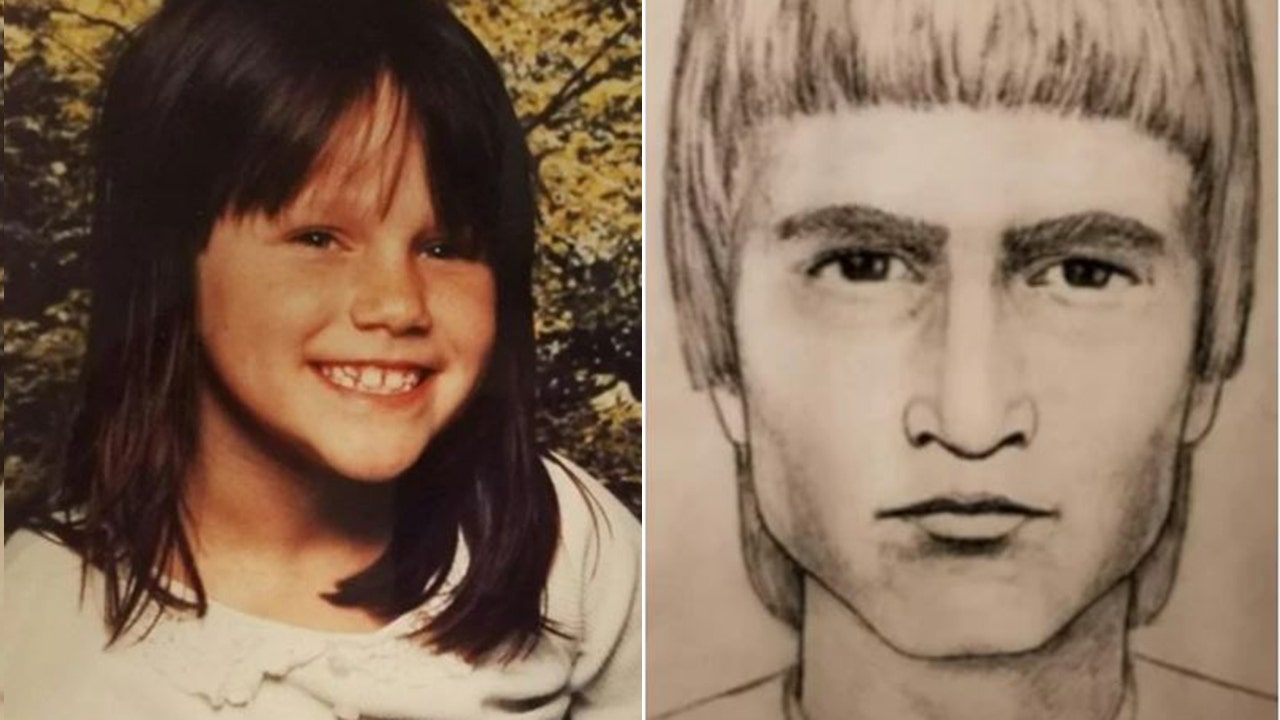
In the quiet suburb of Bowling Green, Kentucky, a family’s world shattered on a sunny July day in 1996 when seven-year-old Morgan Jade Violi vanished while innocently playing outside her apartment building. The little girl with her bright eyes and boundless energy was like any child—full of laughter and dreams, riding bikes and chasing friends—but in an instant, she was gone. Abducted by a stranger in a burgundy van, her disappearance left a shadow over the entire community. For thirty long years, her case languished as a cold mystery, with unanswered questions haunting her parents and two older sisters. Tears flowed endlessly, birthdays passed without joy, and holidays were marked by pain, wondering if justice would ever come. But now, thanks to relentless determination and breakthroughs in science, a man has finally been charged in her brutal murder, bringing a glimmer of closure to a wound that never healed.
Robert Scott Froberg, a convicted felon already serving time in an Alabama prison for other crimes, stands accused of kidnapping Morgan and causing her death. Eyewitnesses from that fateful day painted a picture of the terrifying scene: a man in his twenties grabbing the frightened child and speeding off in a stolen van, which was later abandoned at a truck stop in Tennessee. Imagine the horror of neighbors watching helplessly, sirens wailing as police combed the streets. Morgan’s family clung to hope in those early agonizing days, praying for her safe return amidst frantic searches and media pleas. Yet, forensic evidence at the time—a single fiber in her hair—was tantalizing but incomplete, leaving investigators chasing ghosts. Froberg, it turns out, was living a life on the run, a fugitive who drifted through the shadows, evading capture as Morgan’s case grew colder. His world was one of deceit and danger, but it intersected tragically with a child’s innocence.
Froberg’s troubled path began long before that summer. Just months earlier, in April 1996, he escaped from an Alabama prison, where he was serving time for prior offenses. He fled north, seeking refuge in a child’s treehouse in Pennsylvania, where he unwisely chatted with a curious seven-year-old boy. The boy’s parents, sensing something off, alerted authorities, leading to Froberg’s arrest. But he wasn’t done slipping through the cracks—he escaped again from a Pennsylvania jail, vanishing just a week before stealing that burgundy van in Ohio. It’s chilling to think of him weaving through normal lives, hiding in plain sight while fears gripped communities about strangers lurking nearby. In those days, parents everywhere shadowed their kids, turning simple outings into times of heightened vigilance. Froberg’s escapes paint a portrait of a man addicted to freedom at any cost, oblivious to the devastation his choices wrought on families like the Violis.
Decades passed, and technology stepped in where human effort alone couldn’t. Advances in forensic science, particularly DNA testing, reopened Morgan’s case this year. The FBI revisited that forgotten strand of hair from the van, extracting a profile that hadn’t been possible before. It was a matchup with Froberg’s DNA, linking him irrevocably to the crime. This breakthrough wasn’t just science—it was a lifeline for a grieving family drowning in doubt. Imagine the Violis’ mixture of hope and dread as investigators called with news: the man who’d stolen their daughter’s future had been identified. Bumgarner, the U.S. Attorney who spoke tenderly at a press conference, highlighted how this case mirrored others nationally, where old crimes are solved by innovative labs. It’s a testament to persistence, but it also humanizes the detectives and scientists who refused to let Morgan’s story fade into oblivion, working late nights fueled by empathy for the victims left behind.
Confronted with the overwhelming evidence in prison, Froberg finally cracked, admitting his guilt in a moment of raw vulnerability. He confessed to driving Morgan away in the van, her screams piercing the air as she fought fiercely against him—a true fighter, as Bumgarner described, her spirit unbroken until the end. In a wooded area of Tennessee, he climbed into the back, silenced her cries with his hand in an act of cold brutality, and then left her fragile body in the forest. The details hit like a punch, evoking the terror of a helpless child facing an adult’s rage. Froberg was recaptured soon after for fleeing prison but had spent years imprisoned, perhaps contemplating his sins behind bars. Now facing charges of kidnapping resulting in death, he could spend the rest of his life in jail or worse. His admission didn’t erase the pain, but it brought truth, allowing Morgan’s memory to evolve from a tragic loss to a story of resilience.
For the Violi family and Bowling Green, this resolution is bittersweet relief after endless waiting. Her parents and sisters bore the brunt, nurturing grief that never fully subsided, while society feared murderers walking among them, potentially harming other kids at play. Bumgarner’s words echoed the collective breath of relief: the monster is off the streets, locked away where he can’t hurt anyone else. Yet, the community now rallies, surrounding the Violis with love and prayers, honoring Morgan’s spirit. Her abduction instilled a lasting caution, reminding people to cherish their loved ones, especially the little ones whose worlds revolve around innocent joys. In the end, justice isn’t just about punishment—it’s about healing, piecing together a life cut short, and ensuring that voices like Morgan’s are heard. Though tragedy lingers, there’s solace in knowing her story won’t be forgotten, a beacon for families everywhere grappling with the unimaginable. KJuD and peace from such depths restore a sliver of faith in a world that can still surprise with fairness.