



The Startling Story of a Stranger’s Descent into Violence
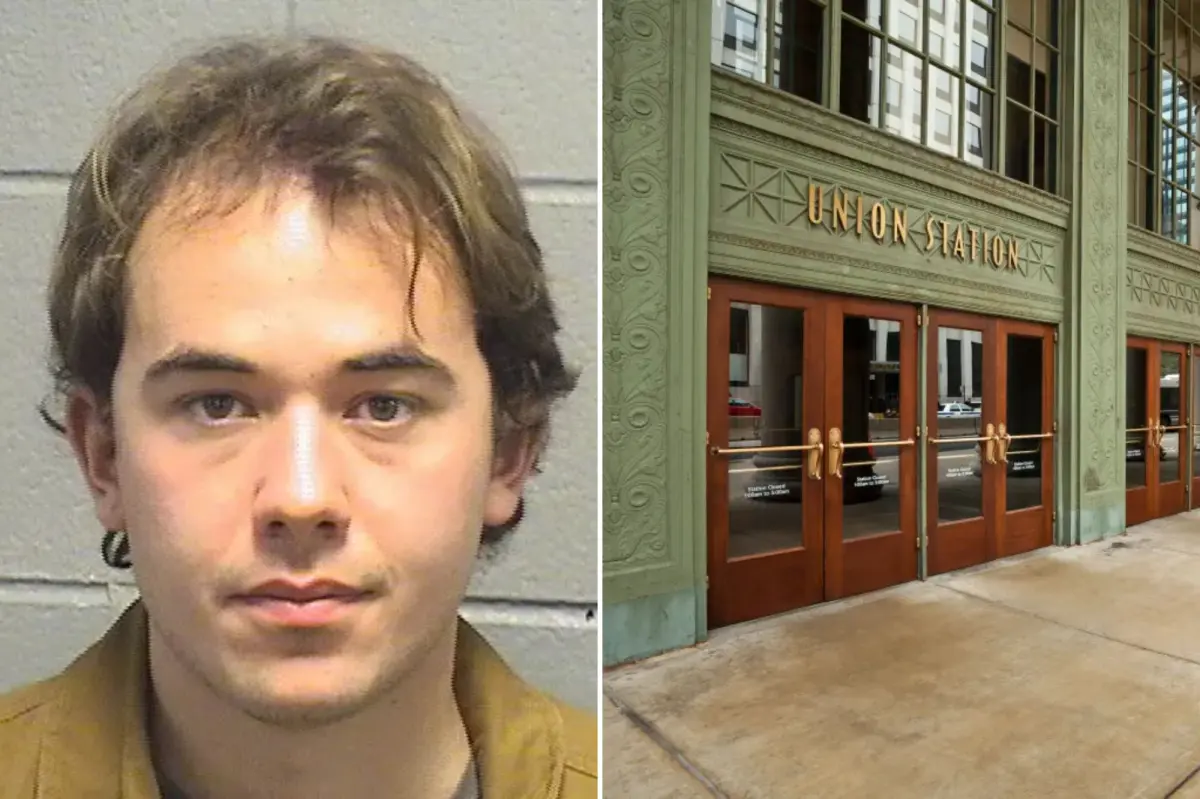
In the bustling heart of Chicago’s Union Station, where thousands of commuters hurry through their daily routines—rushing to catch trains, grabbing coffee, or just escaping the winter chill—one ordinary afternoon turned into a nightmare. Zakir Ibrahim, a 25-year-old man born in London but far from home, is now behind bars, accused of attempting to slash a stranger’s throat in a shocking act of paranoia and aggression. Imagine the scene: the echo of announcements over the loudspeakers, the scent of fresh pretzels from nearby vendors, and amidst it all, a young man convinced he’s untangling some vast conspiracy. Ibrahim’s life had apparently veered into turmoil, leading him to this point of no return. According to reports from CWB Chicago, authorities arrested him on Tuesday, March 3, after what prosecutors describe as a chilling encounter that could have ended in tragedy. As a journalist piecing together the puzzle, I can’t help but wonder what led a guy in his prime to spiral so dramatically. Was it loneliness in a foreign city? Mental health struggles? Or perhaps influences from online forums pushing wild theories? Ibrahim’s story humanizes the dangers of feeling isolated in a world that’s growing increasingly volatile. His background as a Londoner abroad adds layers—perhaps dreams of a fresh start in America twisted into suspicion and rage. We often hear about the fragility of mental health, but cases like this remind us how quickly a person’s world can unravel, spilling over into public spaces where innocent people mind their own business. The victim’s life could have been forever altered, turning a simple train ride into a battle for survival. It’s a stark reminder that in our interconnected society, anonymity can breed fear, and one person’s delusions can shatter the peace for everyone around them. Ibrahim’s actions, as alleged, weren’t just about violence; they reflected a deeper disconnection, a moment where fiction blurred with reality. I’m reminded of how many of us have fleeting thoughts that something’s off in our lives— maybe we’ve all felt that paranoia bubbling— but few act on it so brutally. As this unfolds, Ibrahim’s name becomes a cautionary tale, urging us to check in on those who seem lost.
The Terrifying Moment at Union Station
Picture this: an Amtrak passenger, just another face in the crowd, perhaps listening to a podcast or scrolling through a phone, completely unaware that danger is mere feet away. Zakir Ibrahim approached him with a steely gaze, according to the detention filing obtained by CWB Chicago, holding a knife menacingly to the victim’s nose. The air must have thickened, hearts pounding as witnesses instinctively froze or fumbled for phones. Prosecutors paint a vivid picture in their account: Ibrahim didn’t lunge immediately; instead, he stepped back slightly, building tension before he swung the blade in a slashing motion aimed directly at the throat. It missed by less than an inch—close enough that the victim had to lean back desperately, his body reacting on pure instinct to evade the lethal cut. One can almost feel the rush of adrenaline, the sharp intake of breath, the chaotic scramble as bystanders yelled or darted out of the way. This wasn’t random street violence; it was calculated, fueled by some warped belief. Ibrahim’s composure during the act suggests he wasn’t in a blind frenzy but driven by a conviction that compelled him to act. The station, with its marble floors and high ceilings, became a stage for terror, disrupting the mundane routine of travel and reminding us how vulnerable we are in public spaces. The victim, whose identity remains protected, must have replayed the moment endlessly— what if he’d been a second slower? What if the blade had connected? As a society, we often take for granted the safety nets around us, but incidents like this highlight the human overhang of uncertainty. Ibrahim’s knife-wielding advance wasn’t just physical; it was a psychic assault on the victim’s sense of security. I think of the countless stories of survivors who continue on, forever changed, and wonder if forgiveness or understanding could ever bridge the gap between attacker and attacked in such a visceral encounter.
The Delusions That Fueled the Fury
Diving deeper into the mind of Zakir Ibrahim, it’s the bizarre claims that make this case so eerily gripping. As prosecutors outlined in the filing, Ibrahim allegedly declared himself a CIA agent, convinced that the unsuspecting commuter was a “hitman” out to get him. In that delusional worldview, a simple train platform confrontation morphed into a spy thriller gone wrong, where Ibrahim fancied himself the hero thwarting imminent danger. It’s almost surreal—standing in the middle of a busy station, wielding a knife while spinning tales of espionage. One can’t help but speculate on the influences fueling this: had Ibrahim been immersed in conspiracy-laden online content, binge-watching thrillers that blurred real and imagined threats? London to Chicago is a long way; perhaps the journey amplified feelings of alienation, turning fleeting suspicions into full-blown paranoia. As a human storyteller reflecting on this, it’s heartbreaking to consider Ibrahim’s potential struggles. A young man far from family and friends, maybe battling undisclosed issues like anxiety or identity crises in a new country. Critics might dismiss his claims as outright lies, but in the realm of mental health, delusions can feel profoundly real to those experiencing them. I’ve spoken to experts who talk about how untreated conditions can lead to such breaks from reality, where logic evaporates, and impulse reigns supreme. Ibrahim’s assertion of being a CIA operative adds a layer of absurdity, yet it’s fundamentally human—searching for purpose or power in a chaotic world. If true or not, it underscores how internalized stories, whether from media or psyche, can dictate actions. We live in an age where “fake news” and theories run rampant, making Ibrahim’s outburst a symptom of broader societal cracks. His words during the attack reveal a fractured psyche, perhaps crying for help in the only twisted way he knew how.
The Scramble, the Arrest, and the Outcry
Chaos erupted in the aftermath, with the incident captured on video by multiple witnesses who, in those frantic moments, pulled out their phones to document the surreal scene. Ibrahim’s alleged slash was swift but failed, and as the victim recoiled, the crowd’s murmurs turned to action. Station security or nearby police must have intervened swiftly, tackling Ibrahim to the ground amid shouts and gasps. Arrested on that chilly March afternoon in Chicago, the 25-year-old was taken into custody without hesitation, his bizarre claims echoing in the initial statements. Imagine the scene: officers cuffing a bewildered young man, cameras flashing as word spread online and through the grapevine. Authorities, drawing from the videos and witness accounts, pieced together the puzzle quickly, leading to charges of attempted murder. CWB Chicago’s reporting emphasizes the precision of the evidence—the knife held to the nose, the near-miss throat slash, and Ibrahim’s voiced delusions—all corroborated by bystanders who’d been watching. In human terms, this arrest saves face for the legal system, preventing further harm, but it also starts the uncomfortable conversation. What do we do with someone like Ibrahim? A system response focused on incarceration sends a clear message about public safety, but does it address the roots? As someone who’s covered similar cases, I empathize with law enforcement’s burden—they’re thrust into reactive roles, de-escalating situations born from undetected crises. The victim, meanwhile, likely seeks closure, perhaps therapy to process the trauma. Ibrahim’s detention without bond, as noted in court documents from Fox News Digital, reflects the gravity of the accusation. This moment humanizes the ripple effects: a single act ripples outward, affecting families, communities, and the trust we place in shared spaces like train stations. It’s a reminder that behind every headline is a web of human stories, begging for understanding.
Facing the Court and the Unanswered Questions
Zakir Ibrahim’s journey through the justice system began with that initial booking, and now, details emerge from jail records obtained by outlets like Fox News Digital. An attorney was assigned to represent him, though unnamed in the documents—a standard procedure ensuring rights amid the chaos of accusation. Set for a court appearance on March 27, this upcoming date looms as a potential turning point, where Ibrahim might enter a plea or face more scrutiny. Imagine the young man in an orange jumpsuit, perhaps pacing a cell, ruminating on the path that led him there. The Cook County Sheriff’s Office, when contacted by Fox News Digital, didn’t respond immediately, leaving a void of official comment that fuels speculation. In this limbo, Ibrahim’s story fleshes out further: a 25-year-old immigrant accused in a foreign land, his London roots clashing with American legal processes. As a writer, I ponder the family’s anguish—distant calls, unanswered fears. Could this be a cry for mental health intervention rather than just punishment? Courts often weigh such factors, but attempted murder carries heavy weight, promising lengthy consequences. The humanization here lies in empathy for all sides: the victim’s lingering fear, Ibrahim’s possible regret, and society’s push for accountability. We’ve seen cases where compassion interjects—rehab over retribution—but in high-profile attacks, justice leans stern. Ibrahim’s claims of CIA affiliation might be dissected in court, probing into his state of mind at the time. Was it temporary insanity? A plea deal? Or a deeper-dive into his background? Unanswered questions abound: why Chicago? What triggered this assault? As the trail proceeds, it underscores how one person’s actions can challenge a community’s sense of security, prompting dialogues on mental health resources and immigrant support.
Reflecting on Broader Implications and Hope for Redemption
Stepping back, Ibrahim’s case isn’t just a bizarre footnote in Chicago’s crime logs; it’s a mirror to our times, where isolation, misinformation, and unchecked mental health issues can brew disasters. We live in a world of hyper-connectivity, yet profound disconnection plagues many—especially young people navigating new lives abroad. Ibrahim’s alleged actions at Union Station symbolize how quickly fantasy can collide with reality, endangering lives. But in humanizing this, there’s room for redemption arcs: therapy that unwinds the knots in his mind, rehabilitation that rebuilds from the ashes of paranoia. The victim’s narrow escape serves as a testament to resilience, a story of survival that inspires. As society, we must grapple with prevention—more accessible mental health services, community check-ins to spot the wandering souls before they harm. London-to-Chicago transits are filled with dreams; Ibrahim’s is tainted, but not irreparable. Outlets like CWB Chicago and Fox News Digital amplify these stories, fostering awareness. In the end, while Ibrahim faces bars and a court date, the narrative extends to us all: to listen, to empathize, to act before delusions turn deadly. Hope flickers—perhaps Ibrahim’s lows can elevate broader conversations, turning pain into progress for a kinder world.